





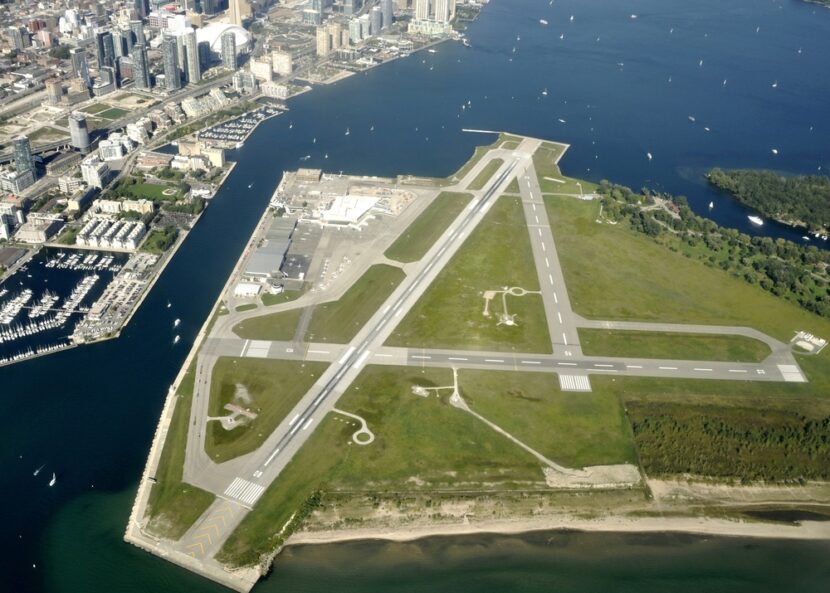
TORONTO — Billy Bishop Toronto City Airport may occupy a relatively small footprint on Toronto’s waterfront, but allowing next-generation jets to fly from its runways could have implications reaching well beyond the downtown core.
From adding airline capacity in one of North America’s fastest-growing regions to creating new competitive pressure on fares and opening up potential new routes, an expanded Billy Bishop could alter how airlines serve the Greater Toronto Area (GTA), says aviation expert Robert Kokonis, President and Managing Director of Toronto-based aviation advisory AirTrav Inc.
And while the federal government has rejected Ontario’s latest proposal to expand the airport, Kokonis believes the larger conversation about Billy Bishop’s future – and Toronto’s long-term aviation needs – is far from over.
At the heart of the issue, he says, is an airport operating under rules that haven’t kept pace with aircraft technology.
“The tripartite agreement at Billy Bishop Toronto City Airport must be updated,” Kokonis told Travelweek. “Currently, the only aircraft permitted under that agreement for commercial service is the Q400 turboprop, an older aircraft type that is gradually being phased out by airlines. From an industry perspective, this limits potential investment and growth and creates a barrier to innovation.”
COMPLEMENTARY, NOT COMPETITORS
Much of the debate surrounding expansion has centred on what a jet-capable Billy Bishop could mean for Toronto Pearson International Airport and airlines already operating there.
Kokonis, however, argues that the GTA will ultimately need capacity from both airports.
“The GTA is one of the fastest-growing regions in North America. Between now and 2051, the region is expected to welcome between three and four million additional residents, while demand for air travel will continue to rise,” he said. “It’s prudent to plan for that growth today.”
Rather than viewing YTZ as a potential rival to Pearson, Kokonis sees the airports occupying distinct positions in the market.
“Air demand cannot be met entirely by Toronto Pearson,” he said. “Billy Bishop really should be seen as complementary to YYZ. Whereas YYZ is an international hub, YTZ is going to be a North American regional hub serving a different set of customers and catchment.”
That distinction could become increasingly important as Toronto’s population and demand for air travel grow, he added.
“Ultimately, demand must be met over the long term, resulting in both airports planning now for what demand will be in the future.”
COULD MORE COMPETITION MEAN LOWER FARES?
For travellers, one of the most pressing questions is whether a larger Billy Bishop could bring greater competition – and potentially lower airfares – to the Toronto market.
Kokonis says history suggests that more competition generally helps keep fares in check.
“If additional carriers can compete and passengers end up with more flight options, ensuing competitive pressures can be expected to help keep pricing in check rather than create a sustained premium based solely on the airport’s downtown location,” he said.
That could mean lower fares on certain routes and at certain times of year, although Billy Bishop has another significant card to play: convenience.
The airport is accessible to passengers using the TTC and GO Transit, with the future Ontario Line expected to further expand downtown transit connectivity. Its location also offers an alternative for travellers who may not be well served by major highway corridors.
“For frequent and business travellers, the convenience of a short terminal-to-gate experience is another significant advantage that YTZ offers,” said Kokonis.
He also pointed to Billy Bishop’s role connecting northern communities with downtown Toronto, including access to businesses, hospitals and educational institutions.
For airlines, Kokonis says allowing smaller, next-generation aircraft could enable carriers to maintain and expand service at the airport as older aircraft types are retired.
“Newer aircraft can deliver better efficiency and performance across a range of measures,” he said. “Allowing smaller, next-generation aircraft would enable carriers to continue serving passengers from Billy Bishop over the long term.”
A MUCH BIGGER ROUTE MAP?
Permitting newer aircraft could also change the types of destinations airlines can realistically serve from Billy Bishop.
“It could create opportunities for additional routes, as these aircraft offer significantly greater range than the Q400 turboprop,” Kokonis said.
“From a network perspective, that could potentially open access to destinations further across Canada, the U.S., and maybe even parts of the Caribbean, while giving travellers more direct options from downtown Toronto.”
Billy Bishop is already building its U.S. presence. Kokonis pointed to the opening of the airport’s U.S. preclearance facility in March 2026 and new routes including New York LaGuardia, Chicago O’Hare and Nashville.
“New-generation aircraft would provide airlines with greater flexibility to build on that foundation and to explore additional markets that may not be viable today,” he said.
Such an evolution would represent a notable shift for YTZ. Rather than simply providing an alternative departure point for relatively short regional trips, the downtown airport could take on a larger role within the broader North American air network.
OTTAWA SAYS NO – FOR NOW
Earlier last month, the federal government recently rejected Ontario’s proposed Billy Bishop expansion following public consultations that generated more than 87,000 responses. Ottawa said it would not pursue plans that encroach on valued public spaces, increase noise, cause significant environmental impacts or interfere with Toronto’s ability to build housing.
Ontario Premier Doug Ford has strongly backed expansion, while Prime Minister Mark Carney has stopped short of permanently closing the door on the idea. Travelweek also spoke to Porter Airlines President, Kevin Jackson, last month, who told Travelweek that the airline continues to support expansion plans of its hub airport.
Despite continued support for expansion from both the province and Porter, Kokonis says any path forward will ultimately depend on addressing the concerns that prompted Ottawa to reject the latest proposal.
“In its recent statement, the federal government was clear that any future plans for YTZ would need to address community concerns related to noise, environmental impacts, recreational uses, congestion and housing,” he said. “Ultimately, the focus must be on ensuring a balanced and accessible waterfront.”
He points to the Toronto Port Authority’s (TPA) existing measures, including a strict noise curfew and environmental initiatives, as evidence that airport growth and community concerns do not necessarily have to be mutually exclusive.
“Billy Bishop is the most noise-constrained airport in North America, and that will no doubt continue,” he said.
WHAT HAPPENS NEXT?
For Kokonis, the next major step is seeing exactly what expansion would look like.
“The key next step is for the TPA to release a plan that clearly outlines how future growth would be managed,” he said. “Stakeholders will need to see the proposal itself, along with the measures that would be taken to address the concerns they’ve heard about.”
He added that much of the debate has occurred without a detailed public plan, which he says has contributed to “confusion and misinformation.”
“From what I have observed, the TPA has demonstrated a commitment to the surrounding community and the environment over many years,” Kokonis said. “Based on this track record, I believe the TPA can in fact deliver a downtown airport that Toronto can be proud of while serving the broader transportation needs of the region.”
And despite Ottawa’s rejection of the latest expansion push, Kokonis sees significance in Carney’s recent comment that “forever is a long time” when asked about the airport’s future.
“From my experience in industry and government, the Prime Minister’s recent comment that ‘forever is a long time’ suggests a recognition across multiple governments of Billy Bishop’s importance within the broader transportation network,” Kokonis said.
“That conversation needs to continue in a constructive way, not only for the airport itself, but also for the future of aviation capacity in the Greater Toronto Area.”
