





TORONTO — Twenty years in, Porter Airlines is showing no signs of slowing down.
As the Canadian carrier celebrates its 20th anniversary this year, Porter President Kevin Jackson says the airline’s next chapter will centre on strengthening its position in Eastern Canada while continuing to expand its North American network.
Speaking to Travelweek, Jackson reflected on Porter’s evolution since its 2006 launch at Toronto’s Billy Bishop Airport, its growing fleet of Embraer E2 aircraft and the brand philosophy that he says continues to set the airline apart.
“I would say Porter’s had two lives, and both of them so far have been quite successful,” said Jackson. “What we did with the launch of the airline in 2006 and the creation of Billy Bishop, the experience that is Billy Bishop today, which is award-winning, and the brand and the onboard experience that we built around that entire experience was a huge success. It created an incredible amount of brand loyalty for the business.”
The second phase of Porter’s growth has involved taking the airline’s Billy Bishop experience and expanding it across North America without losing what Jackson describes as the essence of the brand.
“I’ve always said flying Porter is a feeling. I like the way I feel when I travel with Porter,” he said.
Jackson pointed to Porter’s two-by-two seating configuration as one example of how the airline seeks to create a different passenger experience. He recalled a recent flight from Los Angeles to Toronto where he observed a mother and young daughter watching a video together, two friends laughing and talking and a couple holding hands.
“Those are examples when I say flying Porter is a feeling. When we can create experiences like that, it’s part of why you love the brand,” he said.
BILLY BISHOP EXPANSION REMAINS A PRIORITY
Porter continues to support modernization and expansion at its hub, Billy Bishop, despite the Ontario government’s recent decision to halt the province’s plan for a major expansion of the downtown Toronto airport.
Jackson said improved aircraft technology makes it possible to address some of the environmental and noise concerns that have historically surrounded airport expansion.
“The E2 aircraft is that technology,” he said. “The size of Toronto demands other alternatives to Pearson. When you’ve got an airport that has the ability to satisfy that demand in a meaningful way, it benefits the city of Toronto in many ways.”
There is still, however, hope for an eventual expansion, Jackson added, with “entities with a broader point of view around the impact of the city, what the city requires and its environmental impact” still pursuing plans.
“We’ve always taken the perspective that it’s a matter of when, not if,” Jackson said.
EASTERN CANADA: THE GROWTH ENGINE
With Porter continuing to take delivery of an order for 75 E2 aircraft through to the year 2030, Jackson said the immediate focus is on strengthening its position in Eastern Canada.
“We want to be the preferred carrier in Eastern Canada,” he said, pointing to the airline’s growing presence across the Greater Toronto Area, Ottawa, Montreal and Halifax.
Porter is currently operating at all three major airports in the GTA and at both of Montreal’s airports, including the new Montréal Metropolitan Airport (MET), which Porter helped launch earlier this summer as its launch carrier.
Jackson said the MET has already attracted a significant number of incremental Porter customers. More than 80% of passengers booking Porter at the new airport are new to the airline’s service there, he said, meaning the traffic is largely incremental to its Montreal operations.
The airport is also helping Porter expand its overall presence in the Montreal market without being constrained by capacity at Montréal-Trudeau International Airport (YUL).
“If we had attempted to provide the scale that we are in the city of Montreal only at YUL, we would have been unable to do that just by the constraints that are at YUL today,” Jackson said.
He described the strategy behind the MET, Billy Bishop and Hamilton airports as different in terms of destinations and demographics but connected by one common principle: passengers tend to gravitate toward the airport that is closest to them.
E2 FLEET OPENS UP MORE POSSIBILITIES
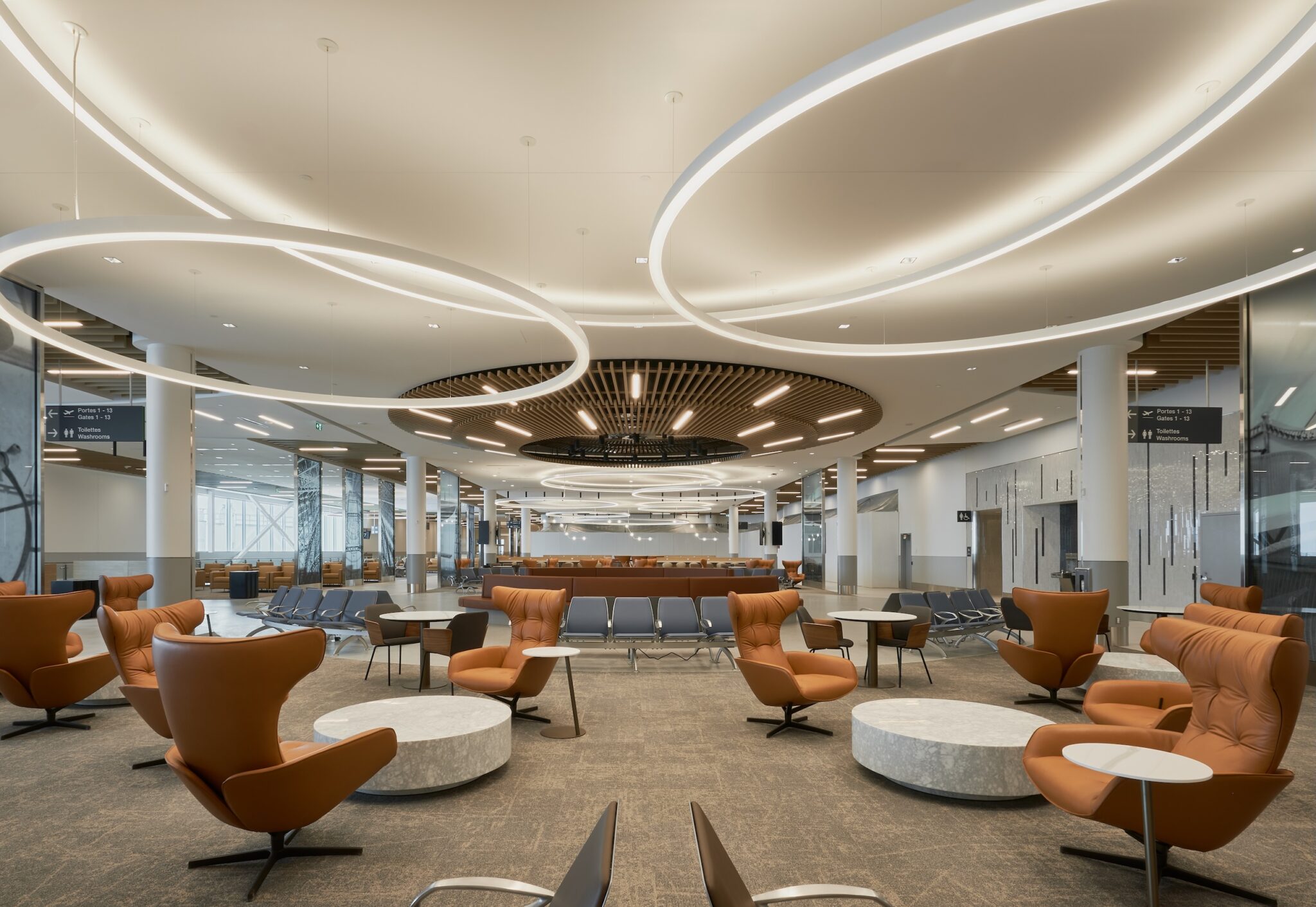
Montreal Metropolitan Airport (MET)
Porter has an order for up to 100 E2 aircraft and has now taken delivery of 54, giving the airline significantly more range to pursue new markets.
“It’s incredible what the E2 is enabling us to do. We are flying six hours all the way down into Costa Rica from Ottawa,” Jackson said. “This aircraft gives us the ability to cover the entire continent. There are so many destinations yet to be discovered.”
Rather than focusing solely on adding high-profile new destinations, Porter’s next phase of growth will also involve increasing frequency in markets where it already operates.
Jackson said higher frequency is particularly important to winning a greater share of business travel, while partnerships with airlines including Alaska Airlines and American Airlines are creating additional opportunities across the U.S. Porter is also working with Transat to build out its domestic network.
FUEL COSTS NOT CHANGING CAPACITY PLANS – YET
Like other airlines, Porter has been navigating higher fuel costs and the resulting pressure on fares. It recently reinstated a $40 fuel surcharge on VIPorter reward flights following a resurgence in oil prices.
Jackson said, however, that the current environment has not changed the airline’s capacity decisions.
“We see today too many markets across the network that are contribution-positive and the opportunity for us to continue to enter similar new markets and increase frequency,” he said.
Jackson said Porter had already pivoted its plans last year in response to tariffs rather than this year’s oil prices.
The broader industry is now responding to higher fuel costs largely through increased fares. So far, he said, consumers have remained resilient despite higher prices.
“If the consumer doesn’t stay resilient, then you’ll make different decisions on capacity,” Jackson said. “But as long as the consumer remains resilient, which they are, you can continue down the path that we’re all on, albeit at certainly less desirable financial performance.”
When asked about the impact of increased fares, Jackson said the airline isn’t worried about any long-term effects.
“Because this is not happening to Porter in isolation – it’s happening to all of us – the entire industry will have to shift. If this continues, you’ll see more structural change in the industry – what that looks like, I can’t say.”
TRAVEL ADVISORS PLAY A CRITICAL ROLE
Travel advisors are playing an increasingly important role in Porter’s growth strategy, said Jackson, accounting for almost 50% of the airline’s bookings today.
He said advisors are particularly important in reaching higher-yield business travellers but are also critical as Porter enters new markets and introduces the airline to customers who have never flown with the carrier.
“We’re still flying new passengers all the time because we continue to expand the network, and travel agencies continue to play a critical role in that,” he said.
Porter’s agency sales team works closely with travel agencies on programs and opportunities designed to support and reward its agency partners.
STAYING TRUE TO THE PORTER BRAND
To kick off celebrations for its 20th anniversary, Porter yesterday announced the launch of ‘The Little Things Blind Boxes’, a limited-edition 20th birthday collection of five little things passengers love about Porter – including the aircraft, complimentary drinks in glassware and Mr. Porter himself. The big prizes? Each sealed collectible blind box comes with a 1-in-500 chance to find a Golden Porter Pass, redeemable for 20 free flights to any Porter destination (equivalent to 10 round trips to any Porter destination). Each blind box retails for $22 US (approximately Cdn$30) and is available now for presale while quantities last.
Looking ahead to the airline’s 25th anniversary, Jackson said growth will remain important but should never come at the expense of the principles that have defined Porter since its launch.
“I want us to stay true to the roots of what we are,” he said. “I think the fact that we have for 20 years elevated the economy experience for travellers has been one that even today, 20 years in, continues to resonate with people.”
He also highlighted Porter’s approach of treating passengers consistently regardless of elite status or class of service.
“The fact that we’re an egalitarian brand that doesn’t treat you differently based on your elite status or the class of service that you buy – that’s just not how the brand operates,” Jackson said.
“As we keep expanding, we don’t lose what was created 20 years ago, which continues to serve us well today. We need to keep scaling that and staying true to the brand principles.”
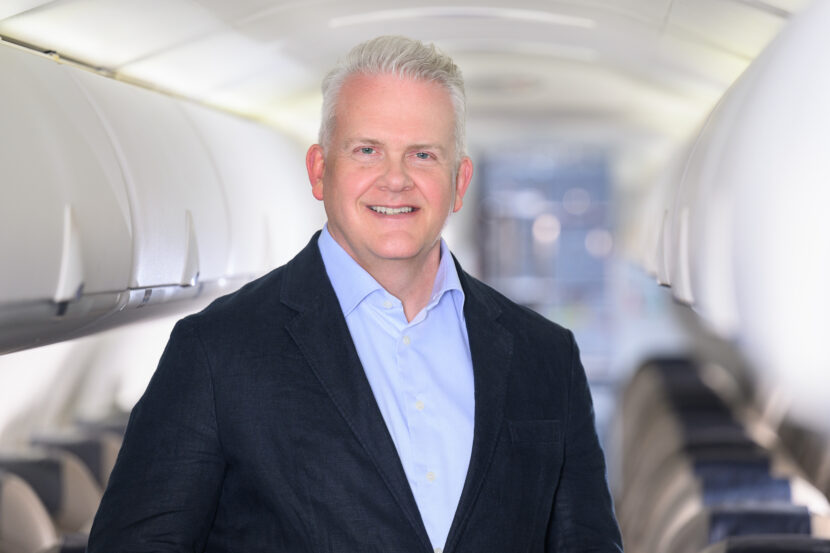
Lead image caption: Porter Airlines President Kevin Jackson
