





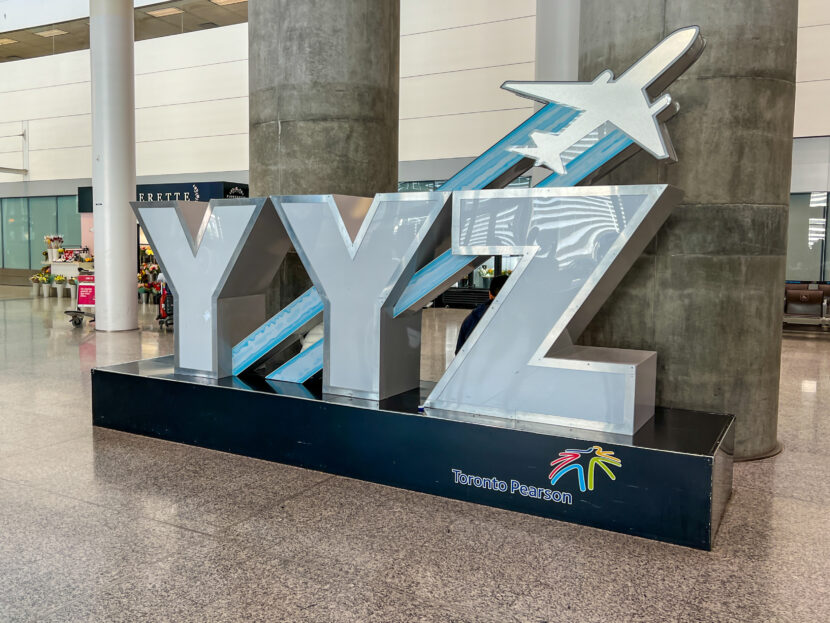
TORONTO — Canada’s airport privatization debate may be grabbing headlines, but aviation expert John Gradek says the real story will be found in the fine print.
Prime Minister Mark Carney announced on Sept. 15 that Ottawa plans to seek private investment through long-term concessions to operate Canada’s four largest airports – Toronto Pearson, Montréal-Trudeau, Calgary and Vancouver – while the federal government retains ownership of the underlying land and assets. Ottawa says proceeds would be reinvested in regional airports and other infrastructure.
The proposal would represent a major shift from the not-for-profit airport authority model that has operated Canada’s largest airports for more than three decades.
As Travelweek has reported, reaction has been mixed. IATA has warned that introducing private investors could work against efforts to make Canadian air travel more affordable, while the Canadian Labour Congress has raised concerns about costs to passengers and workers. The Canadian Airports Council, meanwhile, has said any new model must protect affordability and connectivity while ensuring value generated by major airports is reinvested in Canada’s aviation system.
For John Gradek, Faculty Lecturer and Academic Programs Coordinator, Supply Chain, Logistics, Operations and Integrated Aviation Management at McGill University, the proposal presents both an opportunity and a risk.
“I’m optimistic about the structure and cautious about the terms,” Gradek tells Travelweek.
WHY NOW?
According to Gradek, the timing has as much to do with the scale of infrastructure investment facing major Canadian airports as it does with Ottawa’s desire to unlock new sources of capital.
“Two things came together. The airports are sitting on a wall of spending they can’t fully finance on their own – Montréal alone is trying to get through roughly $10 billion in projects, Toronto has its own multi-billion program, and borrowing costs have climbed,” he says.
At the same time, he points to the money Ottawa has collected through airport rents over the past three decades: $556 million last year and more than $8 billion since the 1990s – with very little put back, he notes.
“So the plan does two jobs at once: it brings private capital in to modernize the big four, and it frees up proceeds Ottawa can send to the smaller airports that have no way to raise that kind of money,” Gradek says. “‘Why now’ is really ‘why not sooner’ – the bill for decades of underinvestment has come due.”
Carney’s proposal specifically calls for long-term operating concessions rather than the outright sale of the airports, a distinction Gradek considers significant.
“The opportunity is real – a concession beats an outright sale, because Ottawa keeps the land and only leases the right to operate,” he says.
THE PASSENGER EXPERIENCE – AND THE PRICE
For travellers, Gradek says greater access to capital could speed up improvements that otherwise take years to finance under the existing system.
“For passengers, the prize is time – rebuilt terminals, faster baggage systems, the digital backbone that lets you move through the building instead of lining up at every stage,” he says.
Airlines could also benefit from improved infrastructure and greater operating efficiencies, but Gradek cautions that private operators would also be seeking a return on their investments.
“For airlines, a well-run concession can mean better facilities and, over time, cost discipline. The risk is that the same operator has every reason to lean on fees.”
That tension is particularly important at major hub airports where passengers and airlines have limited alternatives.
“For competitiveness, remember these are captive assets – you can’t move Pearson, and 47 million people a year go through it. That’s exactly why the pricing has to be watched,” he says. “The model can make our airports world-class; it can also make them expensive. Both are on the table.”
‘SET THE RULES BEFORE YOU SIGN’
Gradek says international examples offer an important lesson for Ottawa: regulation needs to be part of the model from the beginning.
He points to Britain, where Heathrow’s airport charges have been subject to economic regulation, and Australia, where airport privatization has generated continued debate over fees.
“The lesson isn’t complicated: set the rules before you sign, not after,” he says. “Canada has no airport economic regulator today. That has to be fixed first.”
Gradek believes the current not-for-profit authority system has delivered significant benefits over the past 30 years, including keeping airport operations in Canadian hands and professionalizing their management.
Its biggest limitation, he says, is access to capital.
“An authority can only borrow against its own fees, so the big rebuilds come slowly and the airport improvement fee only goes up,” he adds. “Private investment can break that logjam by putting a larger pool of money in upfront, so more gets done at once and it gets done faster.”
But changing the investment model also changes the incentives behind airport operations.
“What the current model doesn’t have, and what any private model will need even more, is someone independent watching the fees,” Gradek says. “That’s the piece to add – not to replace what works, but to protect travellers when the ownership logic changes.”
WHAT TRAVEL ADVISORS SHOULD WATCH
When asked whether a new private investment model could affect airfares, airport improvement fees, route development or service to smaller communities, Gradek didn’t mince words: “Yes to all of it, and this is where the terms matter most.”
He says that airport improvement fees are among the clearest areas to watch, noting that three of the four major airports already charge $40 per departing passenger.
“Without a cap in place a private operator has every incentive to keep raising it; that flows straight into the price of a ticket,” he says.
Airline charges could also indirectly affect fares, while route development could move in the other direction.
“Route development can actually benefit, since a commercial operator wants to fill the building and will chase new service,” Gradek says.
Smaller airports could also gain if Ottawa follows through on its plan to direct proceeds toward regional aviation infrastructure. Carney has said money raised through the concessions would be reinvested in infrastructure including regional airports, with the stated goal of improving regional and remote connections.
For Gradek, however, one question should remain front and centre as the government develops the model.
“The advisor’s watch-item is simple: is there an independent regulator with the power to say no to a fee increase?” he says. “If yes, this is manageable. If no, the client pays.”
Got a story idea? We’d love to hear from you! Contact us at cindys@travelweek.ca.
