


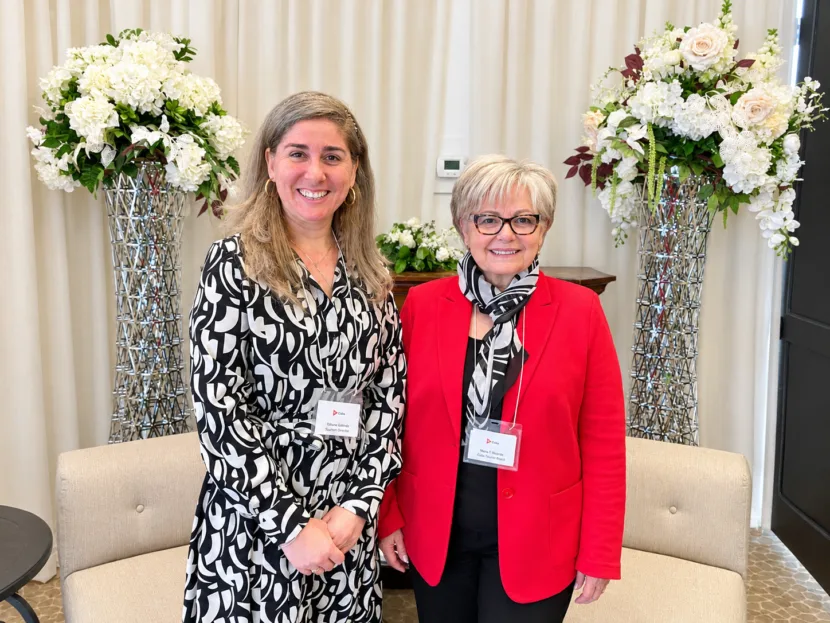
TORONTO — Despite the current suspension of Canadian airline service, the Cuba Tourist Board emphasized that the island is not completely cut off from international tourism.
Gihana Galindo, Director of the Cuba Tourist Board in Toronto, told Travelweek that Cuba continues to welcome international visitors, with flights arriving from markets around the world.
“We don’t currently have flights from Canada, but we do have flights from Panama, Venezuela, China, Europe and the United States. Canada is what we’re missing,” she said.
Canadians are still finding ways to visit, however, primarily via third countries like Panama, although numbers are far lower than normal.
“WE ARE OPEN”
With Canadian airlines and tour operators suspending all service to the island and major hotel chains exiting the country, Cuba is facing one of its most difficult periods in decades.
But the government isn’t backing down, making an aggressive push to attract foreign investment – including in tourism – as it prepares for the eventual return of international visitors.
Count Cuba out? Not a chance.
That was the central message at the Cuban Investment Forum, held in Mississauga on Nov. 13, where government officials and business leaders outlined a series of economic reforms designed to make Cuba more accessible to foreign investors and create new opportunities across the island.
The push comes against the backdrop of an increasingly severe U.S. sanctions regime, which Cuban officials and business representatives say has intensified this year, restricting the country’s access to fuel and affecting international companies doing business there. The resulting energy shortages have had a significant impact on daily life in Cuba and its tourism industry, including the suspension of Canadian flights after airlines were no longer able to refuel on the island.
Yet rather than wait for conditions to improve, Cuba is using this period to reshape its economy and attract the capital needed to modernize its tourism offering.
For Canadian travellers, the message Galindo and Nieves Ricardo, Marketing, Cuba Tourist Board, was that the destination wants visitors to eventually return to a better, more diverse and more competitive Cuba.
“We are open, and we’re more open to foreign investment than ever before,” Galindo told Travelweek.
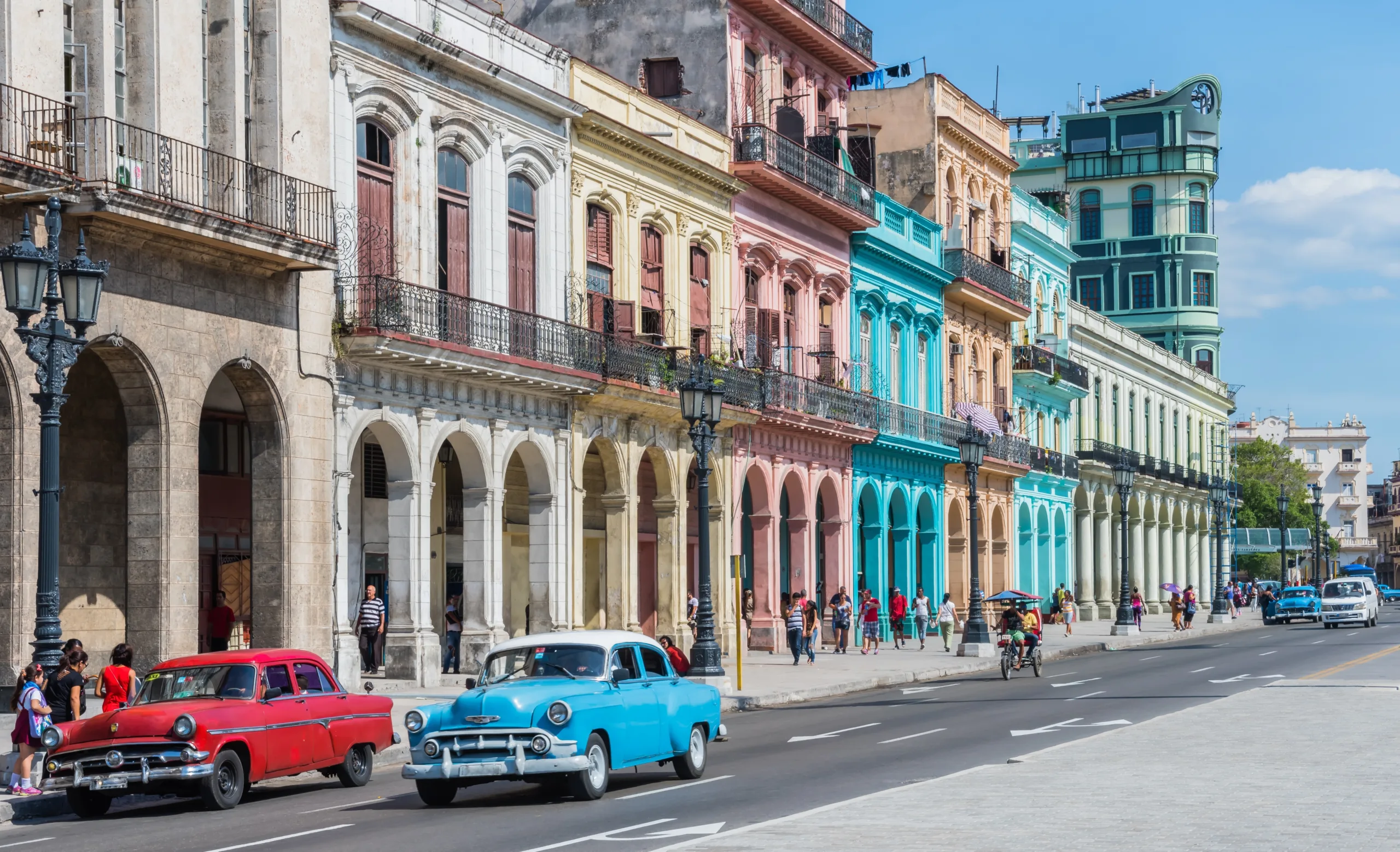
Havana, Cuba
“ONCE DEMAND RETURNS, THE HOTELS WILL REOPEN”
Ricardo said Havana and Varadero are currently receiving most of the international flights, with many hotels in those destinations continuing to operate. Other areas have more limited air service, and fewer properties are open.
She stressed that hotel closures should not necessarily be interpreted as an inability to accommodate visitors. In many cases, properties have closed because demand has dropped.
“Once demand returns, the hotels will reopen,” she said.
However, restoring Canadian tourism will require more than simply reopening hotel doors. Both Galindo and Ricardo identified Canada’s travel advisory, currently at the orange level advising against non-essential travel, as a major obstacle to rebuilding confidence among travel advisors, retailers and consumers.
“The travel advisory needs to change first,” said Galindo.
Ricardo agreed, adding that Canadian travellers continue to have a strong connection to Cuba but that the advisory makes it difficult for the travel trade to support the destination.
“I believe that once the advisory changes, flights will return and hotels will respond to the demand,” she said.
Another development aimed at facilitating future travel is Cuba’s new centralized e-visa portal, which was announced on Nov. 12. The platform brings together visa applications through Cuban consulates worldwide.
For Canadians, the system provides another option while direct flights remain suspended, particularly for those travelling through third countries. Ricardo said it will also be important as foreign investment increases and Cuba anticipates more business visitors. Whether the previous system of including tourist visas in Canadian vacation packages will return when direct flights resume has yet to be determined.
As Cuba works to prepare for the return of Canadian visitors, Ricardo said the destination continues to hold a special place for travellers from this market.
“Even under the current circumstances, Canadians still want to visit Cuba. They have a special affection for the destination.”
A MORE OPEN CUBA FOR FOREIGN INVESTORS
The Cuban government has introduced 176 new economic and social measures across 23 areas, with the objective of attracting foreign capital, expanding opportunities for private enterprise and reducing the bureaucracy that has traditionally complicated doing business in the country.
Speaking at the forum, Rodrigo Malmierca, Ambassador of Cuba to Canada, described the changes as a profound transformation of the country’s economic model.
“We are moving toward greater openness to foreign capital, greater openness to Cuban private enterprise and a reduction in administrative intervention by the state in favour of market mechanisms,” he said.
For the tourism sector, some of the most significant changes involve expanded property rights, new ownership structures and access to previously restricted destinations.
Foreign investors can now obtain surface rights over land for up to 99 years, while usufruct rights, which allow the use of property without owning it, can extend beyond 50 years. Cuba is also allowing 100% foreign ownership of businesses, up from the previous 49% limit, according to Galindo and Ricardo.
The government is also opening up investment in prime tourism locations where foreign development opportunities were previously restricted.
“We are opening up places such as Old Havana, which were protected areas where foreign investors could not develop projects before,” said Ricardo.
The changes extend well beyond hotel construction. Cuba is looking to attract investment in marinas, restaurants, retail operations, ecotourism, car rentals and other tourism-related services.
Galindo said the government has received 346 investment requests in the tourism sector between June and November, from countries including China, Germany, Spain and Canada.
“Since June, Cuba has opened its economy further to foreign investment through more than 170 new measures,” she said.
The government is also hoping to make the approval process faster and less complicated. Malmierca said new measures will simplify documentation, introduce digital systems and give municipalities greater authority to approve projects locally.
“We are doing this because it is necessary. Of course, it will help investors, but it will also help us. We are not doing this simply to be accommodating. We are doing it because these changes are needed,” he said.
NEW OPPORTUNITIES BEYOND HOTELS
One of the more notable changes for the travel industry is the government’s decision to recognize and allow private travel agencies and destination management companies (DMCs) to operate in Cuba.
Previously, ground handling, destination management and many local travel services were largely controlled by state-run companies. Under the new measures, both Cuban and foreign private businesses will be able to participate in these activities, including tour-guiding services.
“This is a major change,” said Ricardo. “When Cuba’s tourism industry recovers, there will be new players in the market. This means more companies, greater competition and potentially better service.”
Private companies will also be permitted to participate in car rental operations, another area previously controlled by the state.
For travellers, these changes could eventually translate into more choice, new experiences and a wider range of services beyond the traditional all-inclusive resort model.
Malmierca also outlined opportunities involving tourist marinas, real estate developments and concessions for underdeveloped tourism facilities. The government plans to establish new economic development zones with special incentives for tourism projects, including tax incentives for ecotourism.
According to Ricardo, the objective is to bring new energy into the industry rather than simply restore the business model that existed before the current crisis.
“We need to revitalize the entire economy. We need new players to bring new energy,” she said.
Lead image caption: The Cuba Tourist Board’s Gihana Galindo, Director (left), and Nieves Ricardo, Marketing
