


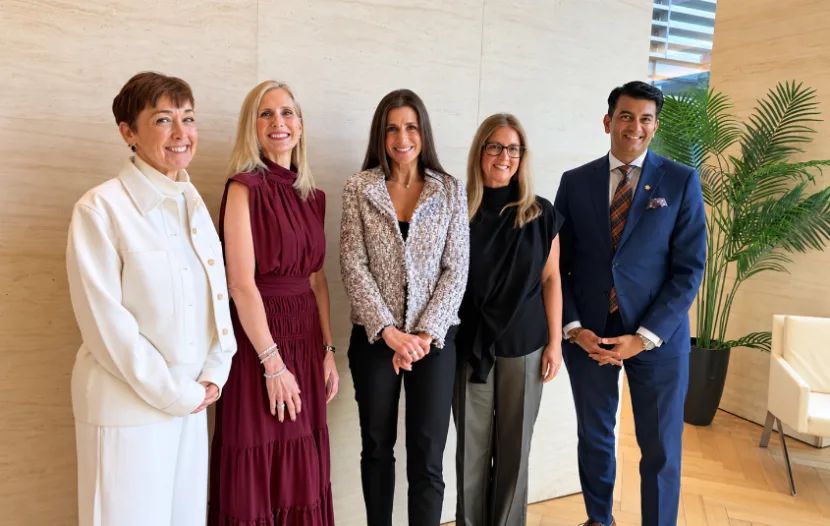
TORONTO — Multi-generational travel, expedition cruising and solo travel are soaring, while hotel rates are indeed through the roof: Virtuoso On Tour’s media event yesterday at the Shangri-La Toronto offered a deep dive on the recently-released 2027 Virtuoso Luxe Report, revealing what’s new and next for Canadian travellers.
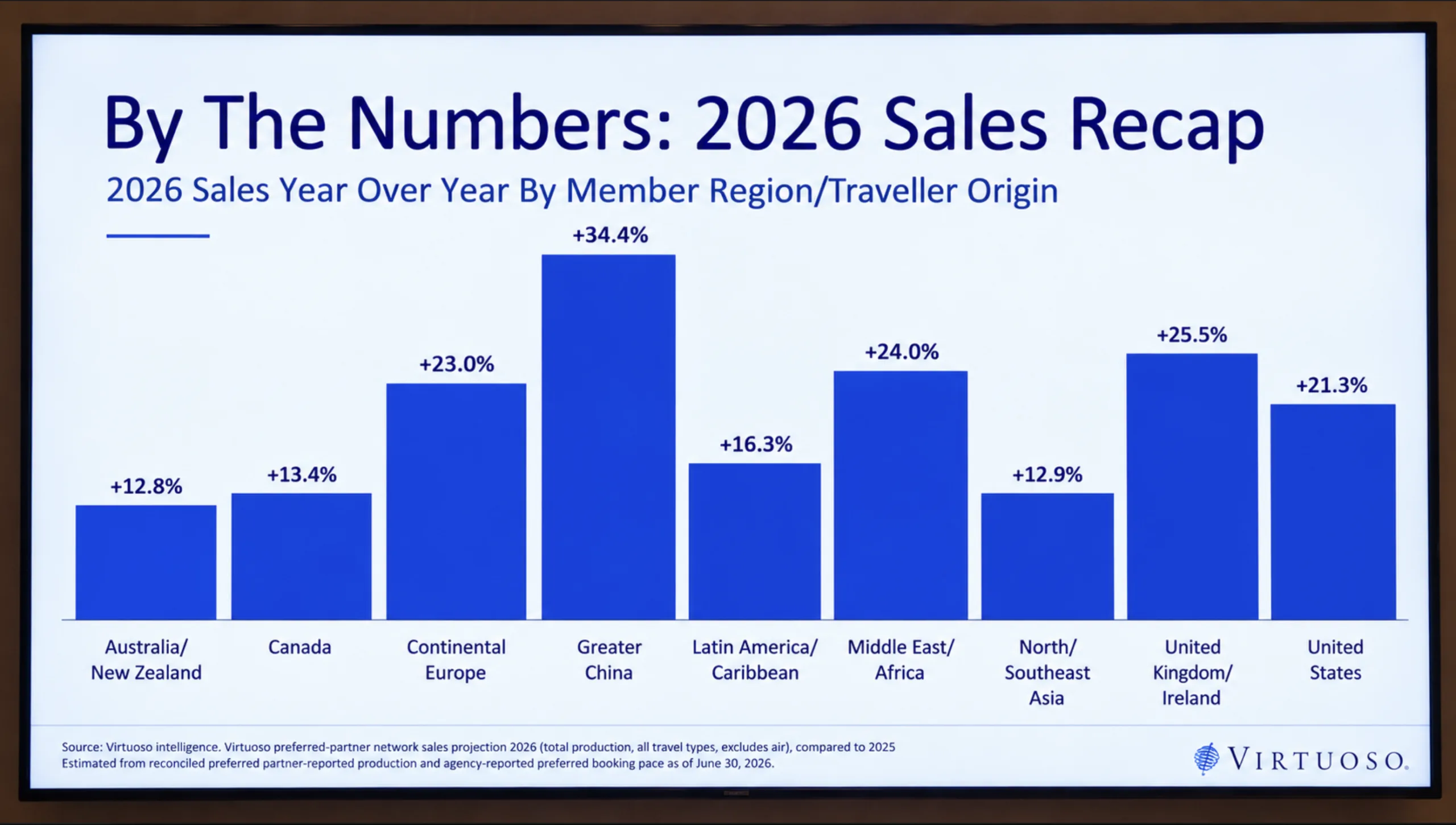
Virtuoso’s annual sales now top US$35 billion. Global network sales for 2026 are projected to rise 28% year over year.
Breaking the numbers down by market, Virtuoso’s Canadian advisors are projecting a 13.4% increase for the year, while U.S. advisors say 21.3%, European advisors say 23% and from the UK, the prediction is 25.5%. Canadian members estimate a 13.9% jump for cruise sales for the year, 9% for hotel, 13.7% for on-site services and 17.2% for tours.
HOTEL RATES SHOCKER – OR NOT
No surprise to anyone booking hotels lately, even mid-market properties: hotel rates have hit the stratosphere.
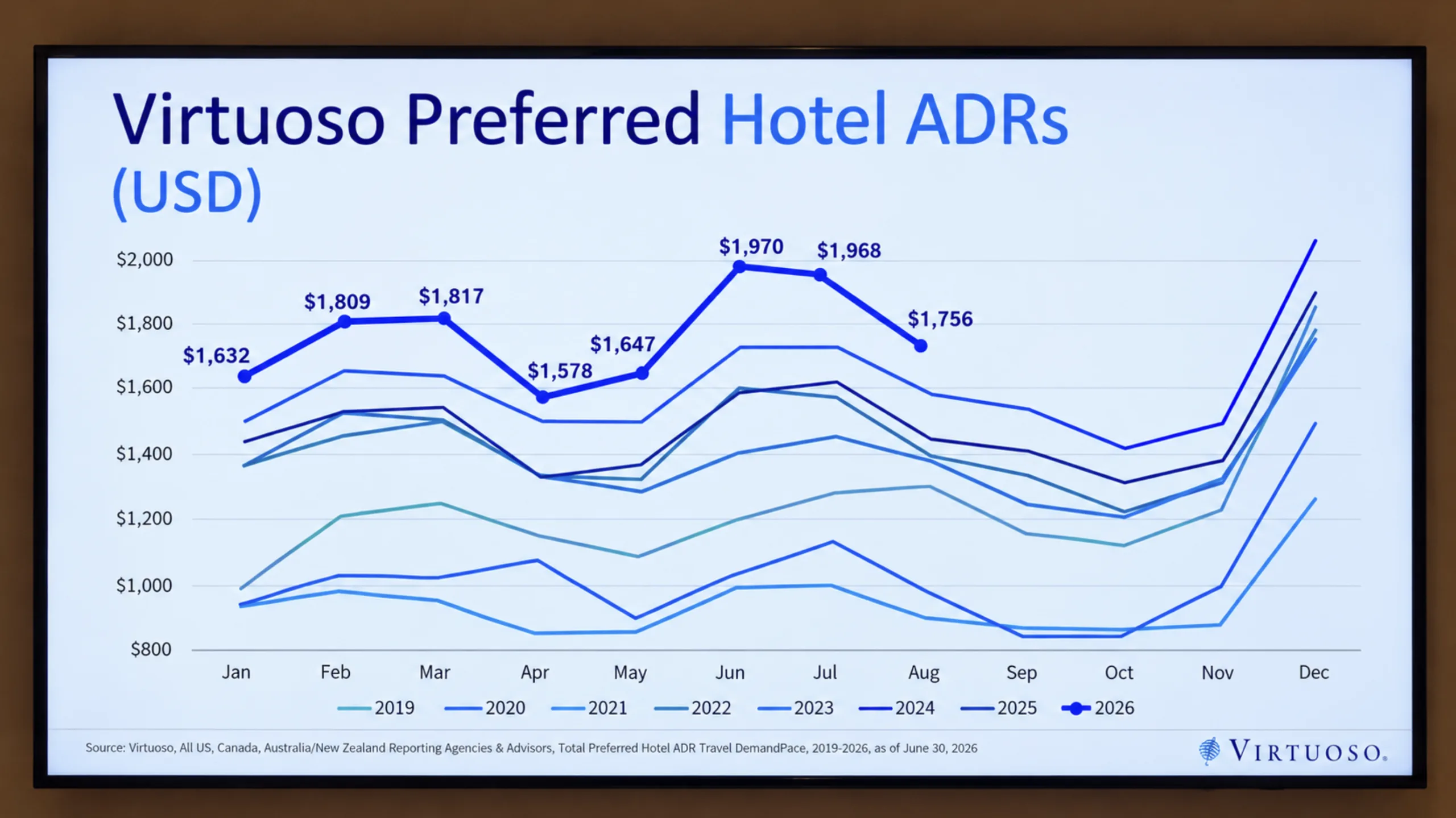
Average daily rates (ADRs) for Virtuoso preferred hotel partners hit a high of US$1,970 per night in June 2026, and this year’s ‘low point,’ if you can call it that, was $1,578 in April. Back in 2019, the ADR high point just barely hit $1,000 per night. As the industry knows, hotel rates soared post-pandemic and haven’t come down since, and keep steadily rising.
More stats: the average booking for Virtuoso’s Canadian advisors is $1,682, year to date, compared to $1,336 in 2025. Almost one-quarter (23%) of Virtuoso’s Canadian advisors say they expect demand to significantly increase for 2027. A solid half predict a slight increase, 21% see 2027 as steady with 2026, and 6% anticipate a slight decrease. About 6 in 10 (61%) are looking at slight increases in per trip spend too.
Virtuoso now has more than 20,000 advisors in 58 countries, including 27 member agencies totalling 1,300 advisors in Canada.
Good news: about 8 out of 10 (79%) of luxury travellers say they’re interested in using a travel advisor for future travels.
And even better, for the bottom line: 37% of Virtuoso’s Canadian advisors say they’re seeing an increase in ultra-luxe travel. For the luxury network, that includes exclusive use, private or “exceptionally high end” experiences.
For this rarefied market, fully inclusive resorts and cruise experiences rank number one. Ultra-luxe travellers are looking for experiences that include transfers, full buyouts and other arrangements that bring the entire trip together. Celebration travel is also part of the picture, with demand still very strong for bigger, once-in-a-lifetime splurge trips.
THE DESTINATIONS
From Canada, Italy is still tops as the top destination in the Virtuoso Luxe Report for 2027, followed by Japan, Greece, Portugal, France, Mexico, Croatia, Spain, the D.R. and Ireland.
But globally, Japan is number one in the rankings for the very first time. Italy is now number two, followed by France, Greece and Spain.
“I’ve worked on this report for more than 20 years, and this is the first time Italy has been unseated as the top global destination,” said Misty Belles, Virtuoso’s VP, Global Public Relations, at yesterday’s event.”Don’t feel too bad for Italy. It’s going to be okay!” she joked. “But it is interesting to see just how strongly Japan has emerged.”
Two cold-weather favourites were one and two on the Canadian list of 2027 destinations on the rise: Iceland and Antarctica. Filling out the top 10 were Costa Rica, Norway, Vietnam, Colombia, Morocco, Argentina, Kenya and the Galapagos Islands.
Belles said this is the first time Argentina, Kenya and the Galapagos Islands made the list. “They’re worth watching because, just as Japan moved from the rising destinations list to the top destinations list, we may see others follow that path.”
Canadians’ loyalty to ‘Elbows Up’ has been a boon for many other destinations. But when it comes to cruising, Canadians still favour Alaska. That’s followed by the Danube, the Med, the Caribbean and the Greek Isles.
THE TRENDS
The top travel trend from Canada for 2027: multigenerational family travel. Expedition cruising jumped up 7 spots, from number nine to number two. Rounding out the top five are ocean cruising; cultural immersion and active / adventure trips.
Solo travel continues to boom. Speaking of which, “there are many Boomers in this category who have decided they’re not going to wait for someone to join them. They want to go and see the world,” said Belles.
She noted that 68% of Virtuoso’s solo travellers are women. “How and where solo travellers go is changing. They’re travelling with greater intention and purpose. Rather than simply asking where they want to go, they’re thinking about what they want to get from the trip.” Women-only solo travel is particularly strong from Canada, she said.
Every travel trend these days gets a buzzy name, and the themes from the 2027 Virtuoso Luxe Report are no different.
There’s ‘fancy-flation’: “Travellers are looking at where their money will go further. They’re not trading down on the experience. They’re still booking suites, they still want guides and they still want the elements they value in their travels. But they’re becoming more discerning. They’re asking where they can find better value and which countries can offer the experiences they want at a better price,” said Belles.
There’s also ‘country coupling’: Just like city-maxxing, but with countries. There’s more to it than just a standard multi-destination itinerary, said Belles. “We’re seeing more thoughtful planning around how destinations are paired. Advisors are helping clients figure out the rhythm they’re looking for. Rather than packing as much as possible into an itinerary, the focus is on combining varied experiences at a more comfortable pace so travellers can enjoy them.”

Kyoto, Japan
FEWER LAST-MINUTE BOOKINGS
Karen Hardie, Virtuoso’s GM, Canada, moderated a panel discussion with advisor input from Anna Judek, President and owner of Zebrano Travel, and Ilana Valo, founder & CEO of TWIL Travel. Both agencies are part of Virtuoso. Ashwin Mather, Shangri-La Toronto’s GM, and Belles took part as well.
Despite the disruptions, high prices and global uncertainty, there’s still a lot of demand out there, said Judek.
“I’m seeing optimism with our clients. Last year, we were seeing clients holding on and not looking far in advance. They were waiting to see what was happening in the world. We had a lot of last-minute travel. This year, I’m finding that the optimism is showing through people planning in advance. They’re really looking at 2027 and talking about travel now, versus the last-minute bookings we saw last year. I’m reading that as optimism.”
Canadian travellers are notoriously keen on value, no matter the budget bracket, but Valo noted that doesn’t always mean the lowest price. “When we talk about value, it’s not that clients are looking to spend less. They’re looking to make sure they’re getting value out of the experiences they’re purchasing. They want to make sure what they’re spending translates into a valuable experience and a valuable stay.”
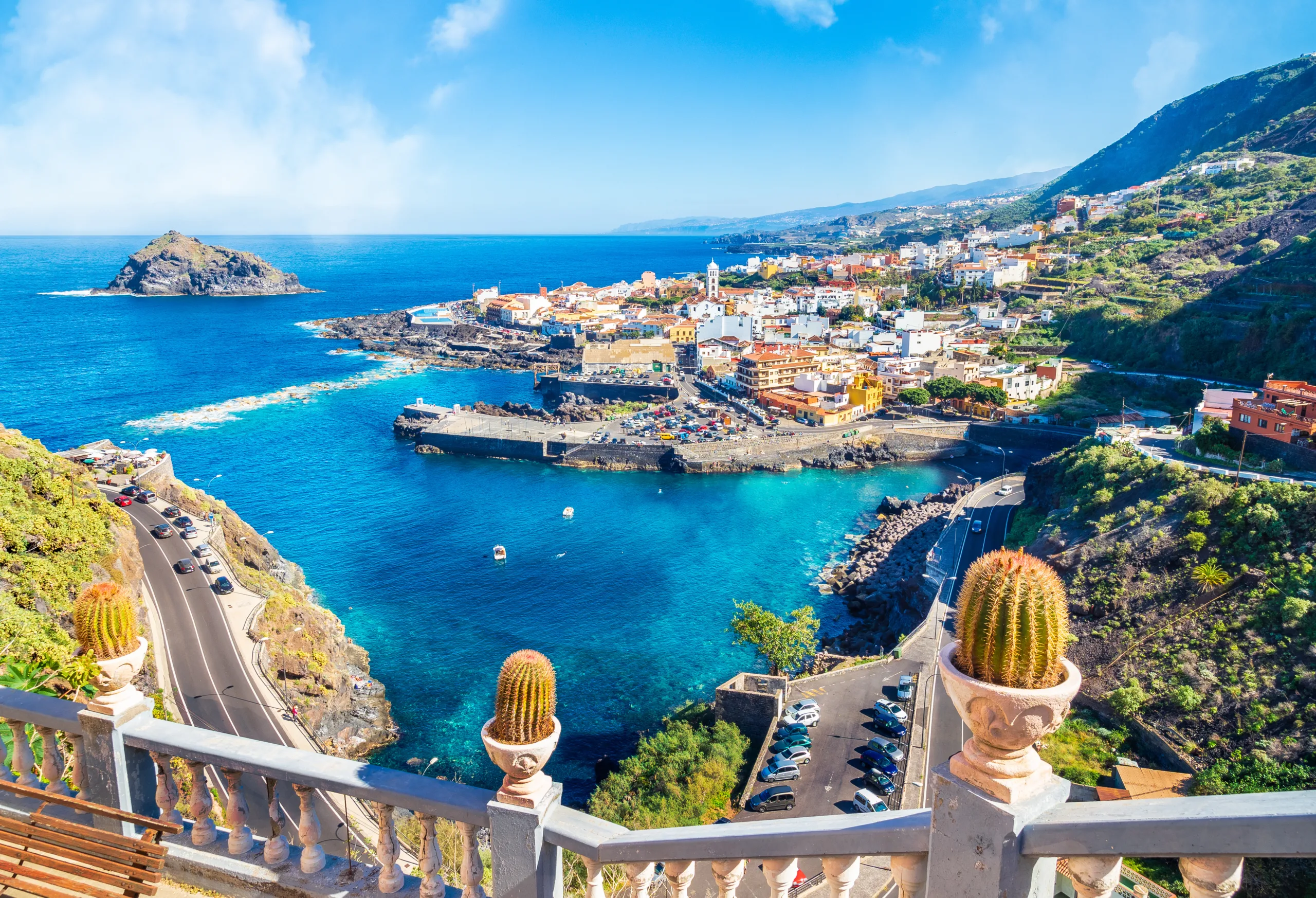
Tenerife, Canary Islands
THE MULTI-GEN SURGE
Both Judek and Valo have experienced the multi-gen surge first-hand. “We call it inheritance travel,” said Judek with a smile. “They want to spend that time together. It doesn’t necessarily look like a beach vacation. It can be an adventure vacation. Safaris resonate, or trips centred around sports and other activities. Clients like to keep the generations busy with different activities during the day, then come together in the evening. We might plan a band or a karaoke night. There’s something for everybody.”
Typically the grandparents are footing the bill, added Valo. “Expedition cruises offer high-end experiences for families. The grandparents might stay on board for presentations and discussions, or choose lighter activities, while the children and parents take part in more active adventures. In the evening, they come together and recap the day. It’s about creating memories with people you love. At the end of the day, you can’t take the cash with you.”
Ashwin said multi-gen is about “understanding what they’re celebrating or hoping to enjoy as a family, while also catering to individuals. We have one- and two-bedroom suites. Some corner suites can be configured with an adjoining king room and twin room, and closed off as one unit. Families can be close together while retaining privacy.”
DIRECT LIFT GAME-CHANGERS
When it comes to country-coupling, the combinations are almost limitless. Traditional pairings like Vietnam and Cambodia, or Thailand and Bali, are still popular, but so are mixes like Dubai and Africa, or Taiwan and Japan, said Valo.
Judek said it’s about spending quality time in each place. “We try not to recommend travelling with a checklist, ticking off destination after destination. Sometimes we encourage people to explore a destination more deeply. Take Brazil. Everyone thinks of Rio or Iguaçu Falls, but if you’ve travelled that far, why not extend into places that might be less familiar? Trancoso offers a bohemian beach atmosphere, Salvador offers culture and São Paulo has art and museums. Luxury travellers are often open to taking the extra time.”
So many new destinations are opening up to Canadians with new direct flights.
Direct lift is a game-changer, but the infrastructure needs to be there too, said Judek, like good highways, transfers, guides and transportation once clients arrive. “A destination may be emerging and interesting, but if the infrastructure isn’t there, we won’t necessarily recommend it until we’re confident,” she said.
Valo said she’s excited about the Canary Islands. Air Canada’s service to Tenerife starts in November, with two flights a week from Montreal and two flights a week from Toronto. The following month, in December, Air Transat is launching Gran Canaria flights, also from Montreal and Toronto.
“There’s room for more luxury properties, but there are already some great options. It’s a beautiful destination, and the climate is nicer than ours in winter. With direct service developing from Canada, I think it will create more interest,” said Valo.
For ultra-luxe travellers, seamless travel at some airports now comes with the ultimate perk – relaxing while reps take care of arrival protocols and paperwork, with no lineups.
Said Valo: “More airports, especially in Europe, are introducing private-terminal services. For around €800 to €1,000 per person in some cases, a car meets you at the plane and takes you to a private terminal. You wait in a private room with coffee, a drink or a bite to eat while the formalities and baggage are handled. Then you’re on your way. It can turn a frustrating arrival into a much more pleasant experience.”

Horseback riding in Iceland
CROSS-BORDER CHECK
The news cycle on Canada – U.S. relations is a bit one step forward, two steps back these days.
At least for August and September, there were increases in both car and air travel from Canada to the U.S., small but important year-over-year upticks.
Judek says her clients continue to avoid the U.S., even refusing to fly through U.S. gateways. Valo said: “We have clients who feel very strongly against supporting the U.S. and spending their dollars there. Then we have clients who are just business as usual and still want to go. It’s very specific to the client.”
The winners from the Elbows Up fallout include Japan, Europe, South America, Costa Rica and the Caribbean, said Judek. “There are lots of places people are willing to explore, and we’re pivoting that way.”
Of course Canadian destinations are getting plenty of Canadian travellers too. “Canadian travel is up,” said Judek. “Whether it’s Fogo Island or Fox Harb’r Resort outside Halifax, there are a lot of great locations within Canada that people are excited to explore. They also like the fact that they’re spending Canadian dollars. They do like that. It helps.”
Lead image caption: Karen Hardie, Virtuoso’s GM, Canada; Misty Belles, Virtuoso’s VP, Global Public Relations; Ilana Valo, founder & CEO of TWIL Travel; Anna Judek, President and owner of Zebrano Travel; Ashwin Mather, GM, Shangri-La Toronto
