


TORONTO — You’ve got European river clients. Are they cruise clients – or rail clients?
Experiencing Europe’s famed waterways by train is making tracks, so to speak, in a year when record low water levels created challenges at every turn for river cruise lines, including some cancellations and offers of refunds and future travel credits.
Over the past decade river cruising has grown 10-15% every year. All the altered itineraries, motor coach segments and ship swaps due to low water levels won’t make a bit of difference to the incredible popularity of seeing Europe’s riverside cities and towns by ship.
But for rail enthusiasts, and they are legion, train trips that showcase the beauty of the regions around the Danube and the Rhine could be just the ticket.
THE SLOW TRAVEL TREND
Railbookers Group’s Famous Rivers by Rail collection launched in mid-June.
With all the planning leading up to the launch, the timing was purely coincidental, but it’s certainly a year when all eyes have been on Europe’s rivers.
It also comes amid a vast resurgence interest for rail travel, thanks to the ‘slow travel’ trend, and also fuelled by climate-friendly short-haul flight bans in some European countries. In 2024 European locals, commuters and visitors logged 8.4 billion rail trips annually. It was an all-time record.
THE DANUBE, RHINE, SEINE AND DOURO
Dan Reisig, Railbookers Group’s Product Marketing & Communications Manager, told Travelweek the Famous Rivers by Rail collection came in response to increased demand the company is hearing “from travel advisors and guests who want a different way to explore these regions.”
Many river cruise companies, including Uniworld and Avalon Waterways, offer river cruise-and-rail combo packages. Great Rail Journeys does rail and cruise.
Railbookers’ collection is all-in on rail, using existing itineraries that all share a common theme: exploring the cities and routes that are well-travelled by river cruises, but using the train as the way to connect between destinations.
As Railbookers’ President and CEO, Frank Marini, puts it: “People have always been drawn to Europe’s great rivers, but you don’t have to be on the water to experience everything that makes these regions special.”
By train, travellers can spend a few days in places like Vienna, Budapest or Cologne, explore beyond the riverfront and then continue on to the next stop, he added.
Following the Danube, the 13-day Blue Danube by Rail travels from Prague to Budapest, stopping in Regensburg, Salzburg and Vienna along the way. There’s also Gems of the Danube by Rail, an 11-day journey from Budapest to Munich, with stops in Vienna and Nuremberg. The 13-day Rhine and Danube by Rail goes from Amsterdam to Budapest with stops in Cologne, Nuremberg and Vienna. Rounding out the collection are Romantic Rhine by Rail (Amsterdam to Basel, stopping in Cologne, Heidelberg and Strasbourg) and Swiss Alps and Rhine Castles by Rail (Basel to Amsterdam via Lucerne, Strasbourg and Cologne).
Other big-draw rivers not in the collection but also on offer: the Seine and the Douro.
PRICING & PACING
Asked about rates, Reisig said price points compare favourably to traditional river cruise product. The company’s à la carte approach allows advisors to package hotels (3-, 4- and 5-star) along with transfers and tours. Pricing is within reach partly because Railbookers uses regional, intercity and mainline European trains.
Product info from the company is available via weekly live webinars, and a Travel Advisor Toolbox with downloadable materials including brochures, guides, and maps. There’s also
hands-on support, so advisors don’t need to be rail experts.
What about the pacing? “One of the great things about these itineraries is that the pacing can be entirely dictated by the guests,” said Reisig. “While each itinerary features two to three nights in each city, all trips can be tailored to add nights or destinations, or arranged exactly as each guest would like. Most full days include one sightseeing activity, leaving plenty of free time for independent exploration and enjoying the culture of the city.”
The rail journeys themselves are easily managed, he added, with no individual leg lasting more than roughly four hours (and many are shorter).
SELLING TIPS
Travel advisors looking to introduce clients to a new way of seeing Europe’s riverside cities and towns have three selling tips, courtesy of Reisig.
First up – naturally – water levels aren’t an issue. Of course Europe’s rail lines aren’t immune to disruptions, chiefly labour strikes. Reisig notes that for the most part trains run every day with multiple departures per day, and in the event of a cancellation or other interruption, the customer care team proactively rebooks and accommodates each guest.
Reisig also highlights the flexible timing. “With an independent rail vacation like Famous Rivers by Rail, the guest is free to enjoy each destination fully at their leisure. Whether it’s time for sightseeing and exploration, or selecting their own dining, the entire vacation is on their schedule.”
Itineraries are flexible too. “Clients can enhance and tailor the trip to exactly what they want (and don’t want) to see and do,” he says. That can include adding destinations, or changing the number of nights in a city.
Advisors who think they don’t have rail clients may find the opposite is true. Surprisingly, Reisig says most Railbookers travellers aren’t diehard train aficionados. “The truth is our guests are not necessarily rail enthusiasts. Rail just provides them a convenient, comfortable and seamless way to travel between city centres in Europe.”
He adds: “Our guests are enthusiasts for bucket-list travel and once-in-a-lifetime experiences and journeys – much like river cruise enthusiasts. What we have found is that once a guest travels on a rail vacation, they are inspired and excited to do another.”
Railbookers doesn’t release sales figures. But when asked about Canada, Reisig said this market continues to grow, with double-digit growth not just in 2026 but also leading into 2027.
This article appears in the Oct. 22, 2026 edition of Travelweek; click here.
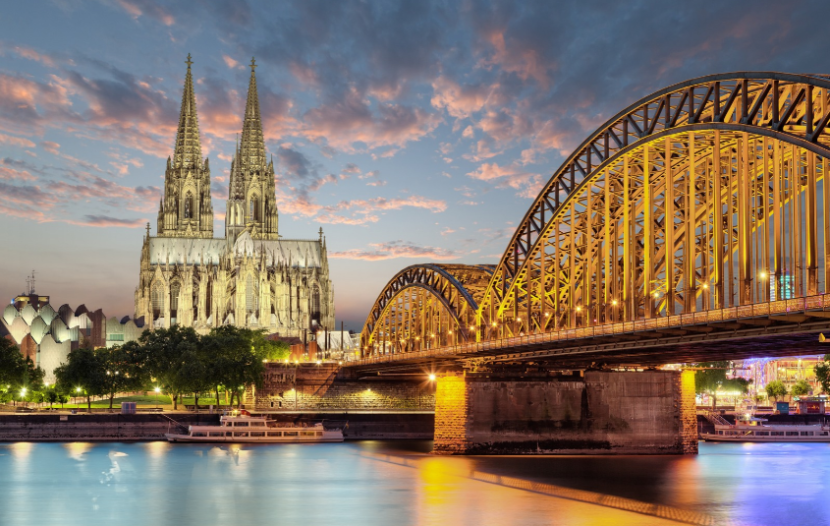
Lead image caption: Cologne, Germany
