






TORONTO — Canadians’ appetite for travel remains remarkably resilient, but where they’re choosing to go is changing rapidly, according to new research from Signal 49.
Speaking during yesterday’s Discover America Canada webinar, Jennifer Hendry, Senior Research Associate at Signal 49, formerly known for decades as the Conference Board of Canada, outlined how geopolitical tensions, economic considerations and evolving traveller preferences are reshaping Canadian outbound travel patterns, particularly when it comes to the United States.
“I’ve been analyzing travel data for 25 years and while a lot has changed over that time, one thing remains the same: tourism’s ability to endure,” Hendry said during the webinar. “No matter what shock is thrown at the sector, Canadians have a deep and lasting passion for travel and that makes the industry very resilient.”
OVERSEAS TRAVEL GAINS MARKET SHARE
According to Hendry, Canadian outbound travel fully recovered to pre-pandemic levels in 2024, reaching 33 million overnight outbound trips, matching 2019 volumes. However, the composition of that travel has shifted significantly.
While outbound travel totalled 30 million overnight trips in 2025, down 9% overall year over year, the decline was concentrated entirely within the transborder market.
U.S.-bound overnight travel dropped 21% last year, while overseas travel increased 10%.
“The important thing to note is that Canadians are still travelling in very large numbers,” said Hendry. “What changed is where they went.”
As a result, overseas destinations accounted for 47% of total outbound travel in 2025, up sharply from 39% the previous year.
Hendry noted that December 2025 marked a particularly significant milestone.
“For the first time ever outside of the pandemic period, the share of overseas travel exceeded transborder travel in a single month,” she said. “The shift is real and it’s significant.”
DESTINATIONS THAT ARE SURGING
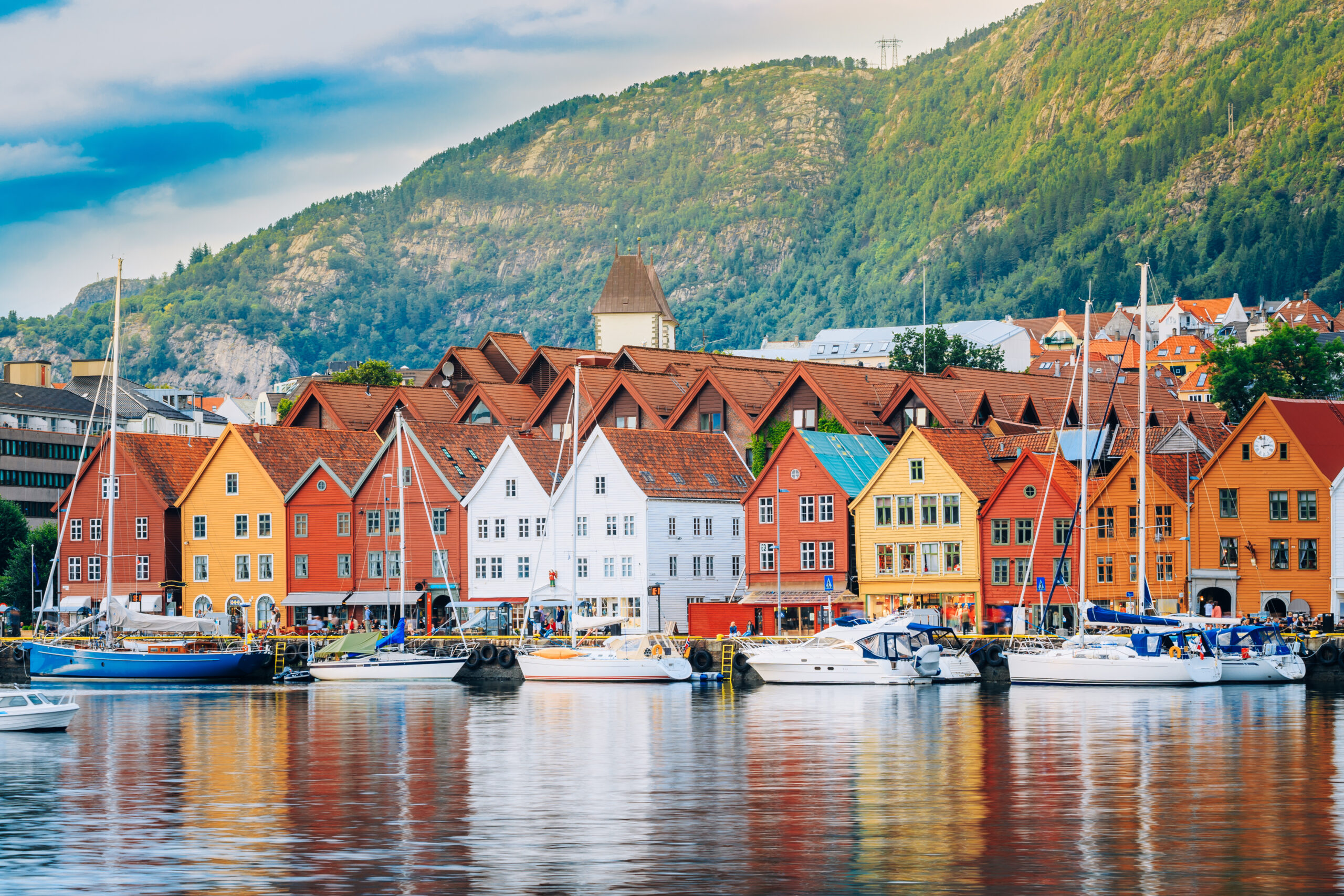
Bergen, Norway
The strongest gains in overseas demand were seen across Europe, Asia Pacific and alternative sun destinations.
According to Hendry, Canadians increasingly sought out emerging European destinations such as Cyprus, Norway and Finland, while Japan, the Philippines and Hong Kong recorded strong growth in the Asia Pacific region.
Even amid operational and geopolitical challenges affecting some traditional winter destinations, Canadians continued travelling abroad.
“Despite the fuel crisis in Cuba, violence concerns in Mexico and unrest affecting parts of the Caribbean, Canadians still travelled south,” Hendry said. “They simply chose alternate destinations.”
Costa Rica, Belize, Thailand and Indonesia all benefitted from shifting demand as travellers looked beyond more traditional vacation markets.
First-quarter data from 2026 continued to reinforce the trend. Overnight U.S. travel declined 14% year over year, with auto travel down 18% and non-auto travel falling 12%. At the same time, overnight travel to non-U.S. destinations increased 7%.
ECONOMIC CONFIDENCE IMPROVES
While affordability concerns and global uncertainty continue to influence travel planning, Hendry said Canadian consumer confidence has begun stabilizing.
According to Signal 49’s latest survey data, 68% of Canadians reported their finances were the same or better than six months ago, while 75% expected to remain financially stable or improve over the next six months.
“Global uncertainty and economic conditions are increasingly becoming more of a background concern,” Hendry said. “Canadians are beginning to feel more financially stable again.”
Travel intent also remains consistently strong. Seventy per cent of Canadians surveyed said they plan to take a leisure trip this summer, while outbound travel intent rose to 29%, up from 25% last year.
YOUNG CANADIANS DRIVING GROWTH
One of the clearest demographic shifts identified in the research was among younger travellers.
Hendry noted that Canadians aged 18 to 34 are increasingly driving outbound travel demand, including travel to the U.S.
“Older travellers are being influenced more heavily by geopolitics, while younger travellers are generally more adventurous and have access to far more destination options than previous generations,” she said.
Among Canadians planning U.S. trips this summer, 42% fall within the 18-to-34 age category, a significant increase compared to 29% in 2024.
Ontario, British Columbia and Quebec continue to generate the largest volume of U.S.-bound travel, though Hendry noted shifting regional patterns as Alberta and Prairie travellers account for a growing share of transborder intent while British Columbia weakens slightly.
CHANGING TRAVELLER BEHAVIOUR
The research also pointed to several evolving booking and travel behaviours among Canadians heading south.
Travellers are increasingly opting for direct flights to the U.S., likely due to improved air access and stronger airline capacity performance compared to cross-border auto travel.
At the same time, more Canadians are choosing hotels and resorts over private home rentals.
“We’re seeing fewer travellers planning to stay in private homes and more choosing hotels or resorts,” Hendry said. “That may partly reflect changing regulations around short-term rentals in some destinations.”
Repeat visitation is also increasing, with many travellers returning to destinations where they have established comfort levels, friends or family connections.
Safety also emerged as a growing consideration in destination choice.
“Safety wasn’t historically one of the top decision-making factors for U.S. travel, but it has moved up noticeably this year,” Hendry said.
Florida remains the leading U.S. destination for Canadians, followed by California and New York, though the collective share held by those three states has declined somewhat as travellers diversify their plans. Arizona and Alaska also entered the top five this year.
U.S. SENTIMENT REMAINS CAUTIOUS
Although negative sentiment toward U.S. travel has eased somewhat compared to last year, Hendry said caution remains elevated.
According to Signal 49’s quarterly sentiment tracking, 63% of Canadians surveyed in April said they were less likely to travel to the U.S. because of the current Canada-U.S. relationship, while 55% said they had chosen another destination instead.
That compares to 69% and 59%, respectively, one year earlier.
“A year ago emotions were much more reactive,” Hendry said. “That intensity has softened somewhat, but the sentiment is still substantial.”
Looking ahead, Hendry expects international travel demand to remain strong over the next several years, particularly for Europe and Asia Pacific destinations, while U.S.-bound demand is expected to remain below 2024 levels in the short term.
“Canadians are highly motivated and adaptable travellers,” she said. “The U.S. remains one of the closest and most accessible destinations for Canadians, and that market will recover eventually. It just won’t happen immediately.”
Lead image caption: Hikers in Zion National Park
