


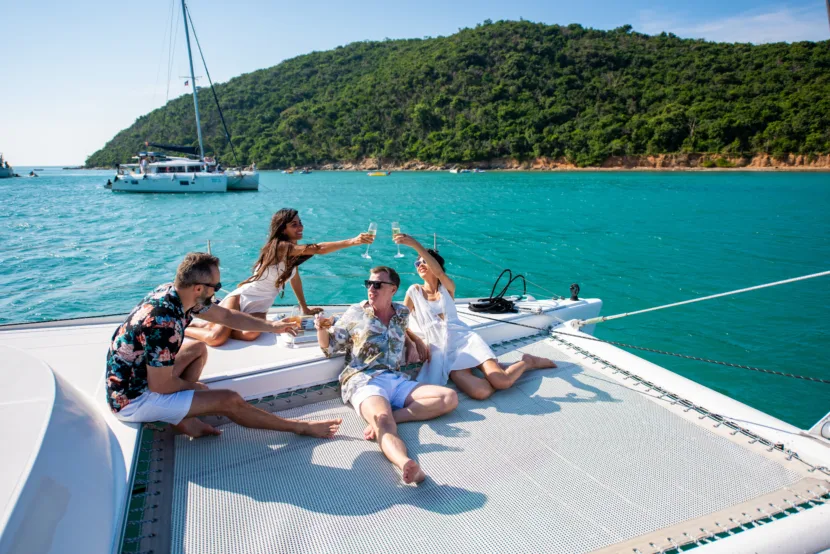
TORONTO — Forget the crowds, the queues and the sprawling decks. Micro-cruising brings travellers closer to the places they visit, with small vessels, fewer guests and a more intimate experience at sea.
Unlike conventional small-ship cruises that can still carry hundreds of passengers, micro-cruising generally refers to voyages aboard vessels accommodating around eight to 24 guests. The smaller scale can mean more flexibility, closer connections with the crew and access to destinations that larger ships can’t reach.
For experienced travellers seeking something different from traditional luxury cruising, the appeal is often as much about the journey as the destination. That’s a shift Vanessa Lee, President of Cruise Strategies Ltd., sees in clients who are ready to venture beyond the usual cruise routes and embrace a more immersive way of exploring.
“I really recommend micro-cruising or very small ship/yacht/barge cruising to experienced travellers seeking a particular experience – usually one that is up-close, in-depth and personal,” says Lee. “Potential micro-cruise guests are invariably those seeking a more bespoke experience overall and who want to journey further off the mainstream path.”
She sees the product as particularly well suited to experienced travellers with a strong interest in a particular destination, activity or style of travel. Potential experiences range from barge cruising through France and exploring the backwaters of Kerala in India to small-ship journeys in the Amazon, Nile, Scotland, Alaska, the Galápagos, Indonesia, Fiji, Tahiti and the Seychelles.
“It’s not for everyone, but for well-travelled individuals with a particular interest, or who yearn to see a certain region or country, I believe it’s ideal,” says Lee.
The trade-off is that travellers accustomed to larger luxury ships will need to give up some of the facilities and onboard choice that come with scale. Micro-cruising is not aimed at those looking for numerous restaurants, entertainment, a casino, spa or a busy onboard atmosphere.
“These cruises are so relaxed in some ways that they feel deliciously like slow motion at times,” says Lee.

A houseboat on the Canal du Midi, France
HOW TO SELL & POSITION A MICRO-CRUISE
Cheri Ozimac, Senior Travel Designer at Tully Luxury Travel in Mississauga, is also seeing growing interest, particularly among experienced luxury travellers who have already sailed on traditional high-end cruise lines and are looking for something different.
“I think there’s also a broader shift toward experiential and slower travel,” says Ozimac. “Clients increasingly want meaningful experiences rather than simply checking destinations off a list, and micro-cruising fits beautifully into that trend.”
She recommends the format to adventurous, well-travelled clients who want a more personal and destination-focused experience. It can also work particularly well for families, multigenerational groups and friends when they have the option of chartering an entire vessel.
Ozimac cautions advisors against positioning micro-cruising as simply a smaller version of a luxury cruise.
“I wouldn’t position micro-cruising as a replacement for Silversea, Crystal, Regent or Explora,” she says. “It’s an entirely different style of travel, and for the right client, that difference is exactly what makes it so special.”
The intimacy of a small vessel is one of the biggest selling points. With fewer guests, there can be more flexibility around the itinerary and more interaction with crew and guides.
“The biggest selling point is how personal the experience becomes,” says Ozimac. “With so few guests, there can be greater flexibility with the itinerary, closer interaction with the crew and guides, and a wonderful sense of freedom that you simply don’t get on a larger ship.”
That intimacy can also shape the social experience. Lee compares the appeal to a small-group African safari, where travellers may choose to add an even more specialized experience, such as gorilla trekking.
“It’s a bespoke experience that not everyone wants to do or can afford, but it delivers a phenomenal return on your investment and creates memories that will never pale,” she says.
For Lee, the small number of guests is also part of the luxury. A barge carrying just a handful of passengers, a gulet in Turkey, a catamaran in Fiji or a small riverboat on the Nile can attract travellers who share particular interests and outlooks.
“As we narrow down the choices and choose these smaller ships, we also narrow down the potential guests,” she says. “Either to specific interests: nature lovers, culinary adventurers, photographers, natural explorers, animal lovers, and so on or to a mindset and a certain outlook on life.”
MATCHING THE RIGHT CLIENT TO THE RIGHT ITINERARY
Both advisors stress that destination is a key part of the equation, with islands, wildlife and remote coastlines particularly well suited to micro-cruising.
Ozimac highlights the Galápagos, including 16-passenger yachts such as Aqua Mare by Aqua Expeditions, as well as Croatia and the Greek Islands for yacht-style cruising. For more adventurous travellers, she recommends Raja Ampat and Komodo in Indonesia. Scotland and the Hebrides, French Polynesia and Alaska are also strong fits for smaller vessels.
Lee points to Pandaw Cruises for sailings along the backwaters of Kerala, India, as well as Aqua Expeditions for the Indonesian Archipelago, Bali and the Spice Islands. In Europe, she notes that the Hebridean Princess sails in Scotland alongside other very small vessels. One standout, however, is French Country Waterways, which offers small-barge sailing in four regions of France, including Burgundy and Champagne.
“It’s perfect for foodies or Francophiles,” says Lee, recalling a trip where she sailed with six other guests. “We enjoyed every minute. It was an extremely harmonious adventure, and we also loved our crew.”
SETTING EXPECTATIONS
Travel advisors should be upfront about both the differences and the benefits of micro-cruising. Cabins can be smaller, onboard facilities are limited and entertainment is generally centred on the destination itself. Smaller vessels can also have more movement at sea, while some itineraries are more active.
Still, Lee expects the segment to see some growth while remaining highly niche — something she believes may ultimately be part of its appeal.
“When you’re on one of these trips, you don’t want to run into too many other ships or yachts doing the same thing,” she says.
For clients who fit the profile, she says the rewards can extend well beyond a traditional vacation.
“These trips can also be life-affirming and perhaps even life-changing,” says Lee.
Got a story idea? Contact us at cindys@travelweek.ca.
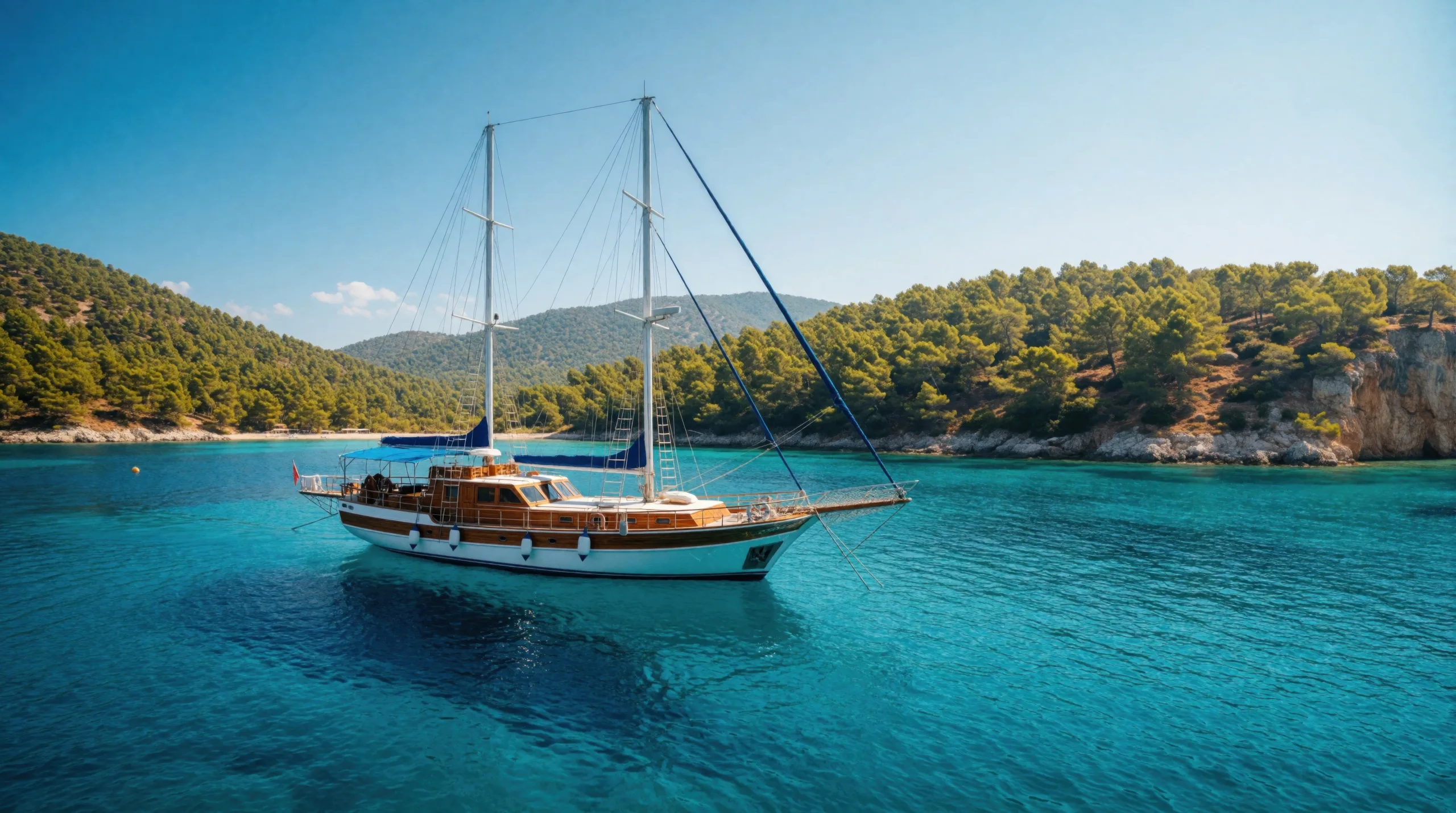
A wooden gulet boat offers an intimate cruise experience
