


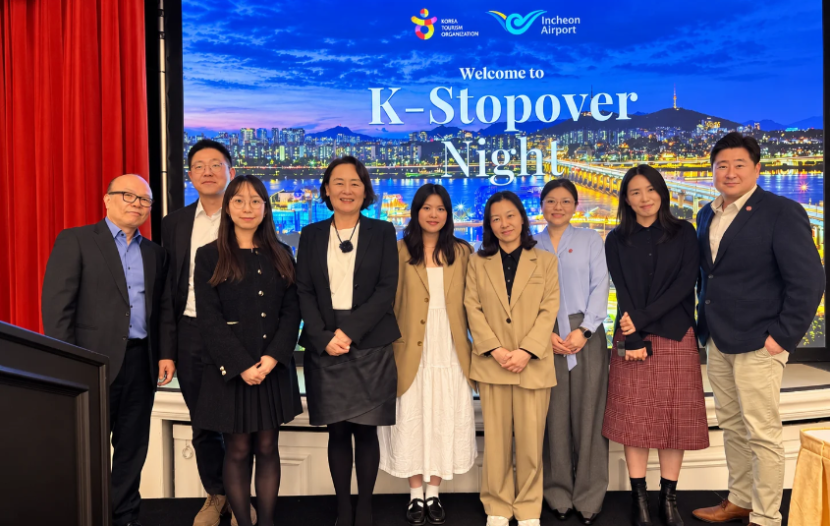
TORONTO — Why should clients visit just one country when they’re already flying halfway around the world? Korea Tourism Organization (KTO) is giving Canadian travel advisors more reasons to build a stopover in Korea into their clients’ next trip to Asia.
That was the message at K-Stopover Night, hosted by KTO and Incheon International Airport at Toronto’s Fairmont Royal York, where reps from Air Canada and Korean Air joined tourism officials to share airline developments, itinerary ideas and support programs for the trade.
The night brought prizes to many lucky advisors. Giveaways included air tickets with Air Canada and Korean Air to Korea, along with AirPods, Korean beauty and skincare products and Korean lanterns. Every guest also received a YETI gift from the KTO.
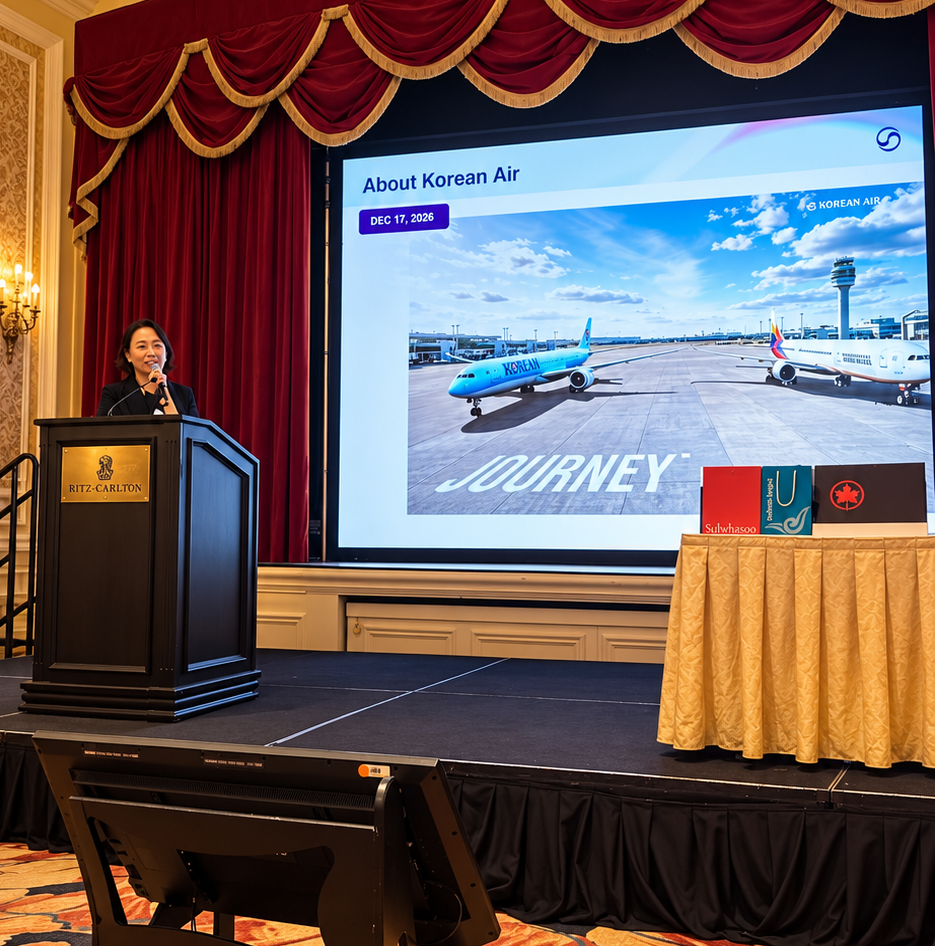
Korean Air’s Heather Ro
“GATEWAY TO ASIA”
For Youna Oh, Director of KTO’s Toronto office, the opportunities go well beyond travellers whose final destination is Seoul.
“I believe Incheon is not just the gateway to Korea, but also the important gateway to Asia,” said Oh.
With Japan, Hong Kong, China and Taiwan all within reach, KTO sees opportunities for advisors to build Korea into multi-country itineraries, while continuing to promote it as a destination in its own right.
KOREAN AIR & ASIANA: ONE AIRLINE AS OF DEC. 17
One of the evening’s biggest updates came from Korean Air’s Heather Ro, who confirmed that the integration with Asiana Airlines is scheduled for Dec. 17.
Korean Air first announced its plans to acquire Asiana in 2020. Come mid-December Asiana’s OZ flight code will transition to Korean Air’s KE code and the carrier will cease independent operations. The two carriers have served many of the same destinations for years, and Korean Air says the combination will give passengers more flexibility when connecting through Seoul.
Rather than reducing frequencies on overlapping routes, the airline plans to adjust departure and arrival times into different connection banks, creating additional flight options and shorter transit times.
“Korean Air will not reduce its frequencies,” said Ro.
KOREAN AIR PERK
Korean Air first launched Toronto service on Nov. 2, 1988, with two weekly flights. Today, the carrier operates daily service using the Boeing 777-300ER.
Vancouver has also become an important gateway, with twice-daily service to Seoul offering daytime and nighttime departure options.
On the Toronto flights Korean Air’s business class offers seating designed for privacy, including middle seats suitable for couples and arrangements that provide separation between passengers. In economy, passengers can purchase extra legroom seating with a 36” pitch for an additional $150.
There’s another perk for passengers who like to catch up on their favourite K-dramas while flying. Korean Air says its Toronto service includes complimentary high-speed WiFi, allowing passengers to stream content during the flight. Last month Korean Air became the first full-service carrier in East Asia to begin offering SpaceX’s Starlink satellite system, with a free high-speed Internet rollout now underway.
The airline also refreshed its branding, in 2025, and made changes to its onboard dining and lounge offerings.
At ICN, passengers can choose from several lounge experiences, including Prestige lounges with relaxation and entertainment facilities and a garden lounge overlooking Korean-style and Western gardens.
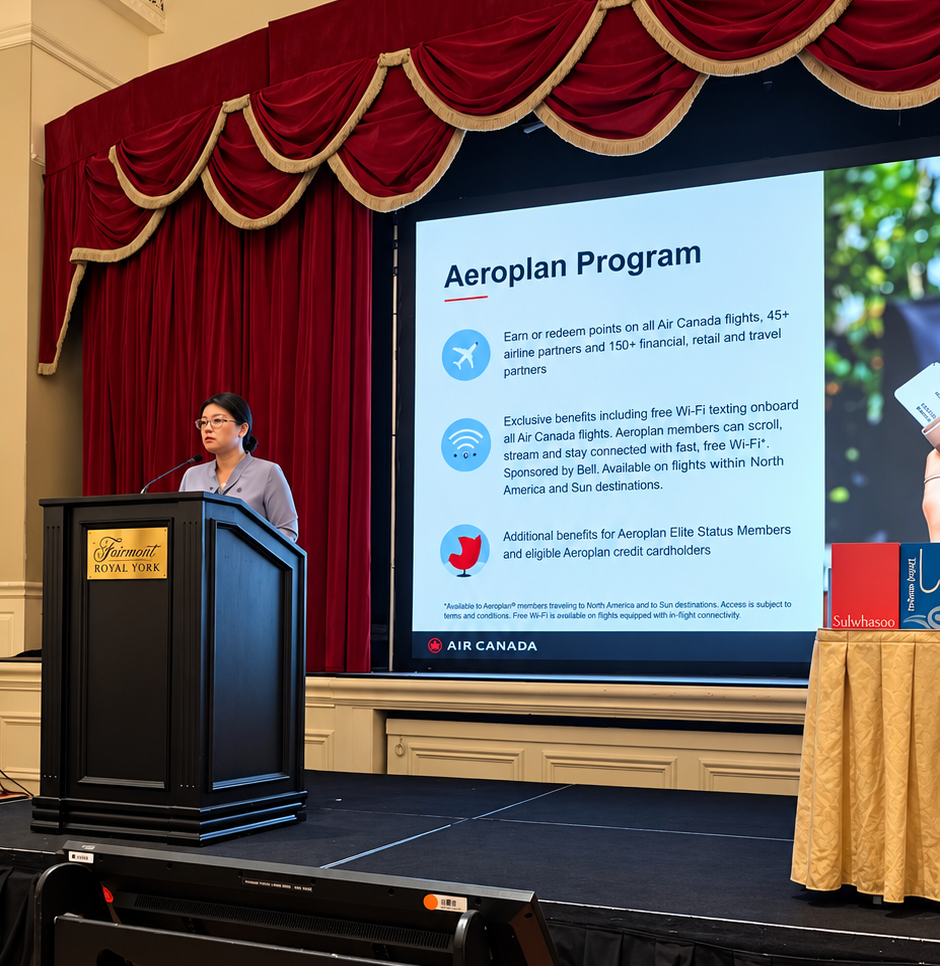
Air Canada’s Maria Lu
MULTI-CITY TRIP IDEAS WITH AIR CANADA
Air Canada’s Maria Lu had another message for advisors: a trip to Korea doesn’t have to begin and end in the same place.
With an extensive Asia-Pacific network and airline partnerships, Lu encouraged advisors to consider multi-destination itineraries that use different gateways for the outbound and return journeys.
Clients could begin with a stopover in Korea, continue to Japan and return to Canada from Tokyo or Osaka without backtracking through Seoul.
Another option is to combine Korea with Thailand, using Air Canada’s nonstop Bangkok-Vancouver service for the return journey.
The airline also highlighted its daily services to Shanghai and Beijing, along with a newly announced nonstop route to Guangzhou, scheduled to launch in May 2027. The Guangzhou addition will give Air Canada service to three major Chinese gateways.
For advisors piecing together more complex itineraries, Air Canada said its interline partnerships can help connect passengers to destinations throughout Asia, with through-checked baggage available on eligible same-day connections.
And then there’s Aeroplan. Lu told advisors to look beyond flight redemptions when discussing the program with clients, pointing to partnerships with Marriott Bonvoy, IHG and Hertz. There’s also Aeroplan Family Sharing, which allows families and households of up to eight members to pool their points for redemptions.
FROM SEOUL’S PALACES TO INCHEON’S SPAS
Korean Air and Air Canada can get travellers to Korea. The question is, what they can do once they’re there?
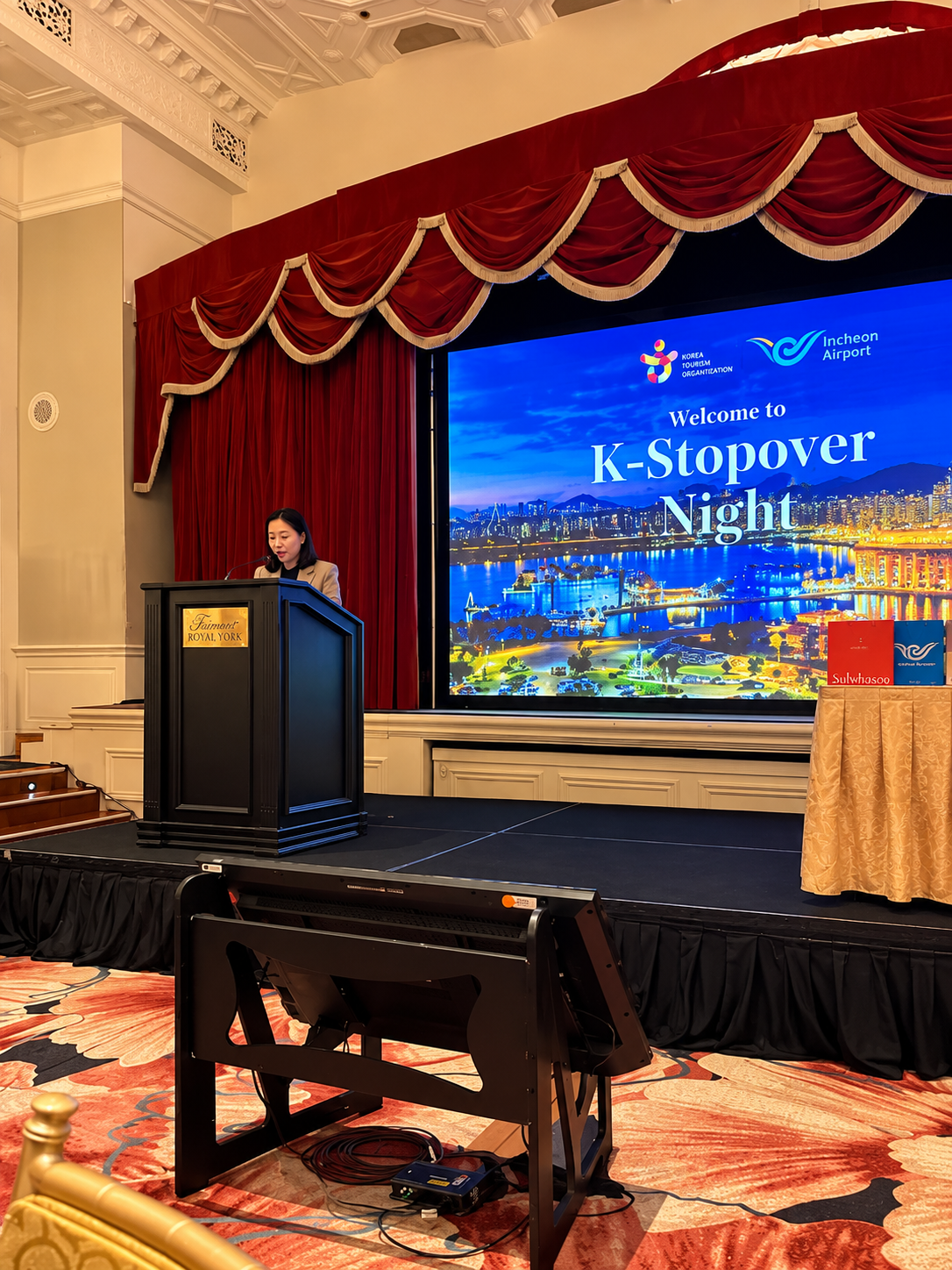
Youna Oh, Director of KTO’s Toronto office
KTO has plenty of suggestions, including itineraries for clients with only a short stopover and those who can spend several days exploring.
For first-time visitors to Seoul, KTO suggests starting at Gyeongbokgung Palace, the largest of the city’s five royal palaces.
From there, travellers can explore Insadong, known for its traditional craft shops, galleries, cafés and restaurants, before continuing to Bukchon Hanok Village to see traditional Korean houses.
It’s an itinerary that introduces visitors to several of Seoul’s best-known cultural attractions without requiring a trip outside the capital.
For clients who have only a few hours or an overnight stay, Incheon itself offers several possibilities.
At Songdo Central Park, visitors can enjoy the waterfront and take moon boat rides during warmer weather. Wolmido Island offers amusement park attractions, while Paradise City’s CIMER spa provides a Korean sauna and wellness experience.
For clients with more time, KTO is also encouraging travel beyond the main gateways.
Autumn brings yellow ginkgo foliage to Hongcheon and Jeonju, where visitors can combine seasonal scenery with traditional Korean architecture and hanbok experiences.
Jeju Island offers a different seasonal attraction, with camellia flowers blooming toward the end of the year and into winter.
KTO also reminds advisors that Canadians can visit Korea visa-free for stays of up to 180 days. The current exemption from the Korea Electronic Travel Authorization (K-ETA) remains in place until the end of 2026.
Direct air service connects Korea with Vancouver, Calgary, Toronto and Montreal.
GROUP TRAVEL
For advisors working with groups, KTO continues to offer support programs for corporate meetings, incentive travel and conferences.
Depending on the type of group, assistance can include conference funding or a complimentary experience added to an itinerary, such as hanbok rental or a Han River cruise. Similar support is available for special-interest groups, including student travel, vegan tours, art-focused itineraries and music groups.
KTO encourages advisors planning these types of trips to contact its office about available assistance.
For Oh, the evening was opportunity to recognize the travel partners who continue to bring Canadian visitors to Korea.
And with new airline connections, more itinerary possibilities and continued trade support, KTO hopes advisors will find additional ways to introduce their clients to Korea.
“At KTO, we will continue to promote Korea as a solo destination as well as a part of the multi-destination travel packages,” said Oh.
For more information about travel to Korea, click here.
Lead image caption: Sam Park, Korean Air; Dae Chul Jung, Korean Air; Jeong Hyun Bae, Incheon International Airport Corporation; Heather Ro, Korean Air; Hillary Nguyen, Korea Tourism Organization; Youna Oh, Korea Tourism Organization; Maria Lu, Air Canada; Seon Hui Yi, Korea Tourism Organization; Deejay Lee, Air Canada (main photo courtesy KTO; inset photos courtesy Michelle Zimmer)
