





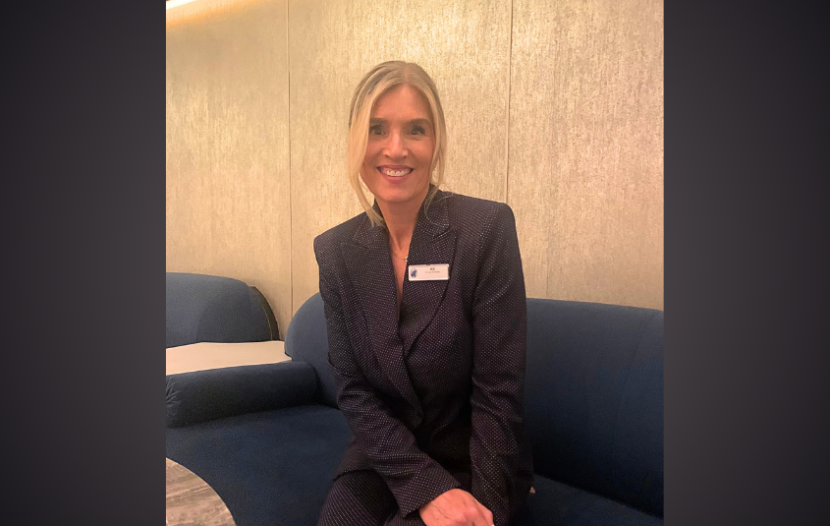
ONBOARD OOSTERDAM — KK Robbins is emphatic in her endorsement of Holland America Line’s decision to go year-round in Europe in 2027-2028.
“From a business standpoint, I think what’s so clever about it is that you’re going to have happier guests,” said Robbins.
Robbins knows about guest happiness. She was the Cruise Director onboard Oosterdam on a recent sailing, and she’s privy to the ins and outs of every itinerary, and what guests want.
“Europe — and particularly the Mediterranean — is my specialty. I’ve been all around the world, but that’s the region I focused on when I was working on land, curating trips for clients. I just love it,” she told Travelweek in an interview.
Not surprisingly, with Europe’s rising temperatures, “one of the biggest complaints we receive during the summer season is about the heat.” Yes, she hears about it. “Guests know they can’t blame you because it’s hot — but they sort of blame you anyway!”
With year-round Europe cruising, “you may not necessarily be going to the beach, but that’s already true when we sail in April or October. You can also adjust itineraries to include some of the more southerly islands, such as Crete.”
Most importantly, she added, you’re not going to have the same crowds.
“Look at somewhere like Santorini or Venice. When we visit in April or May compared with June, July or August, the guest experience is night and day.”
LIGHTNING ROUND Q&A
Talking to Robbins about the how’s and why’s of programming was like peeking behind the staff door. She said the summer conditions even impact how she schedules each day onboard.
“If guests have spent an entire day visiting Rome from Civitavecchia or touring Provence from Marseille, I know the ship needs to be relatively quiet that evening,” she said.
“You don’t want to schedule the one game show they really want to see that night, because then they come back exhausted but feel like they’re missing something.
“You have to understand each port when you’re programming. Maybe there’s another port where guests tend to come back onboard around noon. Then we need more afternoon activities.”
We had a bit of fun with a lightning round with Robbins. Most surprising aspect of her job? “There’s so much more administration than anybody could ever imagine.” Biggest misconception? “People think I’m essentially the hotel general manager. They think I’m in charge of everything onboard. And they think I hand-pick the entertainment! If they’re fantastic, I get full credit. If they’re not, people ask, ‘How did you choose these people?’” Most rewarding part of her work? “The crew. This role gives me an opportunity to connect with them. It’s an honour and a responsibility at the same time.”
OLDER SHIPS, CLASSIC DESIGN
Robbins said she loves Holland America’s Vista class vessels, including Oosterdam, and she’s looking forward to Holland America Evolution, the six-ship renovation project starting with Oosterdam in fall 2027. To accommodate Oosterdam’s earlier-than-expected dry dock, several previously published Oosterdam sailings between Sept. 11 and Dec. 9, 2027, have been cancelled, and impacted guests and travel advisors are being contacted directly with rebooking options.
“We have our larger Pinnacle-class ships — Koningsdam, Nieuw Statendam and Rotterdam. They’re gorgeous. But what you lose on the Pinnacle-class ships is that traditional promenade deck with the loungers and that wonderful open space. That’s something our guests really miss,” she said.
“On these ships, you can walk around Deck 3 and you have those old-fashioned steamer chairs. People absolutely love them. I love walking around that deck because you can look directly out at the ocean and get that fantastic view. You don’t have quite the same thing on the Pinnacle-class ships because of the placement of the lifeboats.
“I think it’s special that Holland America is putting this investment into ships that still retain some of that older design our guests love.”
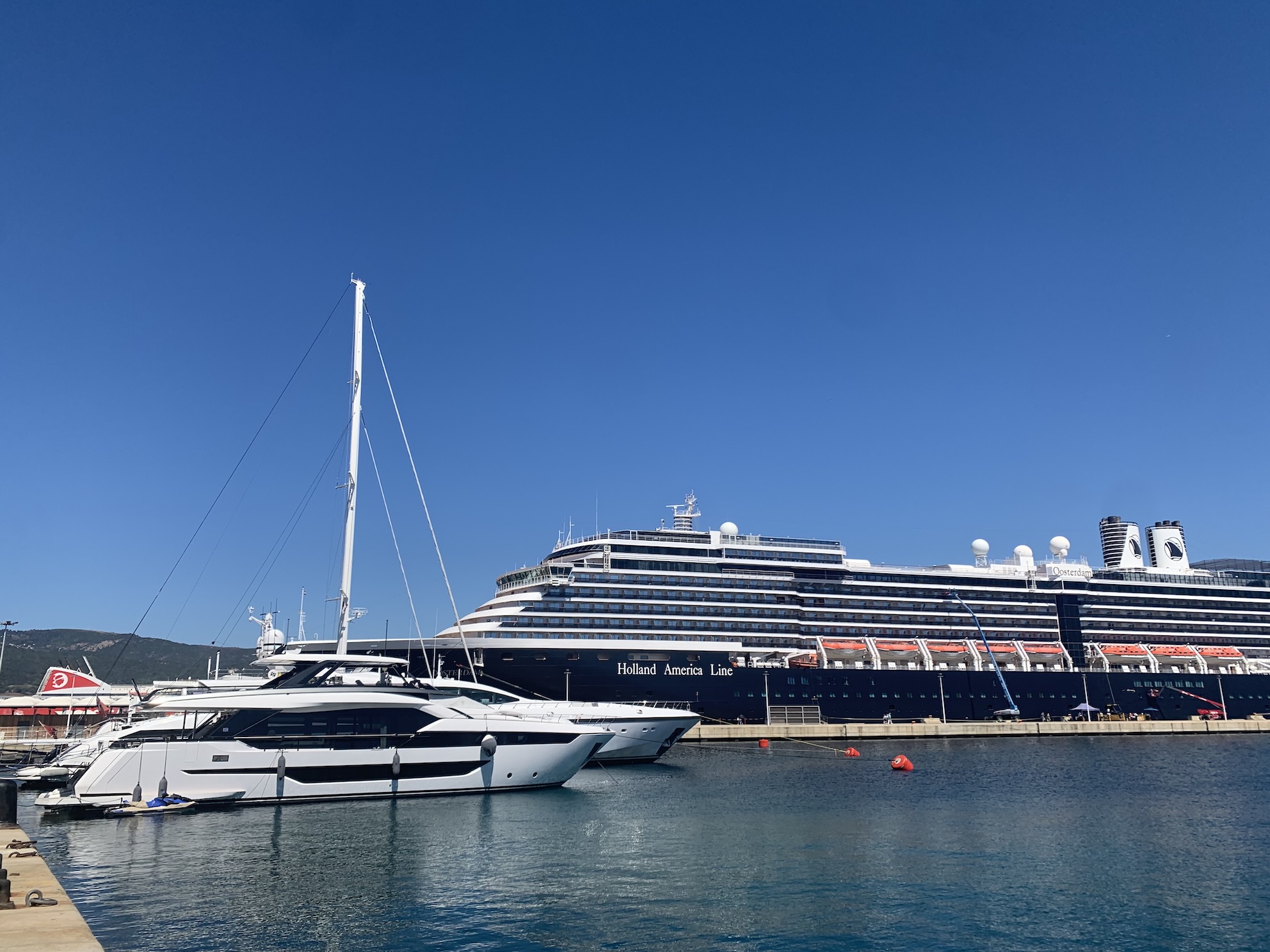
Holland America Line’s Oosterdam at Corsica’s pier
PORTOFINO, CORSICA AND MARSEILLE
On this recent trip, Oosterdam’s seven-night Western Med swing got right into the ports of call with Portofino, Corsica and Marseille, one right after the other. It got the cruise off to a strong start with good momentum, saving the two at-sea days for later in the week.
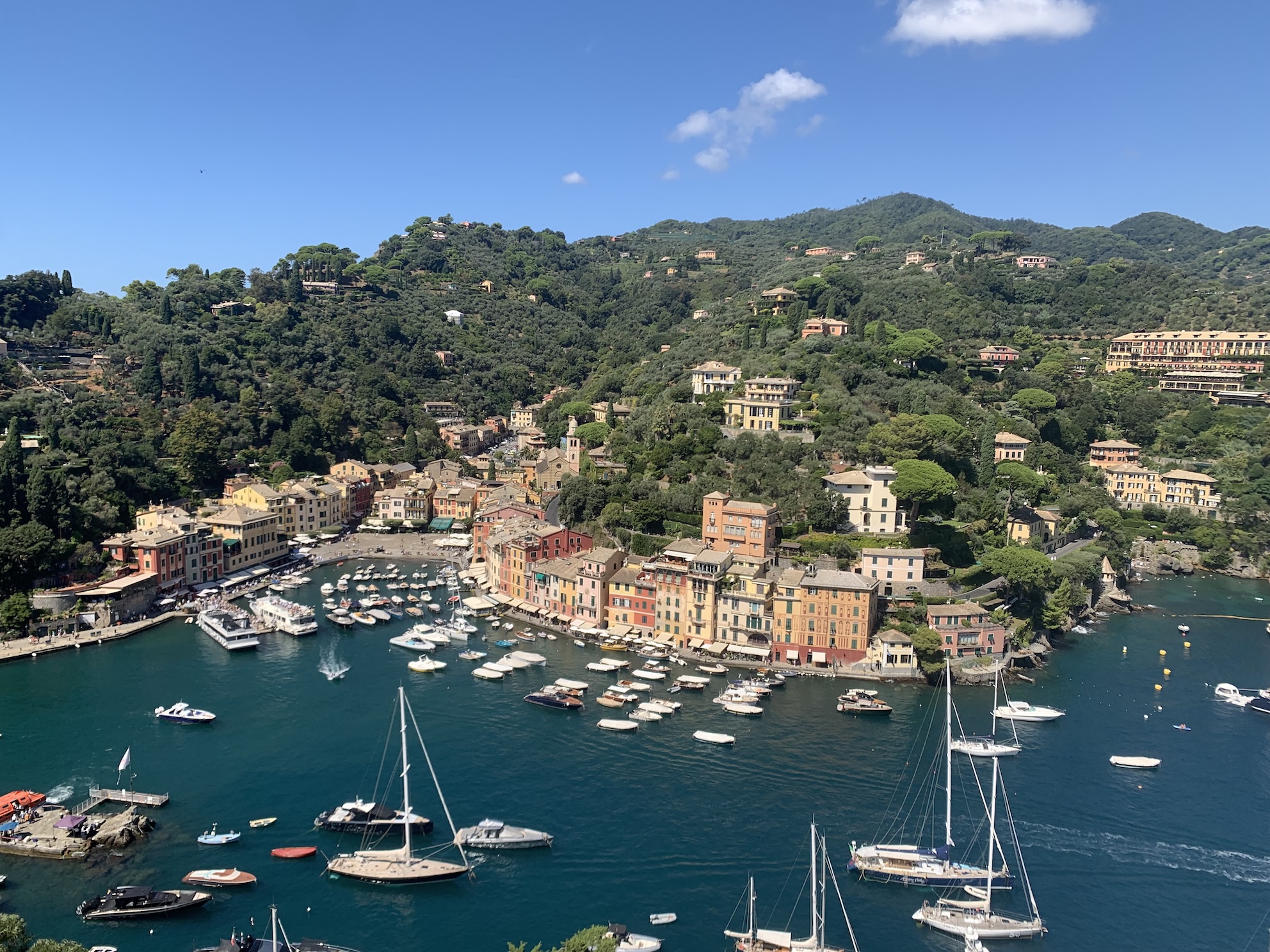
Portofino, Italy
As a Vista-class ship, at 82,000 tons and with 1,964 passengers, Oosterdam is a good size for Portofino. While 3,000+ passenger mega-ships may have to anchor at nearby Santa Margherita Ligure and shuttle or ferry passengers in (or dock at Genoa with an hour-long coach transfer), the mid-size Oosterdam is able to anchor right off Portofino, with just a 10-minute tender boat ride to get passengers to this beautiful Italian coastal town. There are gelaterias and shops aplenty, and easy independent sightseeing. Bonus: it’s impossible to take a bad photo here. Clients with mobility issues will want to stay sea-level. Popular sites like Castello Brown involve steep stairs and paths (with rewarding views).
“Portofino is a very coveted port. It can be tough to get spots so when we saw it, we grabbed it,” said Robbins.
Corsica is next. It’s the Med’s fourth largest island, and while it’s part of France, its proximity to Italy makes for a lovely mix of both cultures and influences. It’s the easiest and most accessible port entry on the itinerary: walk along the pier and out through the port gates and you’re in Ajaccio, the capital.
Most visitors know Corsica as the birthplace of Napoleon Bonaparte, in 1769. His childhood home is now a museum, plus visitors can see the cathedral where he was baptized.
Corsica gets 300 days of sunshine a year, and Corsicans live longer than anyone else in France. Says local tour guide Anna: “If I tell you that Corsica has a population of 350,000, but during July and August we have 3 million people here, you’ll know what our main industry is. But we’re not overwhelmed with tourists.”
If it’s Tuesday, it must be Marseille. It’s France’s second-largest city, and a quick 10-minute shuttle ride takes passengers from the pier to the city drop-off point. From there an open-air 20-minute trolley train trip is a fun way to get up to Notre-Dame de la Garde (or a cab or the #60 city bus will get you there too). Marseille’s Le Panier district is a good option for lunch, but visitors daunted by hills and cobblestones can dine along the sweeping avenue lining the Old Port and never get bored of the scenery.
-
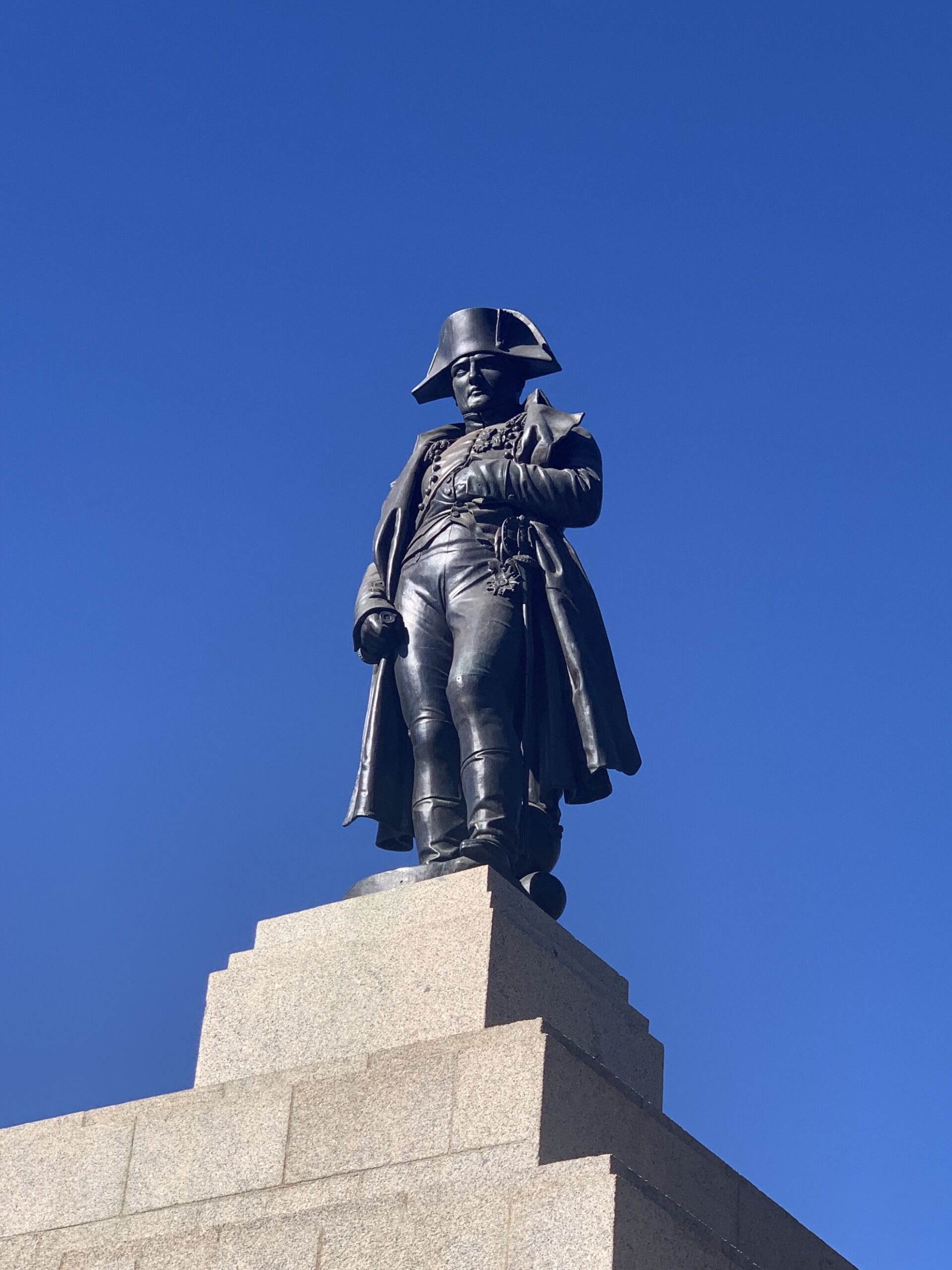
- Napoleon Bonaparte statue at Place d’Austerlitz, Corsica
-
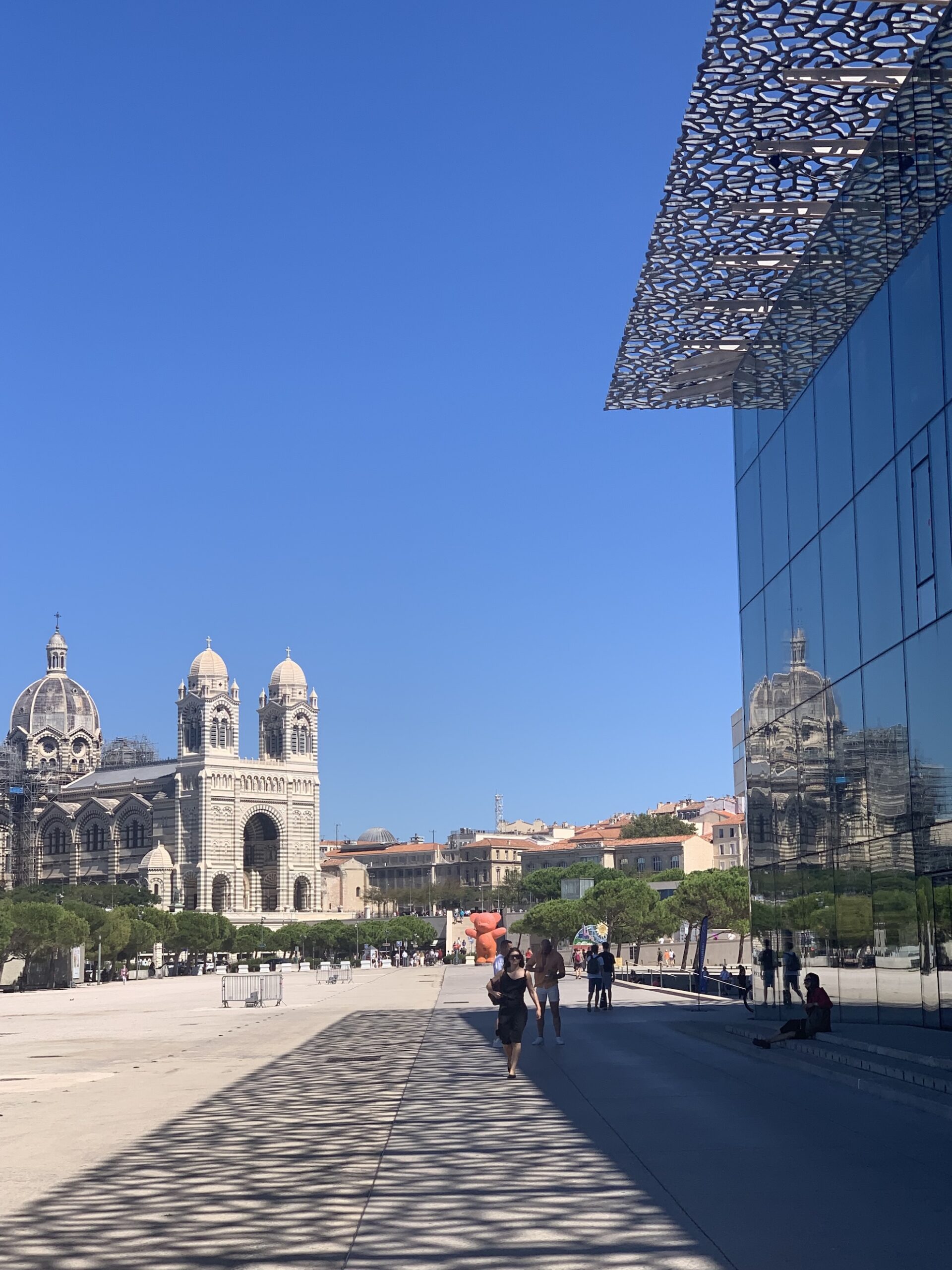
- Marseille, France
GIBRALTAR & BARCELONA
The fourth port of call is Gibraltar. It’s very safe (“just one murder in the past 10 years,” was the cheerful take from tour guide Tony). It’s also a little piece of England in southern Europe, a British overseas territory measuring 5.6 kilometres long and 2.4 kilometres wide at the very southern tip of Spain’s mainland. On a clear day you can see Morocco. “We fought the colonists in the American Revolution at the same time we were fighting the Spanish. We lost America and gained a piece of land smaller than Manhattan,” joked Tony.
Overall Gibraltar is compact and easy to navigate on foot, but a trip up the Rock of Gibraltar is definitely best by bus or taxi. The journey is extremely steep with uneven pathways, and it’s a long climb to reach the summit. Downtown Gibraltar is popular, with its Mediterranean vibe and UK high street shops (including an M&S). Palm trees and pubs make for an unbeatable combination.
Last stop: Barcelona. While this city has pushed back on overtourism, the welcome is warm and in keeping with Barcelona’s reputation as one of the top cities in the world. Even just a day here is special.
-
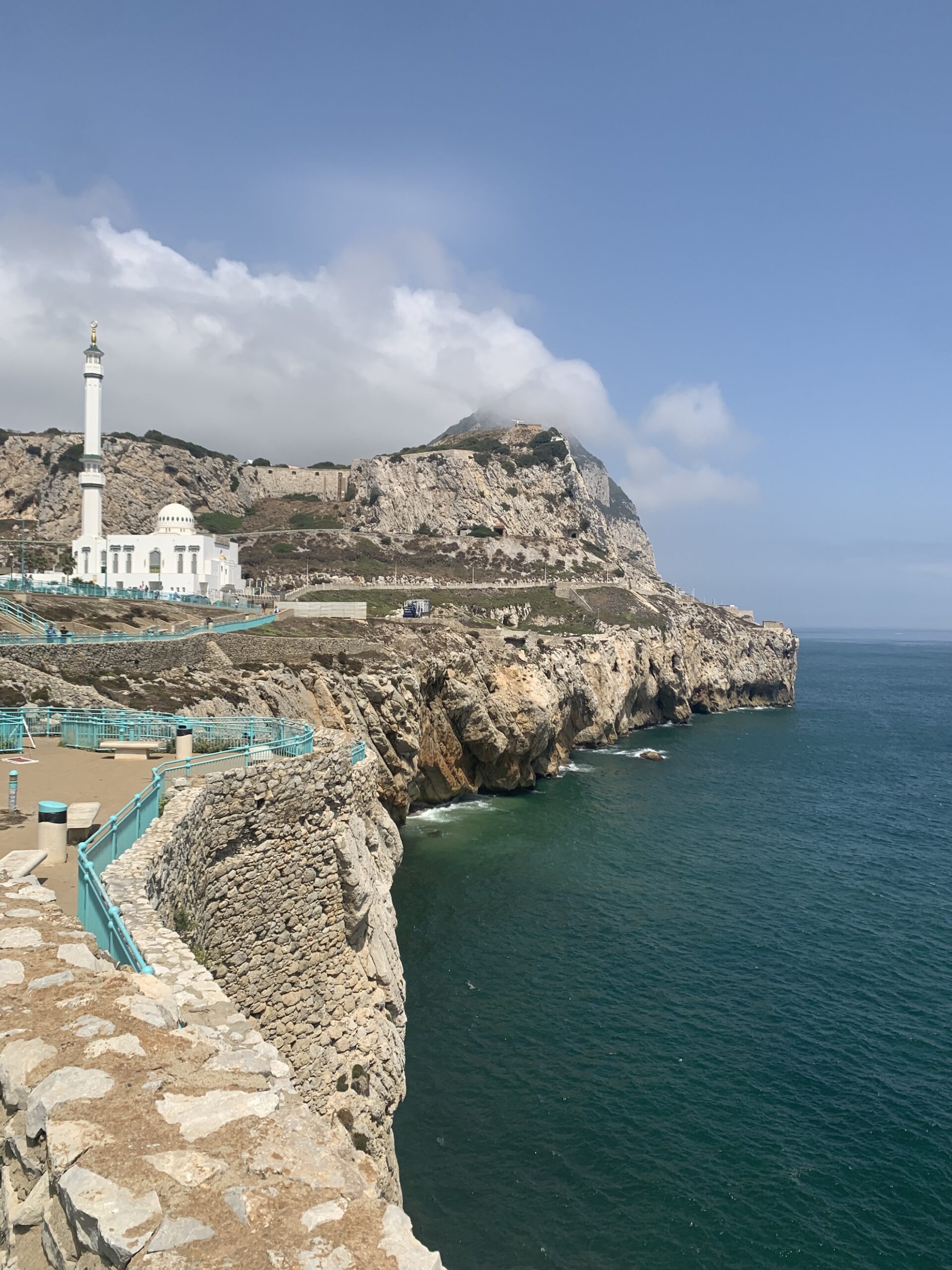
- The Rock of Gibraltar
-

- One of Gibraltar’s famous Barbary macaques
-
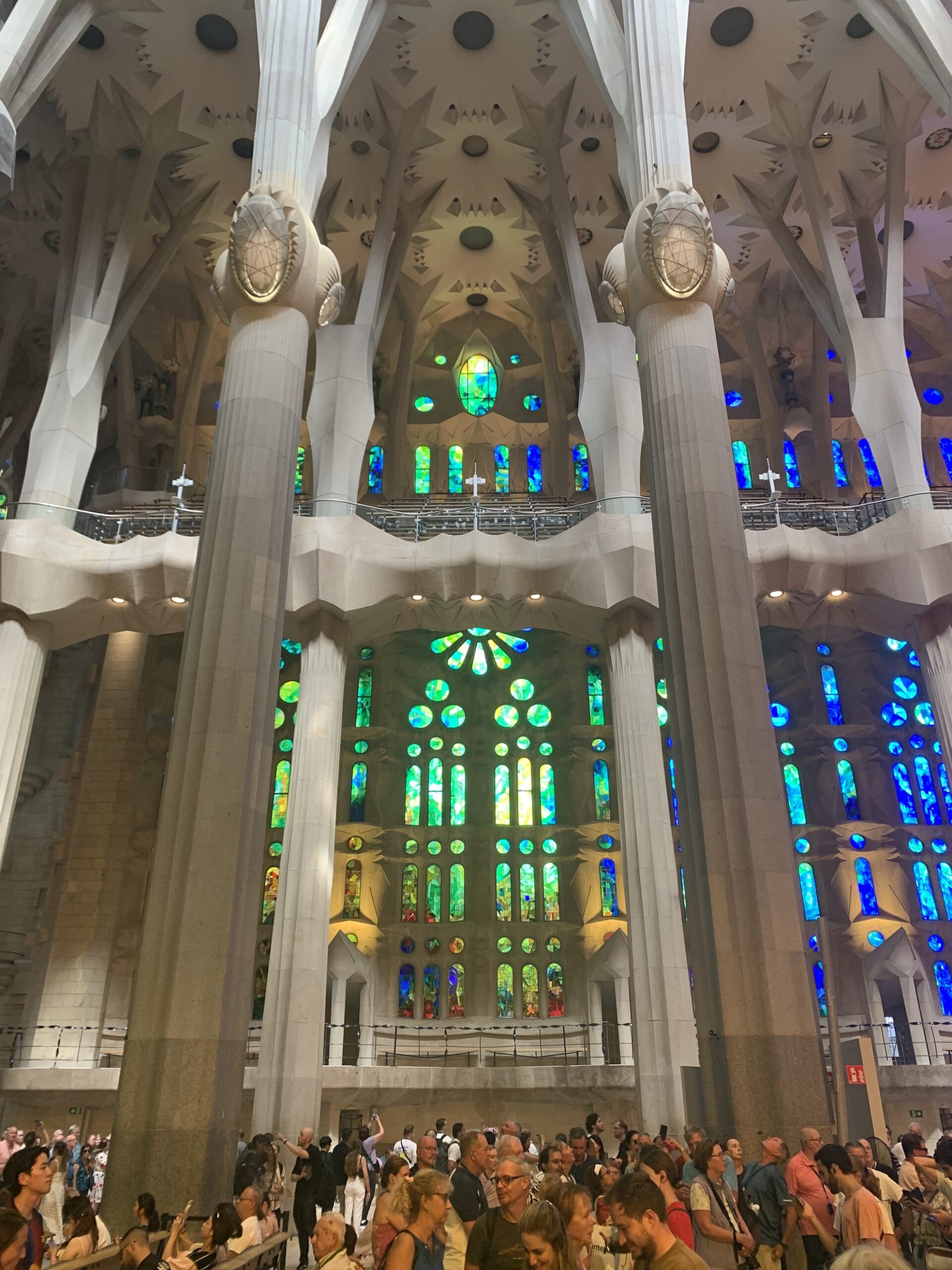
- Sagrada Familia in Barcelona
Watch for wrap-up trip coverage in Travelweek Daily: An interview with Rob Coleman, Holland America’s SVP, North America & Australia Sales
Lead image caption: KK Robbins, Cruise Director, Holland America Line
