





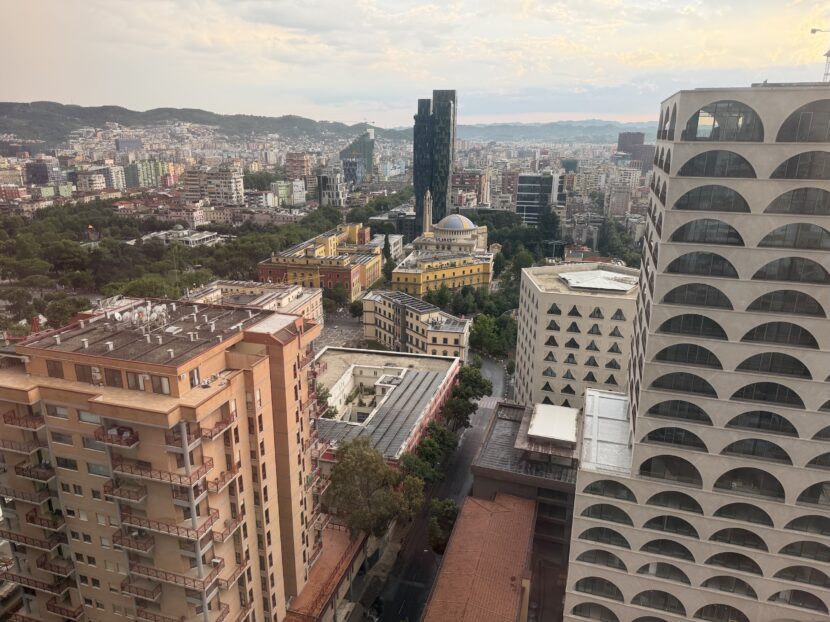
TIRANA — Landing in Albania’s capital and riding into the city centre, Tirana is unrecognizable from the place I visited more than a decade ago. In a very good way.
“These buildings, all new,” my driver, Aldi, says, waving his hand to the incipient skyline ahead. Glassy, modern skyscrapers rise on the horizon, many of them still under construction.
The transformation is almost unbelievable when I walk over to Skanderbeg Square, just a couple of blocks from my hotel.
When I was here in 2014, the statue of the namesake national hero astride his horse was surrounded by dirt and shabby grass and a maze of streets and lots.
Today, the traffic rerouted and the parking sent underground, the square, tiled in stone from all corners of the country, is a gathering place and the beating heart of the city.
I (literally) can’t quite trust my own eyes. So I ask a passerby, showing them a photo from that first visit. Can this possibly be the same place? “A lot has changed here,” he says, indicating not just the new structures, and the square itself, but also the little parks and food carts and other lovely features that have been installed around the edges. Busy – even on a weeknight – with young, smiling people.
Few countries have undergone such dramatic changes in the last few years as Albania. Once a pariah state ruled by an unstable dictator and isolated from both the West and the Eastern Bloc, development here has been swift, and sudden. As beaches become more crowded and expensive in places like Croatia and Italy, sun-seekers are heading further down the coast.
In just the last five or 10 years, restaurants and other tourist conveniences have started popping up everywhere, across the country.
Europeans have already started flocking here in big numbers – according to one report, tourism visits more than doubled between 2021 and 2025. But Albania is only just emerging as a destination for the North American market.
AIR TRANSAT’S NEW FLIGHTS
That’s about to change. The first direct flight connecting Canada and Albania, a weekly, seasonal route on Air Transat, started operating this summer between Toronto and Tirana.
Albania is a compact country with both mountains and the Adriatic and Ionian Seas. The capital is by far the largest city in this small nation of about 2.8 million people. Once tired and a little sad, my recent visit to Tirana revealed a newly optimistic and revitalized place, one surging into the future while still honouring its difficult past.
“The city stands as one of the most dynamic examples of urban transformation in the Balkans,” says Armand Ferra, founder and CEO of Fine Travel Albania DMC, a high-end agency that planned and carried out most parts of my trip. “Ultimately, Tirana is a city that cannot truly be described, it has to be experienced.” So, I do. On my first night in town, I just wander.
AL FRESCO DINING & UPSCALE SHOPS
Spending some time on Skandebeg Square, I walk past the Khrushchev-era National Theatre of Opera and Ballet, the National Library, plus the National Museum, adorned with a massive mosaic, covering 440 square metres. Completed in 1981, it is one of the last prominent and unapologetic representations of socialist realism in the city.
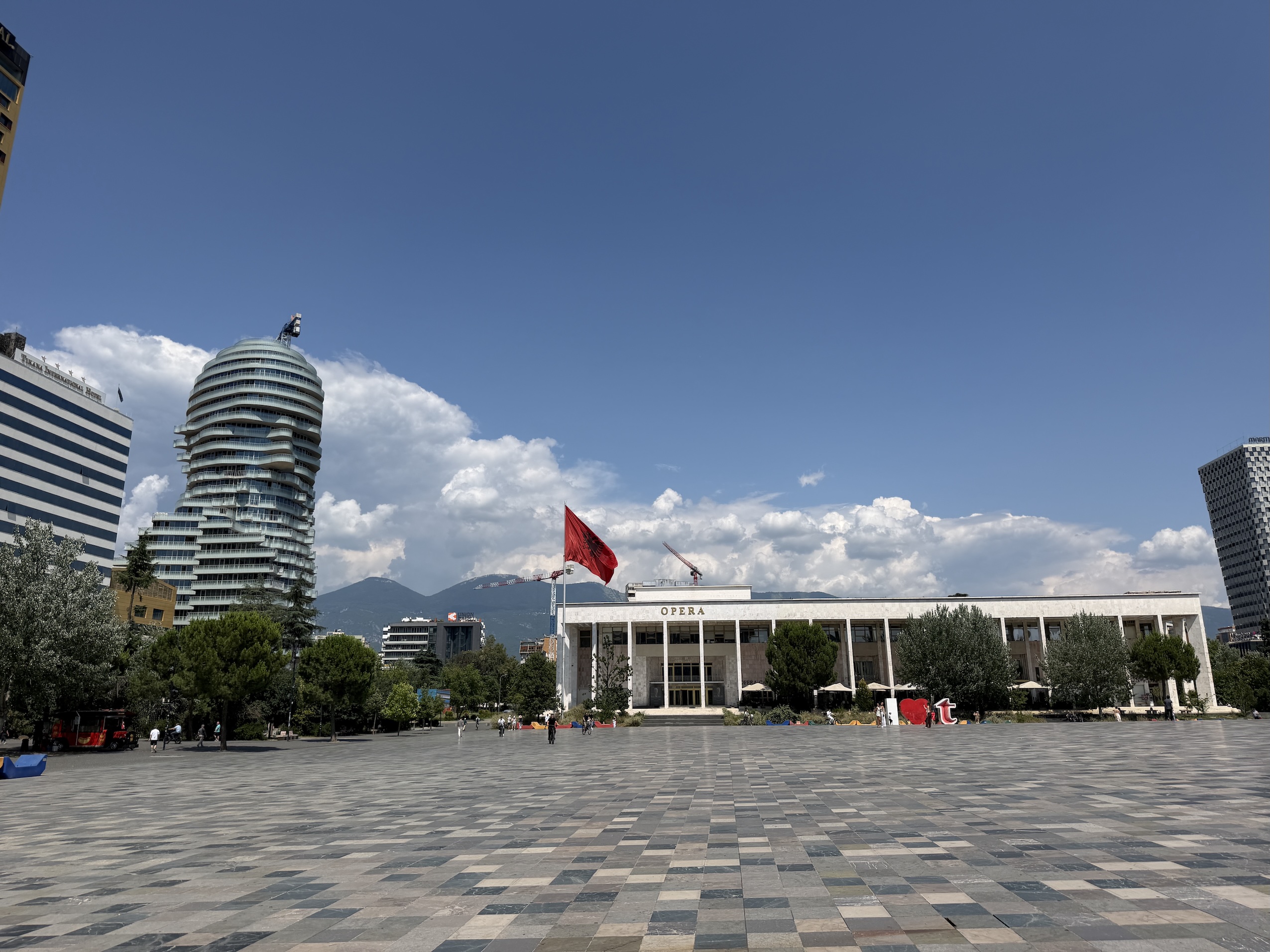
National Theatre of Opera and Ballet – Credit Tim Johnson
“You can see all the different stages of Albanian history,” Edjon Maliqaj, a guide with Fine Travel, shares with me, later. From an ancient Illyrian warrior, to those who battled the Ottoman Empire, to communist partisans in the Second World War.
It forms a sharp contrast to the lights of the newest buildings, coming up as a warm evening fades to inky night. The nearby Tirana Castle (formally the Fortress of Justinian) was, until recently, only a sixth-century Byzantine ruin. Originally constructed to protect Adriatic trade routes – east meeting west, north intersecting with south – in 2018 builders redeveloped and opened the area as a modern bazaar.
I make my way down the cobblestones of the serpentine Murat Toptani Street, the main, pedestrianized thoroughfare. Overhead, strings of white bulbs twinkle. To the left and right, upscale shops and restaurants and bars, bursts of laughter rising from al fresco tables packed with happy-looking patrons.
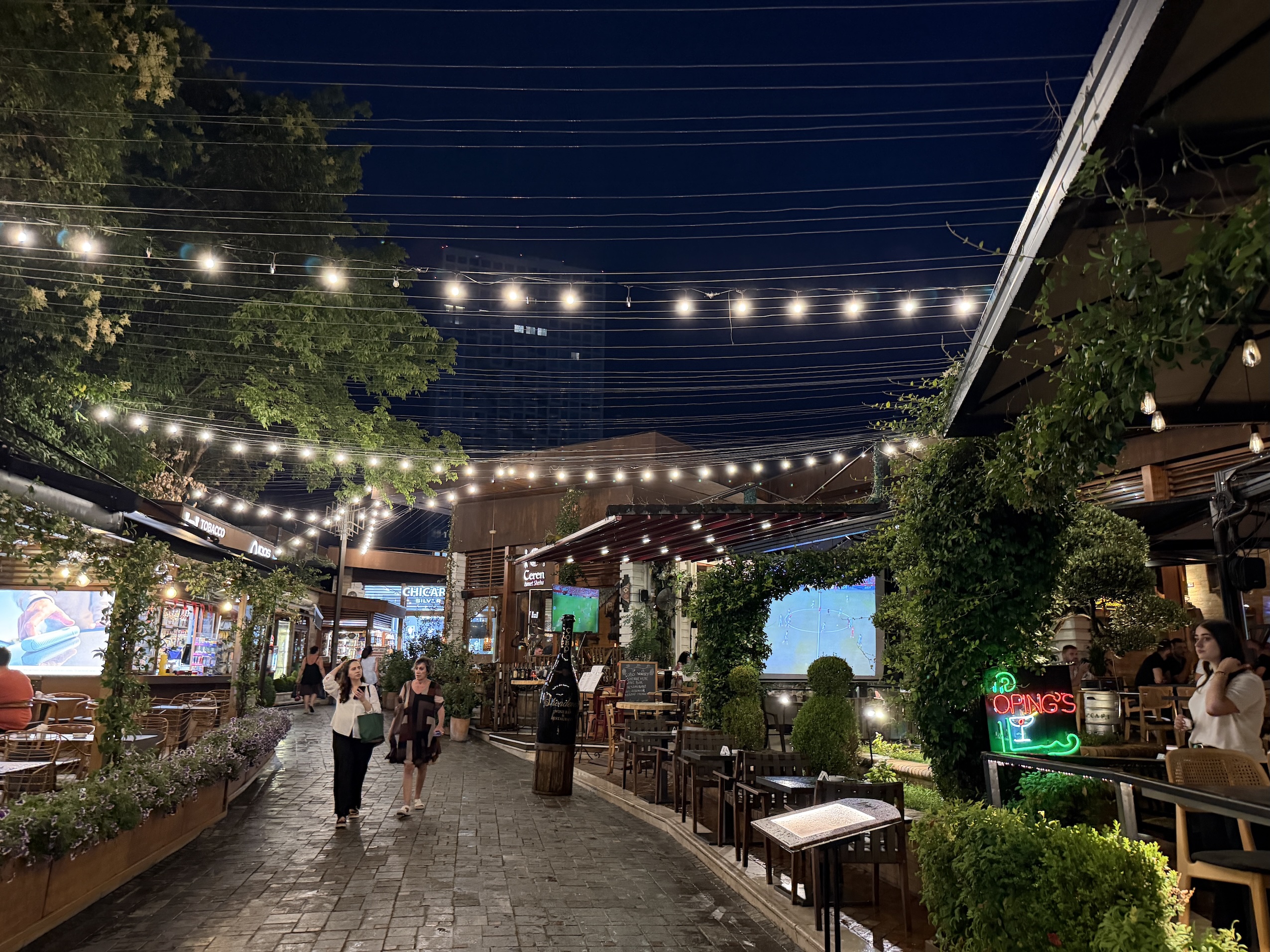
Murat Toptani street – Credit Tim Johnson
A TRIP BACK IN TIME
During my following three days in Tirana, I take a little time to learn about Albania’s darkest days. From 1944 until 1990, the country wasn’t just a communist state. Adhering to a strict Stalinist doctrine, most of that period was spent under the rule of a man named Enver Hoxha.
The House of Leaves, a stately brick villa draped in ivy, tells the story of Hoxha’s iron fist. The building was once used by the country’s secret police to interrogate supposed state enemies and spy on both Albanians and visitors. Opening as a museum in 2017, it now, room-by-room, tells the story of how the regime used propaganda, surveillance and brute force to subjugate his nation.
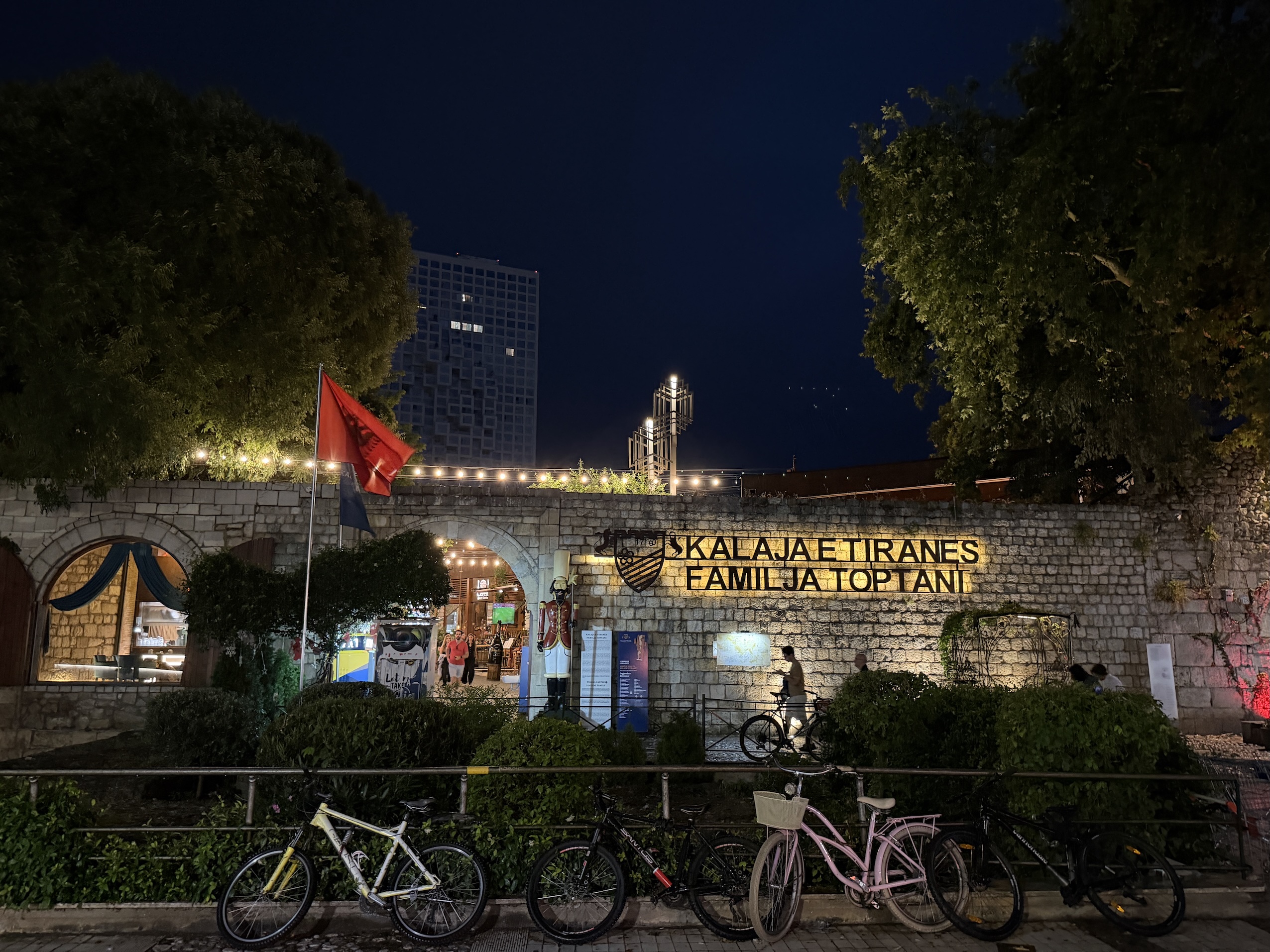
Tirana Castle – Credit Tim Johnson
Hoxha saw threats everywhere, both within and without. He turned allies into opponents and pursued a policy of almost total isolation. And he was famously paranoid – something on full display at Bunk’Art 2, which I visit with my guide, Maliqaj. “The idea was that the government could hide out here, in case of attack,” he tells me.
Hoxha built bunkers everywhere, including beneath the streets of the capital. Descending a series of steps, I explore the subterranean corridors and dozens of rooms. Many tell similar stories those I encountered at the House of Leaves. Perhaps the most interesting part: the passages connecting to government ministries, and the chambers that would have served as underground bedrooms and offices for those ministers.
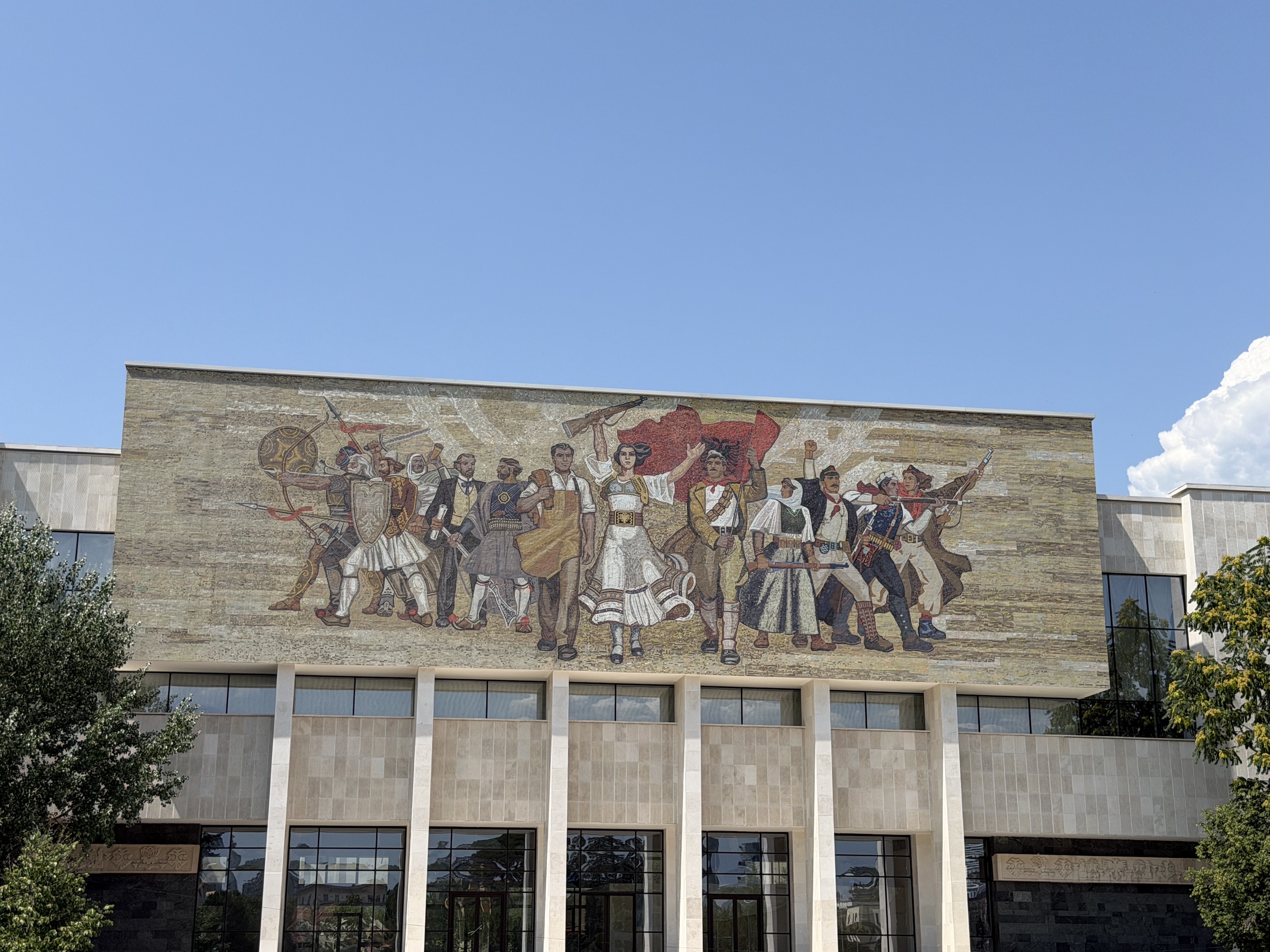
National Museum – Credit Tim Johnson
“ONCE THIS WAS UGLY, NOW IT’S COOL”
But that was the old Tirana. I emerge into the fresh air, and Maliqaj leads me to a neighbourhood that means a lot to him – the district where he grew up. An easy walk south of Skanderbeg Square, the streets here are lined with brutalist Soviet-style apartment blocks.
“Once this was ugly,” the guide tells me. “Now it’s cool.” And he’s right. The ground floor units have been converted to some of the trendiest galleries and boutiques and restaurants in town.
Those same young, optimistic people I’ve been seeing all over Tirana pack these establishments as they chat over coffees and glasses of wine and steaming dishes. A tale of two cities. All in one place. Definitely worth the flight, from Toronto to Tirana, to witness it.
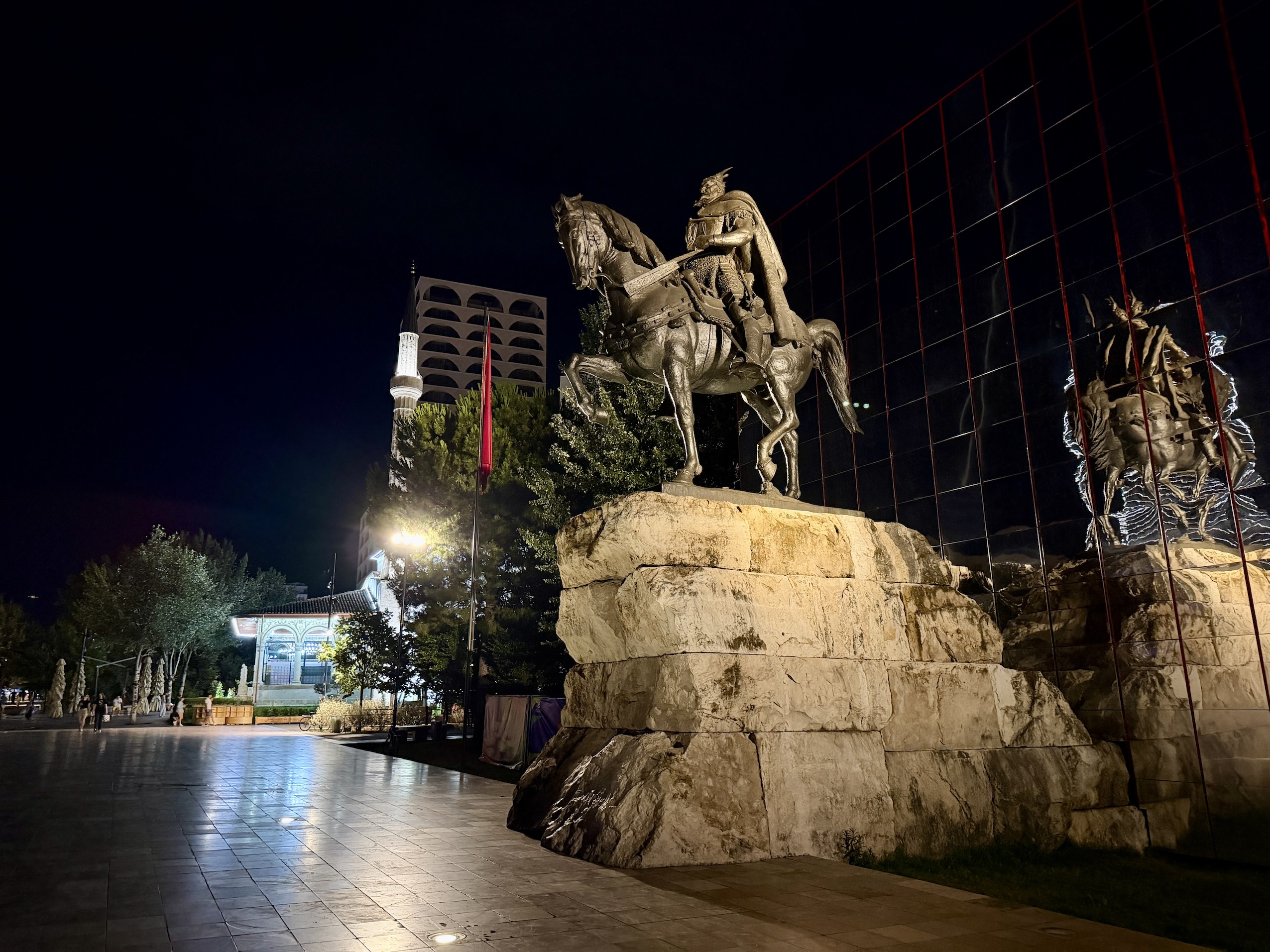
Skanderberg Square – Credit Tim Johnson
GETTING THERE
Air Transat’s brand new seasonal service to the Albanian capital runs once a week. Flights aboard an A330-200 depart Pearson International Airport on Thursdays, and return on Fridays, until the beginning of October.
It is the only nonstop connecting North America and Albania. Their Club Class service is worth the extra cost, providing larger, more comfortable seats and extra legroom, elevated meals, complimentary food and wine, and (on my flight) absolutely extraordinary service.
GETTING AROUND
Fine Travel Albania unlocks the best of this Balkan country. A locally based DMC, they specialize in upscale tours, and take care of all the details, from transportation to hotels and restaurants, from the moment you touch down until your departure.
They also travel beyond, to neighbouring countries like Montenegro, North Macedonia and Kosovo. They employ veteran guides who know Albania, from the summits of the mountains, to the vineyards on their flanks, to the all the best beaches along the coast.
Air Transat’s new nonstop, weekly service between Toronto and Tirana operates every Thursday until Oct. 8, 2026. It marks the first-ever nonstop air service between Canada and Albania.
Lead image caption: Aerial view of Tirana — Credit Tim Johnson