





San José, Costa Rica (April 22, 2026) As Earth Day shines a global spotlight on environmental protection, Costa Rica continues to demonstrate how conservation, wildlife protection, and tourism can work together, not only in policy, but in real and deeply human ways.
Roughly the size of (Nova Scotia/West Virginia), Costa Rica is home to approximately 6.5% of the world’s biodiversity despite covering less than 1% of the Earth’s surface. Today, more than 25% of the country’s land is protected through national parks and reserves, while over 30% of its marine territory is safeguarded to protect vital ecosystems. Over the past several decades, Costa Rica has also successfully reversed deforestation, increasing forest cover from around 25% in the 1980s to more than 58% today.
But beyond these achievements, Costa Rica’s conservation story is perhaps best understood through the work being done to protect individual animals, and the lives behind those efforts.
At the Centro de Rescate y Santuario Las Pumas in Guanacaste, wildlife rescue and rehabilitation is an everyday reality. The center receives an average of 350 animals from approximately 65 species each year, many of them injured, orphaned, or impacted by human activity.
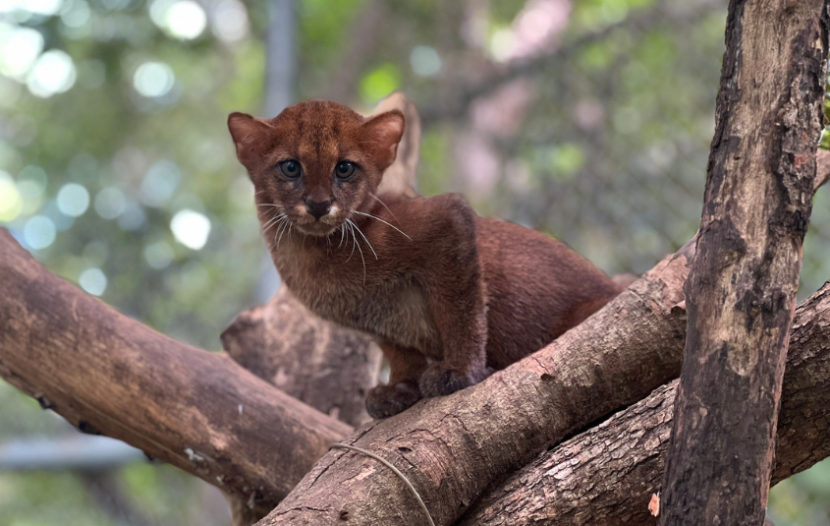
Among them is Caoba, a rescued jaguarundi whose story reflects both the fragility of wildlife and the long-term commitment required to protect it.
Caoba was found alone in the forest as a young animal: weak, frightened, and calling for her mother. After being rescued and brought to Las Pumas, she was carefully rehabilitated with the goal of returning her to the wild. She developed strong instincts, learned to hunt, and showed promising signs that she would be able to survive independently.
But just before her planned release, tests revealed that Caoba had contracted feline leukemia, an incurable disease that meant she could never safely return to her natural habitat.
Today, Caoba remains at Las Pumas, where the team is working to build her a larger, enriched habitat designed to support her health and wellbeing for years to come; a space that reflects not only her needs, but the centre’s commitment to providing rescued wildlife with dignity, safety, and quality of life.
Wildlife rescue and rehabilitation efforts can be found throughout the country. Near San José, the Rescate Wildlife Rescue Center, founded by a Canadian and located along a natural wildlife corridor connecting Ciudad Colón and the surrounding mountains and volcanic regions, rescues and rehabilitates animals that cannot survive in the wild while also providing education to visitors about wildlife conservation and habitat protection. The center is also home to capybaras that were rescued after being smuggled into the country and are now cared for at the facility.
Stories like these help illustrate how conservation in Costa Rica extends beyond national parks and protected land to include wildlife rescue, education, and rehabilitation efforts across the country.
This conservation-first mindset also shapes how travellers experience the country. Often referred to as “Green Glove” travel, Costa Rica’s approach integrates sustainability, nature, wellness, and cultural connection into the visitor experience. Rather than requiring travellers to seek out eco-tourism, sustainability is embedded into everyday travel, from exploring protected rainforests and visiting wildlife rescue centres, to engaging with local communities and experiencing farm-to-table cuisine.
“As travellers increasingly look for destinations that align with their environmental values, Costa Rica offers a powerful example of how conservation, wildlife protection, and tourism can work together,” said Adalberto Rodríguez, Market Coordinator (USA & Canada) for the Costa Rica Tourism Board (ICT). “Protecting nature is part of who we are, and it’s something visitors can experience in a very real way.”
This Earth Day, Costa Rica offers more than a sustainability story; it offers a reminder that conservation is not only about protecting landscapes, but about protecting life itself.
