





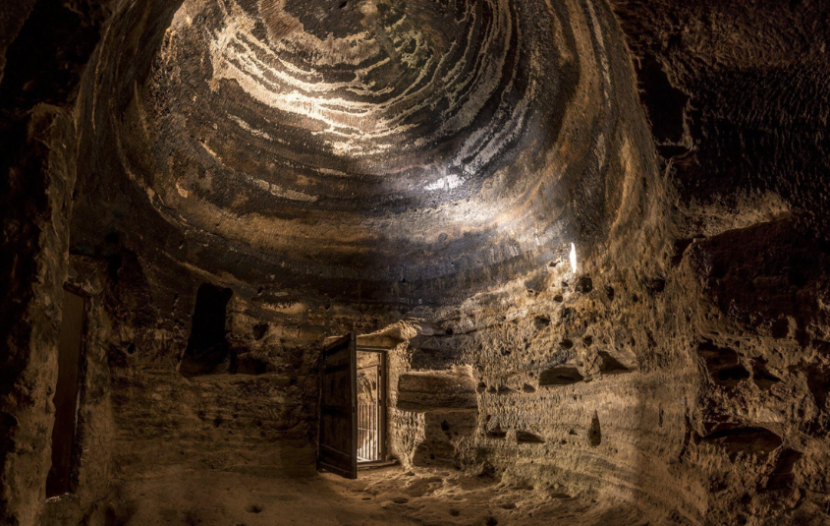
Long before the first Spanish ships arrived, Gran Canaria was already home to an aboriginal people whose settlements, caves, and rock art can still be visited today. For history-minded travellers, Gran Canaria offers one of the most complete and accessible windows onto pre-Hispanic Europe found anywhere in the Atlantic, backed by several international recognitions that confirm its heritage value and place the island firmly on the world map of cultural and archaeological tourism.
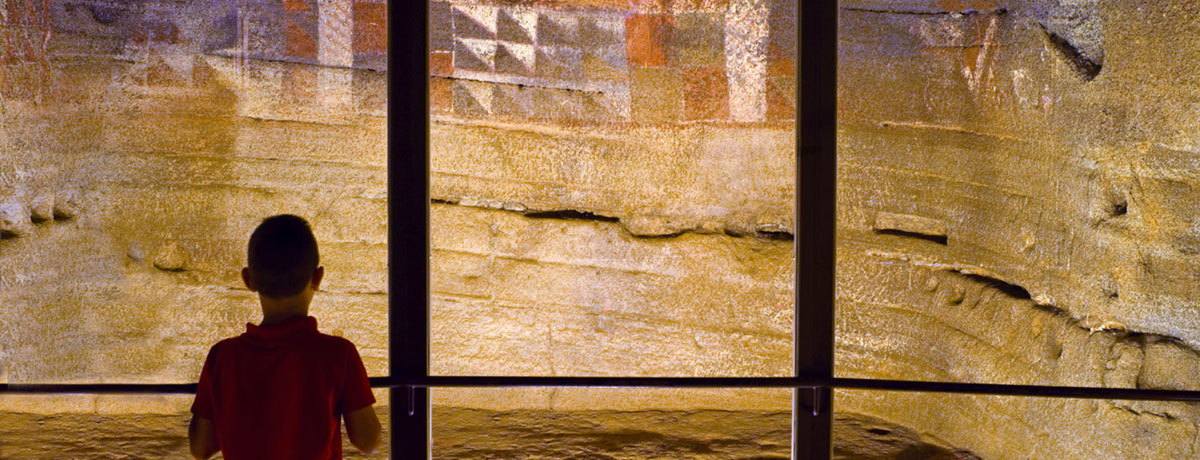
The painted cave at the Cueva Pintada Museum and Archaeological Park, Gáldar
The island’s most important site is the Cueva Pintada Museum and Archaeological Park, in the municipality of Gáldar, in the north of the island. Discovered by a farmer in 1862 and systematically excavated since 1987, the site preserves the remains of a pre-Hispanic village of more than fifty houses, built around a cave decorated with striking geometric paintings that some archaeologists link to ancient lunar and solar calendars. The visit takes place along raised walkways above the excavated village, and the painted cave itself can be viewed through a glass structure designed to protect the paintings while keeping them on display. It is also one of the few sites of its kind that is fully accessible, located right in the centre of Gáldar rather than on a remote hillside.
This archaeological legacy reaches its highest international recognition in the Cultural Landscape of Risco Caído and the Sacred Mountains of Gran Canaria, declared a UNESCO World Heritage Site in July 2019. Located in the island’s mountainous heart, within the Caldera de Tejeda, this extensive archaeological area — covering close to 18,000 hectares across the municipalities of Artenara, Tejeda, Gáldar, and Agaete — contains more than a thousand caves and sanctuaries carved into volcanic rock, including a more than 2,000-year-old astronomical temple whose interior is illuminated with precision on specific dates of the solar calendar, evidence of the advanced astronomical knowledge held by the island’s early inhabitants. It was the first World Heritage listing anywhere on Gran Canaria, a recognition that places the island alongside some of the most highly valued archaeological sites on the planet.
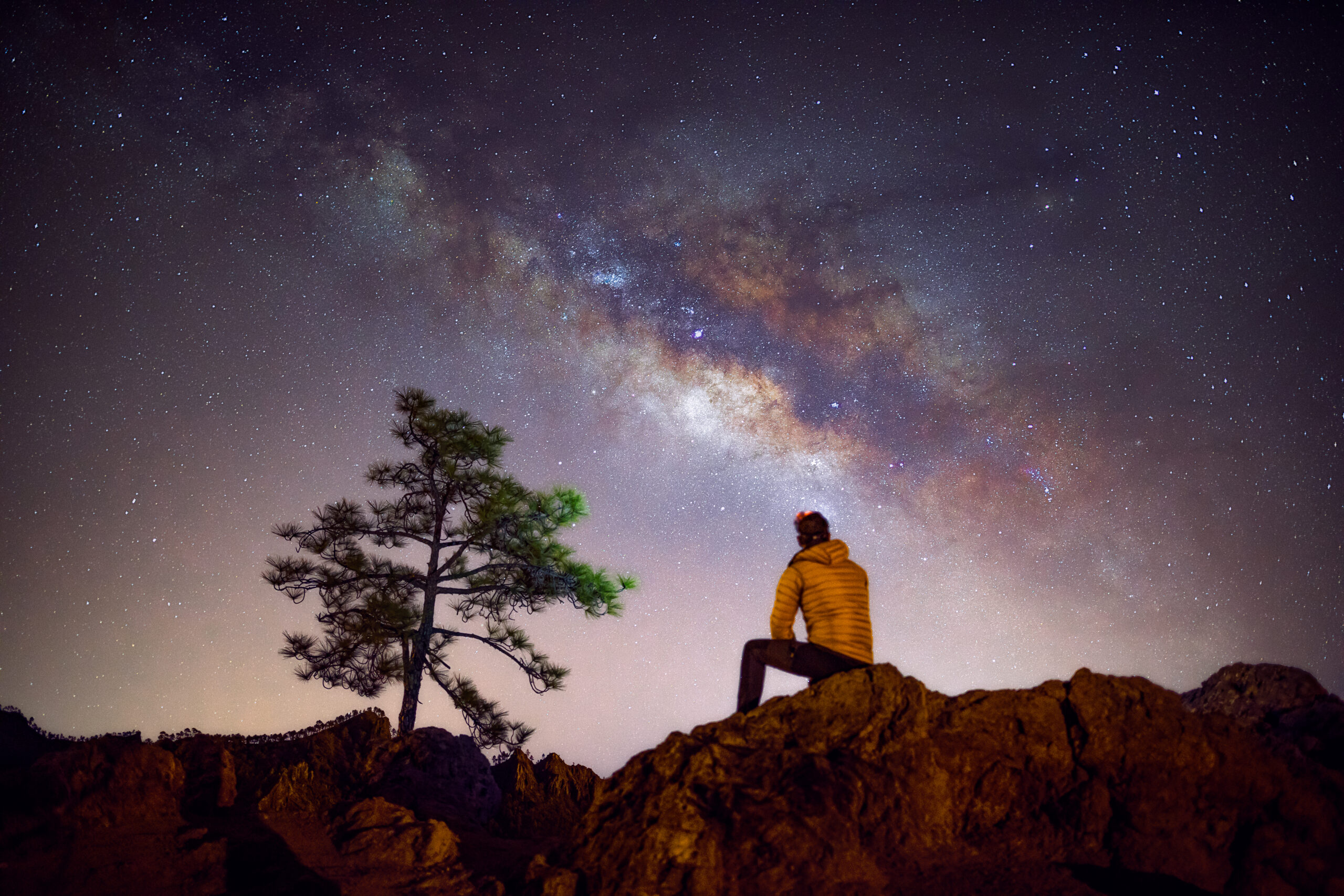
The Milky Way over Gran Canaria’s interior — the island has held Starlight Tourist Destination certification since 2017
This ancient relationship between Gran Canaria and the sky continues today through a very particular distinction: the island holds Starlight Tourist Destination certification, awarded in December 2017 thanks to the exceptional quality of its night skies and the low light pollution across much of its interior. Gran Canaria is thus one of the few places in Europe where archaeology, history, and astro-tourism coexist in the same territory, offering stargazing experiences in the very same landscape where, centuries ago, the island’s ancient inhabitants already looked to the heavens to guide their rituals and agricultural calendar. A number of routes and viewpoints across the island’s interior now offer guided stargazing experiences, making the most of skies that rank among the cleanest in all of Europe.
This journey into the island’s past has its own reflection on the table, through traditional Canarian confectionery passed down for generations in the villages of the interior. The most iconic sweet is bienmesabe, made from ground almonds, sugar, cinnamon, and egg yolk, a tradition especially rooted in the mountain villages, where almond trees have for centuries been a signature crop of the island’s high-altitude agricultural landscape. Alongside it are other typical products such as gofio — toasted corn flour that was already part of the diet of the island’s pre-Hispanic inhabitants and remains a staple of Canarian cooking and confectionery today, from breakfast to dessert — and traditional Canarian almond nougat (turrón), made for generations and closely tied to the island’s festivals and popular celebrations.
Discovering these sweets and local specialties requires nothing more than a stop in any inland village or one of the island’s traditional markets, where artisan bakeries keep centuries-old recipes alive. It is a simple, accessible way to connect with Canarian culture, one that pairs perfectly with a visit to the archaeological sites and adds a sensory dimension to what would otherwise be a purely historical itinerary.
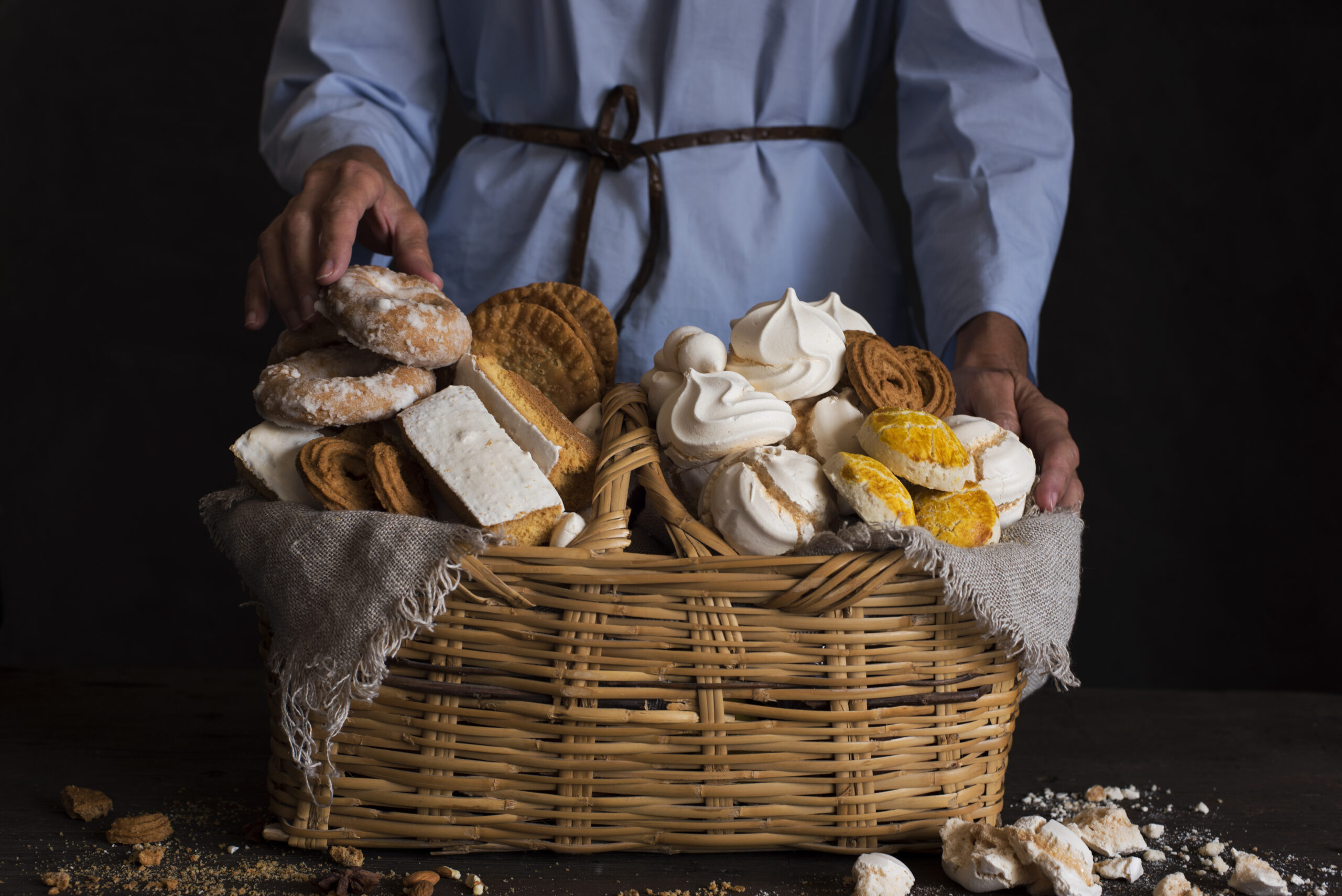
Gran Canaria’s Traditional Sweets
This combination of recognitions — a landmark archaeological site, a UNESCO World Heritage listing, and a certified starry sky — makes Gran Canaria a destination with a far deeper historical and cultural story than its sun-and-sand image might initially suggest. For travellers seeking substance, history, and authenticity alongside good weather, this side of the island offers more than enough reason for a visit, or for rounding off a beach holiday with a day devoted entirely to this heritage.
Most of these sites are concentrated in the north and centre of the island, within easy reach of one another, making it simple to plan a one-day cultural route combining the Cueva Pintada site, a first look at the Risco Caído landscape, and a final stop in an inland village to sample its traditional sweets.
Between ancient caves, a UNESCO World Heritage Site, some of the clearest skies in Europe, and a confectionery tradition that dates back centuries, Gran Canaria offers the culturally curious traveller a complete story — one that pairs perfectly with any sun-and-sand stay and adds substance and authenticity to the experience.
Learn more: Cueva Pintada: grancanaria.com/turismo/en/culture/archaeological-sites/cueva-pintada-museum-and-archaeological-park/ | Risco Caído: grancanaria.com/turismo/en/culture/
