


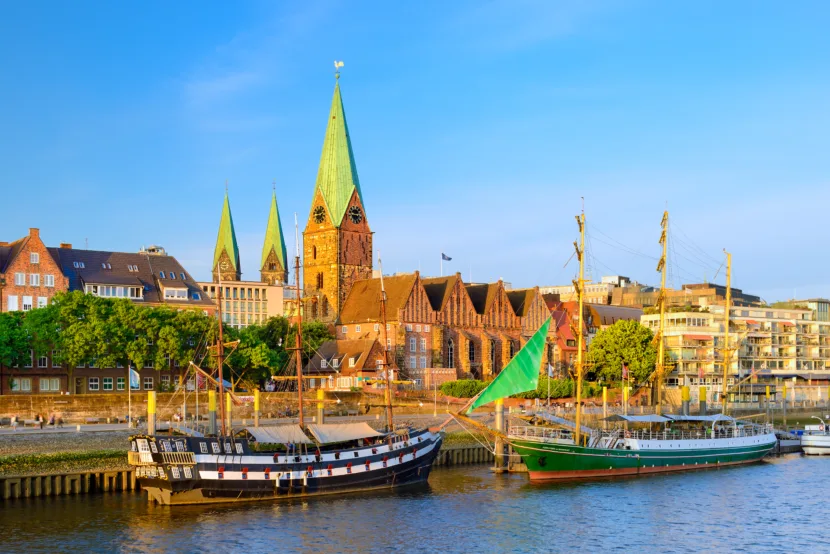
One of Europe’s most distinctive architectural styles connects the coastal cities of northern Germany: Brick Gothic, which emerged here between the 13th and 16th centuries, still defines the face of entire cities today — along the North Sea coast as much as the Baltic.
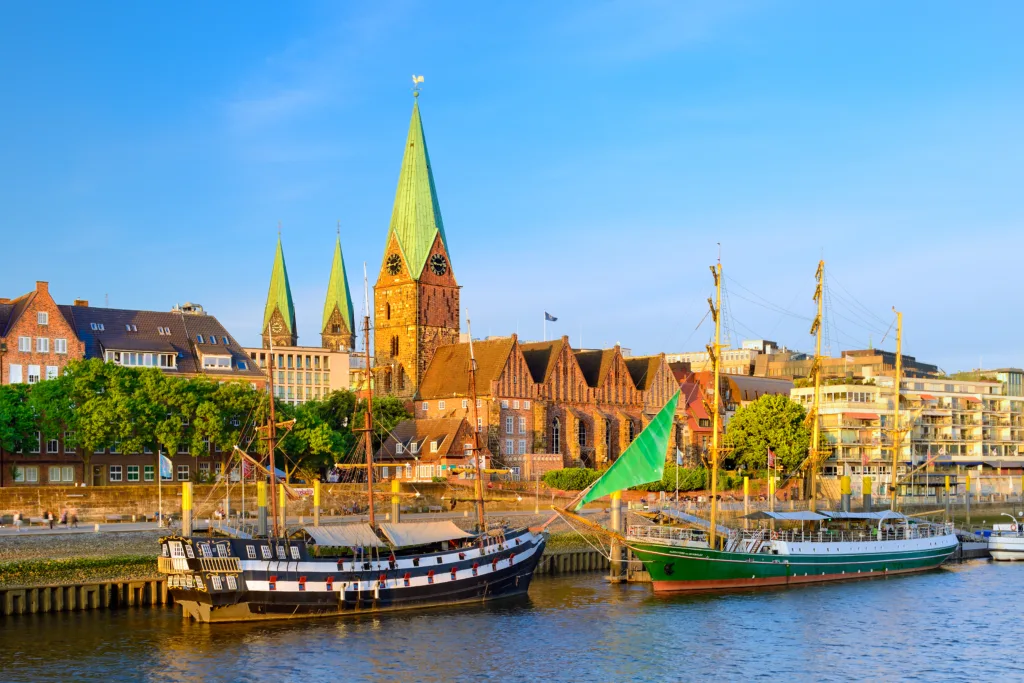
Mudflats, Sea Breeze and World Heritage: The North Sea Coast
Openness to the world has a history of more than 1,200 years in Bremen. The magnificent town hall in the Weser Renaissance style and the statue of Roland on the market square have been UNESCO World Heritage Sites since 2004 — and just nearby, the Bremen Town Musicians can be visited in person. Downstream, where the Weser meets the North Sea, lies Bremerhaven, home to the German Emigration Centre, the Klimahaus Bremerhaven and the German Maritime Museum — as well as fresh shrimps straight from the cutter at the Schaufenster Fischereihafen.
→ More on Bremen at germany.travel
Further north, Wilhelmshaven offers its own surprises: the German Naval Museum tells the story of seafaring history, while the visitor centre of the UNESCO World Natural Heritage Wadden Sea provides insight into one of the world’s most significant coastal ecosystems.
Harbour Romance and Sailing Culture: The Baltic Coast
Along the Baltic, three Hanseatic cities carry the UNESCO World Heritage seal. Lübeck holds one of Germany’s largest heritage old towns: gabled houses, winding courtyards and the famous Holstentor gate make it essential for any culturally curious traveller. Wismar impresses with one of the largest market squares in northern Germany, while Stralsund, set on a harbour island, captivates with around 500 historic buildings. All three cities lie along the European Route of Brick Gothic.
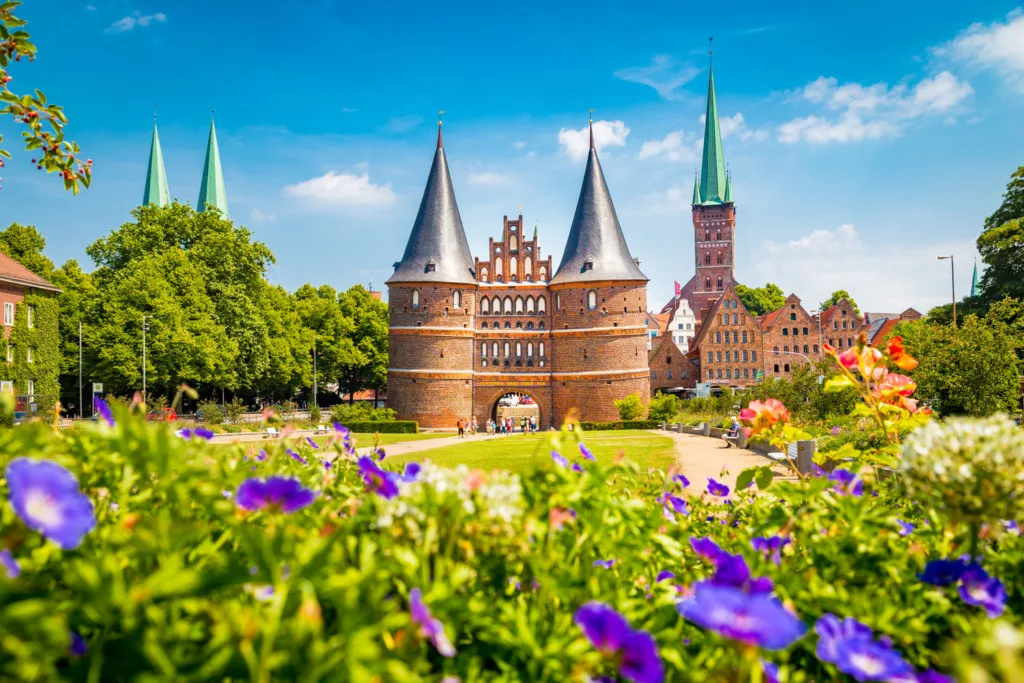
Historic town of Lübeck with famous Holstentor gate in summer.
Rostock adds a lively brick-red old town that flows directly into the city harbour — and nearby Warnemünde, where the world’s first beach chair rental opened in 1884. Kiel brings together city life and sailing culture: the Kiel Week, the world’s largest sailing event, draws visitors from around the globe to the fjord every summer. And right at the top of the country, just a short distance from the Danish border, lies Flensburg — with more than 800 years of history, an old town full of atmospheric taverns and historic captains’ houses, and a waterfront that still smells of salt herring and old timber.
What all these cities share: they are places where history and the present move to the same rhythm — and where the sea always plays a part.
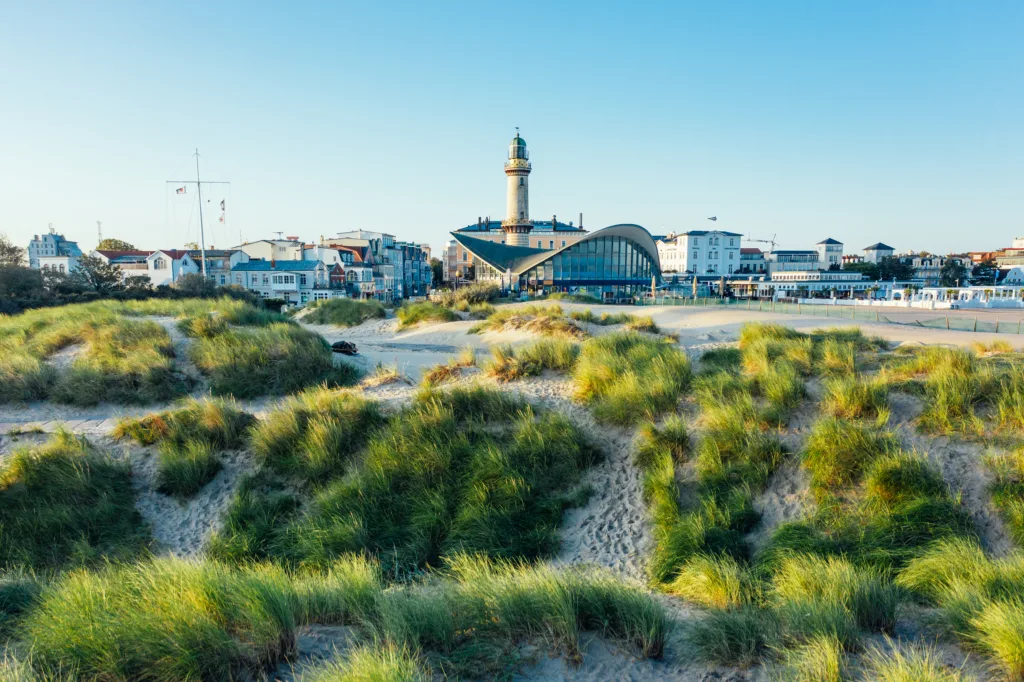
View over the dunes to the lighthouse and the Teepott in the seaside resort Warnemünde.
→ Explore Germany’s coastal cities at germany.travel
