





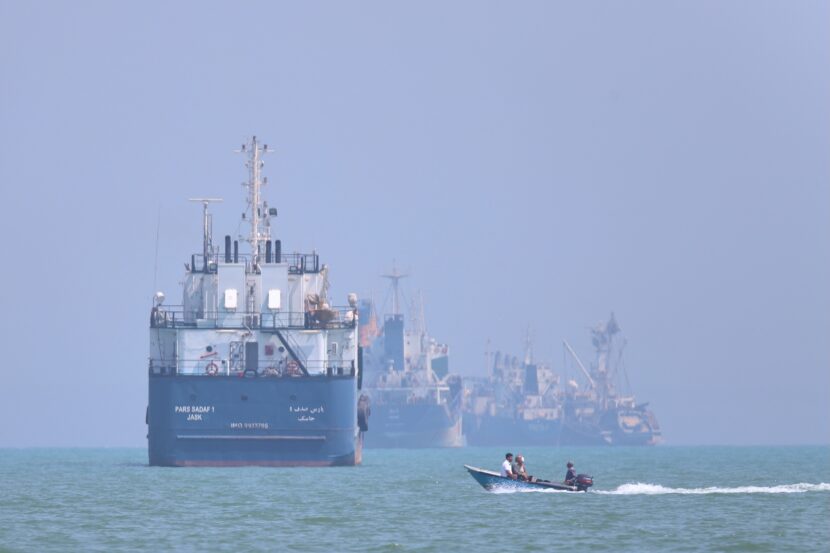
NEW YORK — A tentative deal to end the Iran war makes it reasonable to ask how soon prices will drop for gasoline, groceries, airline tickets and other items that got more expensive during the conflict.
Not so fast, experts say.
Even after oil starts flowing again from the Middle East, it could take a while for consumers to see a difference at local fuel pumps, supermarkets and other places they shop, according to economists and industry analysts.
Fighting over the Strait of Hormuz disrupted not only supplies of crude and refined fuel but also the supply chains for fertilizer, food and even footwear. Businesses expect higher costs to linger, which means their customers might need to prepare for that too.
“It is not clear, despite three months of war, that anything has been achieved that makes the American consumer better off,” Brett House, an economist who teaches at Columbia Business School, said. “In fact, by almost any measure, not just the American consumer, but the world, is worse off as a result of this attack.”
If the deal between the U.S. and Iran holds, here’s how experts see the war’s effects receding — or not — in the weeks ahead:
Following news of the tentative agreement, oil prices fell Monday to about US$80 for a barrel of U.S. benchmark crude. That compares to $67 per barrel before the war and the price of over $120 a barrel reached earlier in the conflict.
Refineries typically pay for crude oil a month or more in advance, so even after oil prices drop, they won’t immediately be processing cheaper products.
“The tendency of gasoline prices to fall slowly is partly because the raw material takes weeks to work through the system until it’s delivered to consumers,” said Michael Lynch, a distinguished fellow at the nonpartisan Energy Policy Research Foundation.
In places without enough refining capacity to meet their needs, such as the West Coast of the U.S., gas prices will take longer to drop, said Mark Barteau, a professor of chemical engineering and chemistry at Texas A&M University.
In some Asian and African countries that rely more on oil from the Middle East, the supply shock led to school and government office closures and instructions to work from home, according to the International Energy Agency.
“The bottom line is that getting back to ‘normal’ will be a lengthy process involving many parties and countries,” Barteau said. “Getting an agreement between the U.S. and Iran to open the strait is just the beginning.”
FLIGHTS WON’T GET CHEAPER RIGHT AWAY
Industry experts have spent months warning that even if the war ended, travellers should not expect airfares to go down immediately.
Airlines typically buy fuel in advance, adjust their schedules gradually and price tickets based heavily on demand, meaning lower oil and jet fuel prices can take weeks or months to get factored into the cost of commercial flights.
“I think it’s unlikely that we’re going to see a retreat or reduction in the cost of flying at any point this summer,” Columbia’s House said.
Fuel surcharges that some airlines outside the U.S. added are one of the first areas where passengers might get a reprieve, said Gordon Ho, a professor at the University of Southern California’s business school.
“Consumers are going to say, ‘Wait a minute, why are you still charging me a fuel surcharge?’” Ho said.
Judah Levine, head of research at the freight booking platform Freightos, said the Straight of Hormuz closure has affected about 2% to 3 % of the total volume of container ships that are used for global shipping, but higher oil prices and disruption have impacted the shipping industry more broadly.
Josh Steinitz, chief strategy officer of the business logistics platform ShipStation Global, said consumers might notice higher shipping costs and more out-of-stock items online until the end of the year.
“I think fuel surcharges, which then flow into shipping costs, which then get passed along to consumers, are still going to be with us for quite sometime from many of the major carriers,” Steinitz said.
Lead image caption: A small motorboat passes anchored vessels in the Strait of Hormuz off Bandar Abbas, Iran, June 11, 2026 (Amirhosein Khorgooi/ISNA via AP)