





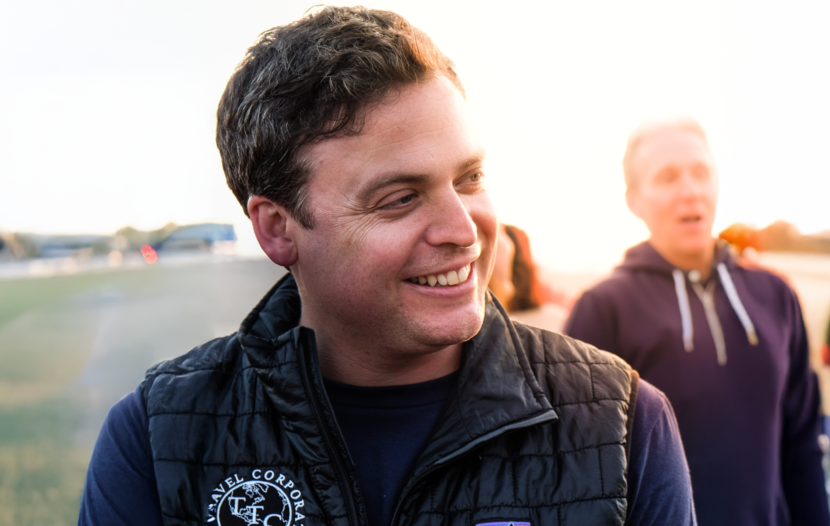
TORONTO — Artificial intelligence is moving beyond experimentation and becoming part of the everyday travel business, says Travel Trends founder Dan Christian, and he says the industry’s next challenge is understanding how to use it without losing the human expertise that makes advisors so valuable.
It’s a central theme at this year’s Travel Trends Summit V3, themed ‘Beyond AI’ and taking place online Oct. 28 and 29. Christian heads up the summit, plus he’s the founder of the Travel Trends podcast.
Now in its third year, the summit will bring together more than 40 speakers for two days of discussions, demonstrations and debates on everything surrounding technology, distribution, marketing, leadership and more.
The summit is free, courtesy of TourRadar and a full roster of sponsors. Sign-up is here.
“The conversation has moved past ‘what is AI’ and even ‘what do we actually do with it’ to where humans are still relevant,” Christian told Travelweek. “That’s the key question we look to answer.”
He noted that AI is increasingly embedded in supplier, tour operator and booking technology, while more travellers are turning to generative AI tools to research destinations, compare options and begin building itineraries before contacting an advisor.
“The reality is that AI is only speeding up and the window for being early is closing,” he said. “Two years ago, AI was something you experimented with on your personal time. Today it’s embedded in the tools our suppliers, tour operators and booking platforms use every day.”
For advisors, Christian said that means understanding both the capabilities and limitations of the technology.
“If a client arrives having already built half an itinerary with an AI assistant, the advisor needs to understand what that tool got right, what it got wrong and where real expertise adds value.”
FOCUS ON WHAT WORKS, NOT EVERY TOOL
Rather than attempting to master every new platform, Christian believes advisors should concentrate on understanding how AI can support their existing business.
He said generative AI has already found a place in many day-to-day workflows, while agentic AI, i.e. technology capable of completing more complex, multi-step tasks, represents the next area advisors need to watch.
“The travel advisors I speak with who are thriving aren’t the ones who have mastered every tool,” he said. “They’re the ones who decided to stay curious and keep up.”
FIRESIDE CHATS & LIVE DEBATES
Alongside keynote presentations, the two-day Travel Trends Summit V3 will offer demos showing AI tools working through actual travel-industry workflows. A trend briefing and live debates will explore some of the larger questions facing the industry, including how technology is changing distribution and where human expertise fits into an increasingly automated marketplace.
Christian will also take part in fireside chats, including a talk with Travelweek’s Publisher, Devin Kinasz.
“Travel advisors will leave knowing which tools are worth their time, how their peers are applying them to marketing and client communication, and how the distribution landscape is shifting around them,” said Christian. “Our goal is simple: every attendee should walk away with at least one thing they can put to work to grow their business.”
For many advisors, the most immediate benefits of AI may be found in the less glamorous parts of running a travel business.
Drafting client emails, summarizing supplier updates, converting call notes into proposals and creating first drafts of newsletters and social media posts are among the tasks Christian says advisors can already delegate to AI.
“TREATING AI AS A VERY FAST JUNIOR ASSISTANT”
AI can also help create destination briefings, compare travel options and review an itinerary for pacing and logistics before an advisor presents it to a client.
He stressed that human oversight remains essential. “The key is treating AI as a very fast junior assistant, not the final word,” he said. “You still check the facts, you still apply judgement and you still add the insight that only comes from having been there or having sent 100 clients there.”
The payoff is increased productivity plus making more time for the part of the business technology cannot easily replicate: relationships and trust-building.
“You get to spend more time dreaming with your clients and strengthening the human connection,” said Christian.
The arrival of increasingly capable AI has inevitably raised questions about whether the technology could eventually compete with travel advisors themselves. Christian said he sees parallels with a not-so-long-ago technological shift: the Internet.
“I’ve been in this industry long enough to remember when the Internet was supposed to end the travel advisor. It didn’t,” he said. “What it did was eliminate the transactional work and raise the bar for everything else. AI will do the same thing, faster.”
WHEN A TRIP GOES SIDEWAYS
As straightforward information retrieval and simple transactions become increasingly automated, he said he expects trust, judgement, relationships and accountability to become even more important differentiators.
“When a trip goes sideways, travellers don’t want a chatbot,” Christian said. “They want someone who knows them and can fix it.”
Christian said the pace at which AI is evolving makes staying informed important, even for advisors who don’t think of themselves as techies.
“The cost of not knowing is getting higher every month,” he said. “In two days you’ll hear from people who are building and deploying these tools, not just talking about them, and you’ll get an honest picture of where the industry is heading across technology, distribution, marketing and leadership.”
For advisors wondering whether they can spare the time, Christian suggested looking at the summit another way.
“Busy travel advisors are exactly the people who stand to gain the most, because they’re the ones who need their time back,” he said. “Think of it as a small investment of time that pays you back in hours for the rest of the year.”
To register for the free Oct. 28-29 Travel Trends Summit, click here.
Lead image caption: Dan Christian, founder, Travel Trends Summit and Travel Trends podcast
