





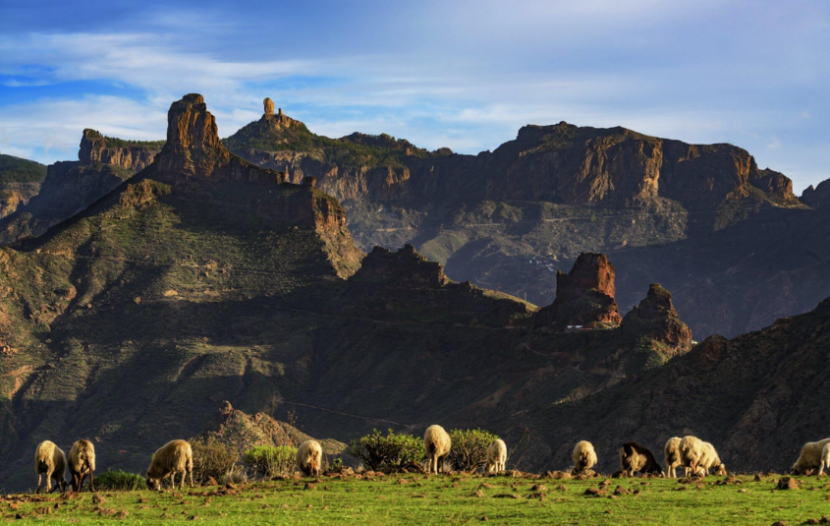
While Gran Canaria’s coastline holds most of the island’s tourist infrastructure, its interior is home to some of its most authentic experiences — and some of the least known to international travellers. Moving just a few kilometres inland reveals a landscape of traditional villages, natural viewpoints, and a calm that contrasts sharply with the holiday atmosphere of the coast, along with a pace of life that has barely changed in generations and that proves especially appealing to travellers looking for more than a sun-and-sand stay.
One of the best starting points is Teror, in the northern highlands. Declared a historic-artistic site, its old town preserves cobbled streets, traditional wooden balconies, and the Basílica de Nuestra Señora del Pino, the island’s most important church and home to the patron saint of the Canarian diocese. Every Sunday, Teror’s market fills the square in front of the basilica with local produce, crafts, and village atmosphere, offering a very different picture from the tourist areas of the south and a rare opportunity to see island life exactly as it is lived outside the usual tourist circuits.
Further into the centre of the island, the scenery becomes even more dramatic in Tejeda, one of Spain’s most beautiful villages and the gateway to Roque Nublo, Gran Canaria’s most recognisable natural landmark. Set inside an ancient volcanic crater known as the Caldera de Tejeda, this municipality offers some of the island’s most spectacular viewpoints, with views that on clear days stretch as far as the silhouette of Mount Teide on neighbouring Tenerife. Temperatures at this altitude are noticeably cooler than on the coast, making a trip to Tejeda a perfect change of pace at any time of year.
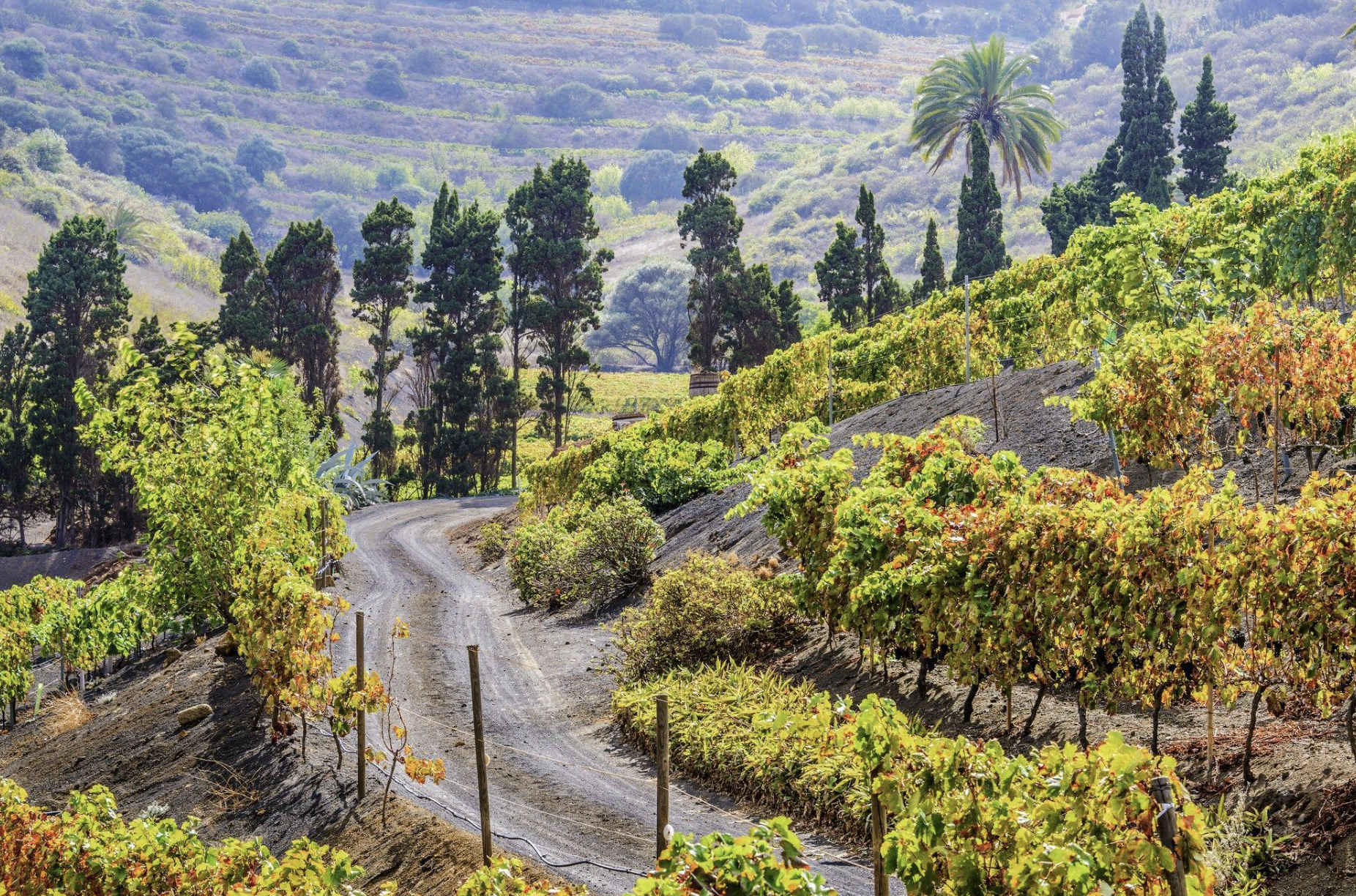
Vineyards in Gran Canaria’s highlands, where the island’s high-altitude wines are grown
This area of highlands and altitude is also home to another of the island’s great agricultural traditions: wine. Gran Canaria has its own Protected Designation of Origin, unifying what were originally two separate appellations — Gran Canaria and Monte Lentiscal — under a single quality seal managed from Santa Brígida. The island’s vineyards sit at unusually high altitudes for winemaking, some above 800 metres, and the historic Monte Lentiscal area, next to the volcanic Bandama crater, remains the heart of red wine production, made mainly from the native Listán Negro grape, while white wines, made from Listán Blanco, Moscatel, and Malvasía, are grown mostly in the island’s high ground and south.
Following Gran Canaria’s wine route leads to century-old wineries such as Bodega San Juan, founded in 1912 and still run by the same family five generations later, where guided tours include tastings of the island’s red and white wines paired with local cheese and seasonal produce. The volcanic soil, the altitude of the vineyards, and the distinctive microclimate of the highlands combine to produce wines with real character — with an acidity and freshness typical of the island’s Atlantic identity — increasingly recognised beyond the islands and appearing on restaurant wine lists across Spain.
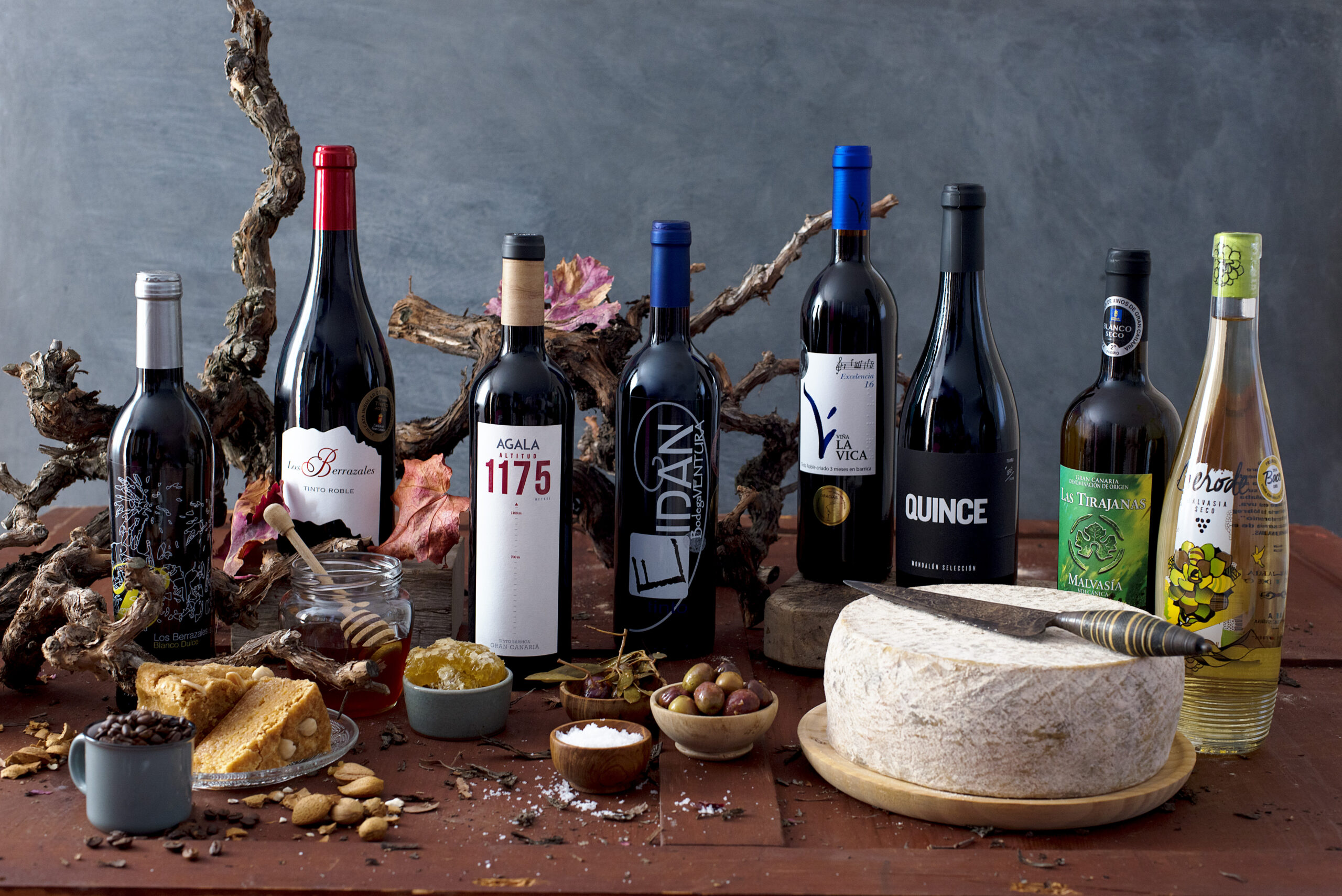
Gran Canaria Denominación de Origen wines with local cheese, honey, almonds and bienmesabe
This quality has earned official recognition at national level: the Gran Canaria Wine Route is certified by the Spanish Association of Wine Cities (Acevin) as part of the official Wine Routes of Spain network — the only one of its kind in the Canary Islands. The route brings together more than fifty wineries, restaurants, wine shops, estates, cheese shops, guides, and small family-run “bochinches” where wine is paired with traditional food, offering visitors a structured way to explore the island’s inland landscapes and way of life through its wine.
Gran Canaria’s interior works, in short, as the perfect counterpoint to the beach experience: villages with their own history, mountain scenery that shifts character with the seasons, and a wine culture that connects visitors directly to the volcanic land each bottle comes from. It is a part of the island that especially rewards those with enough time to step away from the coast, even for just a few hours, offering a welcome change of temperature and pace after several days of continuous sun and beach.
This connection between the interior and the island’s food culture comes to life at the Km.0 Gran Canaria Fairs, a travelling market that has run for 39 editions since 2021, moving between towns across the island and bringing together more than 385 local producers to showcase everything grown or made on Gran Canaria — cheese, wine, bread, gofio, honey, fruit, and vegetables sourced within a short distance of where they are sold. Organised with the backing of the Cabildo de Gran Canaria and Turismo de Gran Canaria, the fairs double as a simple, low-key way to experience the island’s rural towns exactly when they are liveliest, with upcoming stops in Ingenio, Santa Brígida, and Tejeda offering visitors a genuine taste of island life alongside the wine route.
Accessibility is one of this area’s biggest advantages: the road network allows visitors to reach any of these villages in under an hour from the main tourist hubs, making it possible to plan a full day trip without changing accommodation or giving up coastal comfort in the evening.
Combining a visit to Teror and Tejeda with a stop along the wine route reveals, in just half a day, a side of Gran Canaria very different from its beaches: that of its villages, its people, and its centuries-old agricultural tradition.
Learn more: Wine Route: grancanaria.com/turismo/en/gastronomy/gastronomy-in-gran-canaria/wine-route/ | Km.0 Fairs: km0grancanaria.com
