





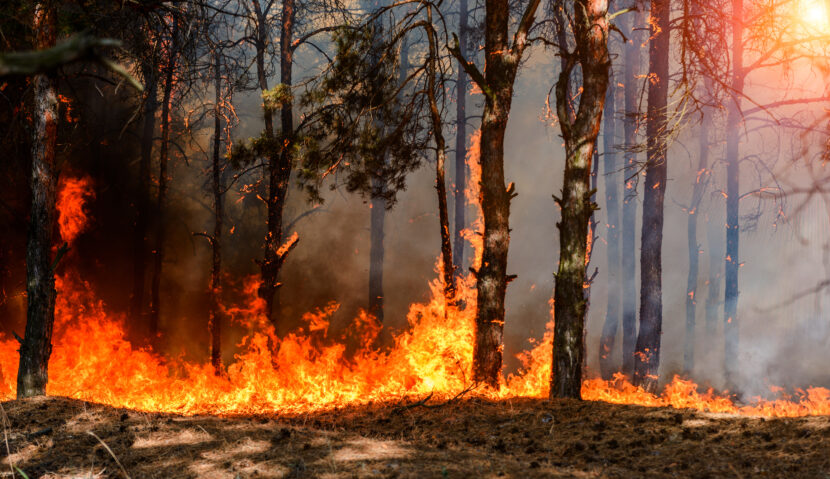
MONTREAL — After a week of devastating wildfires in parts of southwestern France, where do things stand in terms of managing the fires, the travellers currently in the affected areas – and those planning to travel there soon?
The Nouvelle-Aquitaine Regional Tourism Committee (CRT) and several Quebec travel industry stakeholders weighed in on the rapidly changing situation.
For now the massive wildfire that has consumed 42,000 hectares in Gironde remains stable. However, a new heat wave and strong winds forecast for later in the day threatened to reignite the flames, according to AFP, as reported by Le Devoir.
Firefighters are currently monitoring three main hotspots northwest of the Arcachon Bay, including a dune on the Cap Ferret Peninsula, about 60 km west of Bordeaux.
Since the start of this wildfire crisis, 222,000 people have been evacuated as a precaution across 24 municipalities in the region. On Tuesday, 4,000 tourists staying in campgrounds and holiday residences in the seaside resort of Lacanau, about 50 km west of Bordeaux, were also evacuated as a preventive measure.
UPDATES FROM THE GROUND
As dramatic as the images circulating around the world have been, media coverage can sometimes give the impression that an entire region is affected, when in reality the damage is often confined to specific locations.
Certain parts of Gironde, Biscarrosse, and other wildfire hotspots remain off-limits, and travellers should avoid those areas. However, the broader situation requires some perspective.
“Flights to Bordeaux are not affected, although some train services departing from the city may be,” said Carole Larocque, spokesperson for Atout France. “Travellers should check local conditions before departing, as the situation can change quickly depending on weather conditions such as wind direction.”
“The situation is probably less severe than media coverage suggests, although it remains very sad and concerning,” added Céline Boute, Head of Long-Haul and Multi-Market Leisure Markets at Tourisme Nouvelle-Aquitaine. “About 250 homes have burned, and 220,000 people have been evacuated, but most have been accommodated with family or friends.”
She noted that, given the circumstances, the Regional Tourism Committee (CRT) wanted to provide tour operators and travel agencies with accurate, up-to-date information to help them properly advise their clients.
THE SITUATION IS LOCALIZED
Nouvelle-Aquitaine covers nearly 84,000 square kilometres, making it the largest region in France.
The fires are concentrated in several parts of southern Gironde and northern Landes, where authorities have implemented precautionary evacuations, access restrictions, and safety measures.
The Bordeaux metropolitan area is not directly threatened by the fires, although it has experienced indirect effects such as smoke and occasional transportation disruptions.
Outside the restricted zones established by authorities, many destinations remain fully open and continue welcoming visitors.
Regions unaffected by the fires include …
. The Basque Country
. Dordogne
. Périgord
. La Rochelle
. Cognac
. Poitiers
. Pau
. The Pyrenees
Even within Gironde and Landes, many areas have not been impacted, including …
. Historic downtown Bordeaux
. Saint-Émilion
. Entre-Deux-Mers
. The Blaye and Bourg wine regions
. The southern Atlantic coast, including Hossegor, Capbreton, Seignosse, and Vieux-Boucau
. Dax
. Mont-de-Marsan
TRANSPORTATION UPDATE
Most transportation services throughout the region continue operating, although adjustments have been made near the wildfire zones.
Bordeaux–Mérignac Airport remains open and fully operational.
However, travel south of Bordeaux is currently affected as follows: A63 motorway (Bordeaux–Bayonne): Traffic restrictions are in place south of Bordeaux because of nearby wildfires; Rail service: High-speed TGV trains from Paris to Arcachon, Bayonne, Hendaye, and Biarritz currently terminate at Bordeaux Saint-Jean Station. Regional TER trains between Bordeaux–Arcachon and Bordeaux–Morcenx have been suspended.
BOOKINGS IN AFFECTED AREAS
For travellers with bookings in affected coastal areas, the CRT recommends contacting their accommodation provider, local tourist office or travel professional, who can provide advice based on local conditions. Tourism professionals are assisting travellers on a case-by-case basis.
For visitors touring other parts of the region or staying outside the affected zones, trips and tourism services can continue safely.
. Wildfires are concentrated in specific parts of Gironde and Landes.
. The Bordeaux area is experiencing indirect effects such as smoke and occasional transport disruptions but is not directly affected by the fires.
. Tourism continues as normal throughout the rest of Nouvelle-Aquitaine outside restricted areas.
. Travellers planning to visit affected locations should contact their accommodation provider or tour operator before departure and regularly consult official updates.
. The CRT remains available to answer questions at ressources@na-tourisme.com.
AIRLINES & TOUR OPS MONITORING THE SITUATION
At present, the airlines and tour operators contacted by Profession Voyages report that relatively few customers have been affected.
“At this stage, we are seeing only a small number of inquiries related to the situation,” said Marie-Christine Pouliot, Head of Public Relations and Marketing Content at Transat. “Our contact centre has received only a handful of calls and messages, suggesting that customer concerns remain limited for now.”
She added: “Our thoughts are with the communities affected by the wildfires in Europe and everyone impacted. We continue to monitor the situation closely in collaboration with our local teams and airport authorities.
“As with any rapidly evolving situation, we have implemented continuous monitoring and are preparing contingency plans as a precaution so we can respond quickly if conditions change. Should operations be affected, impacted travellers will be contacted directly. We also encourage customers to check their flight status regularly before departure.”
Nathalie Tanious, President and CEO of Voyages H.I.S. Canada, parent company of TravelBrands, told Profession Voyages: “Our thoughts are with everyone affected by the wildfires in Europe. We encourage travellers planning to visit affected regions to follow guidance from local authorities and stay in touch with their airline or travel provider, as conditions may change quickly.”
Maryse Martel, VP, Strategic Growth, Industry Relations and Media at Groupe Voyages Québec, said: “What is happening in France is deeply saddening. Fortunately, we do not currently have any tour groups in the regions affected by the fires. We are closely monitoring the situation and staying in contact with our suppliers. Our next departures to these regions are scheduled for several weeks from now.”
THE LATEST FROM CHANTECLERC
“July is generally a quieter month for our European tours compared with spring and autumn,” said Cristelle Cormier, Assistant General Manager of Tours Chanteclerc. “We currently have only one group in France, and it has not been affected by the situation.
“Our thoughts are with everyone impacted by these fires, and we hope they can be brought under control quickly so residents of the affected areas can safely return home,” she added.
RESOURCES FOR TIMELY UPDATES
To help travellers stay informed about the evolving situation and its actual impact on tourism, Tourisme Nouvelle-Aquitaine has created online resources.
“We extend our full support to local residents, vacationers, tourism professionals, firefighters, and all emergency responders working on the ground,” said the Regional Tourism Committee.
The organization has created a webpage bringing together key information and useful resources to help travel professionals assist their clients and stay informed about the measures being implemented by the CRT Nouvelle-Aquitaine. That site can be found here.
