





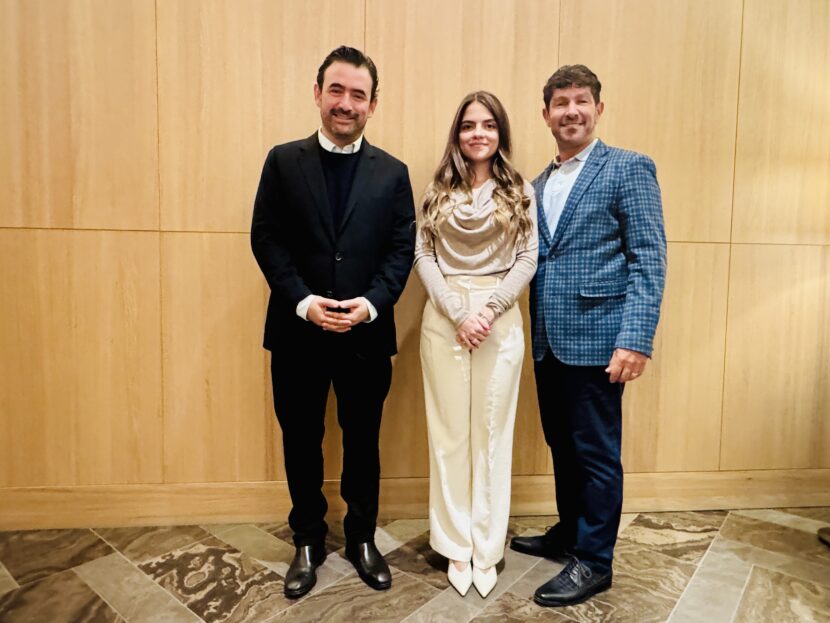
TORONTO — The Mexican Caribbean Tourism Board has appointed its first-ever Canadian representative, signalling a renewed focus on one of its most important source markets.
Industry veteran Dave Cecco, who recently retired as Vice President, WestJet Vacations, is working with the Mexican Caribbean Tourism Board to lead efforts to strengthen relationships with travel advisors across Canada.
Cecco served as WestJet Vacations VP since 2023, and before that, as VP Product from 2014 to 2023. He was also President of Total Vacations, from 1996 to 2013. More details about his new role will come shortly.
“Now we have representation in Canada, for the first time ever,” Cecco tells Travelweek in an exclusive interview earlier this week. “So we’ll be doing lots of events and training across Canada.”
The announcement comes as Andrés Martínez Reynoso, CEO of the Mexican Caribbean Tourism Board, is in Toronto this week meeting with travel partners.
Speaking with Travelweek, he says that Canada remains a key market for the Mexican Caribbean, ranking second only to the United States and accounting for a significant share of visitation. North America overall represents nearly 82% of the region’s hotel occupancy.
“Canada is the market that grew the most last year – almost 15%. This was largely because many Canadians weren’t travelling to the United States as usual, to places like Orlando, and instead were choosing to go to Cancun and other destinations in our region. I was expecting some increase in visitation but 15% is a pretty significant jump – that’s a lot of passengers,” said Martínez Reynoso.
“WE ARE COMPLETELY SAFE”
Following recent cartel violence in Jalisco State, including Puerto Vallarta, Martínez Reynoso is assuring Canadians that the Mexican Caribbean region – located on the opposite side of Mexico – remains a safe and reliable destination for travellers.
“The main message is that we are completely safe – we haven’t had any violence like that in our tourism areas,” he said. “But it’s important to note that like with any other country in the world, if you stay in recommended areas, you will be fine. We’re a very big country – people don’t realize just how big the territories in Mexico are. Certainly, we have some issues in the north and sometimes along the border, but we don’t have that problem because it’s a massive territory to cover.
Martínez Reynoso also noted that the region’s high volume of tourists is a testament to its safe atmosphere.
“The fact that we welcome 21 million tourists a year says a lot. That’s 21 million positive experiences – and they often come back again the following year,” he said.
At the same time, the region continues to position itself as a strong value proposition for Canadian travellers.
“The cold weather in Canada definitely impacts visitation – the colder it gets here, the more Canadians travel to the Mexican Caribbean. Coupled with our constantly evolving products, we have something special that makes Canadians want to come back again and again. Many Canadians come two or three times – at least. They feel comfortable there, it’s really close by, they know what they’re getting and everything feels familiar. People keep returning because they know the quality of service, the food and hospitality. It’s pretty much a guaranteed vacation,” said Martínez Reynoso.
With a new campaign, “The Vacation Capital,” and an expanded presence in Canada, the Mexican Caribbean Tourism Board is doubling down on its efforts to grow awareness and bookings across the region’s diverse destinations.
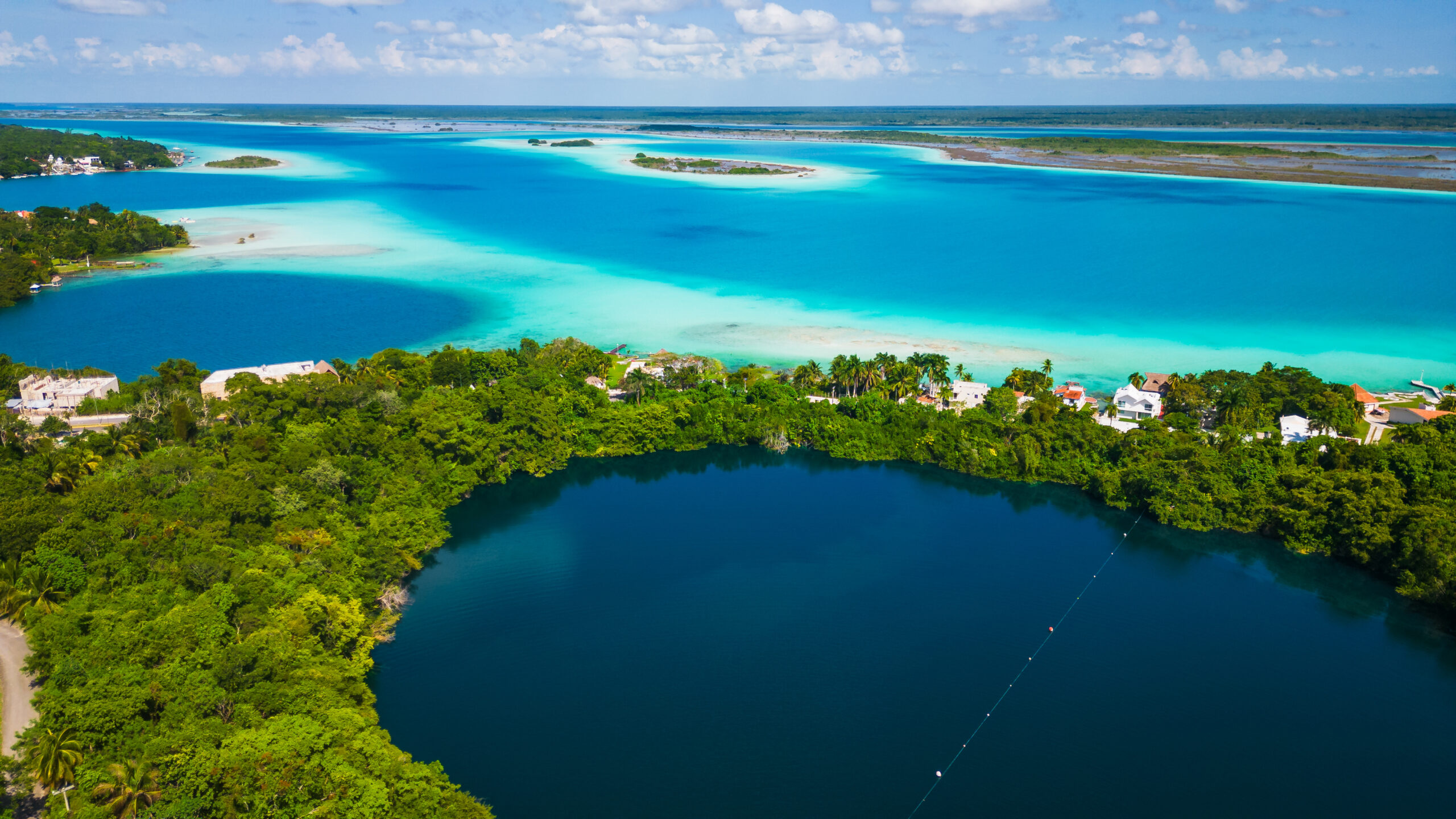
Bacalar, Mexico
AFFORDABILITY & LUXURY
The Mexican Caribbean continues to evolve with new infrastructure, product development and a growing mix of accommodation options. With approximately 140,000 hotel rooms and an additional 5,000 rooms added annually, the region offers a wide range of price points and experiences.
“The biggest destination in the world in terms of hotel rooms is Las Vegas, which has 152,000 rooms. We are the second largest destination in the world, with 140,000 rooms,” said Martínez Reynoso. “But it’s not about the number of rooms we have – it’s about the variety. We have everything from all-inclusives and luxury resorts to boutique and jungle cabins. With this variety in hotels comes a variety of rates – our prices fit absolutely everyone.”
The region is also seeing increased demand for luxury travel, with new high-end developments on the horizon.
“We’ve really seen a shift towards luxury travel in the past two years, with new luxury hotels coming on the scene. Our foundation has always been all-inclusive resorts but we’ve started developing a luxury experience with high-end brands like Banyan Tree and a new St. Regis coming to Costa Mujeres. So now we have a really good mix of all-inclusives and economy and luxury,” said Martínez Reynoso.
Among emerging destinations, Bacalar is gaining attention for its natural beauty and upcoming luxury offerings.
“There are exciting developments going on in Bacalar, a town on Lake Bacalar, also called the Lagoon of Seven Colors. It’s often called the Maldives of the Americas – the colours of the water is unlike anything you’ve seen,” raved Martínez Reynoso. “It’s a destination that the South is definitely pushing. A new Banyan Tree hotel will be opening there soon, and it will make Bacalar a major luxury destination.”
AGENT OUTREACH & RESOURCES
Cecco’s appointment marks a major milestone for the tourism board as it looks to deepen engagement with Canadian advisors and drive bookings across the region’s 12 destinations, including Cancún, Playa del Carmen, Tulum and the Riviera Maya.
Cecco notes that the tourism board’s Ambassador training program, launched last year, is a great way for travel advisors to stay informed of the latest offerings and incentives. Graduates of the program become certified as official Mexican Caribbean Ambassadors. Click here to register.
Cecco also told Travelweek that a new incentive program is in the works to drive bookings beyond go-to destinations like Cancun.
“The program will entice travellers to explore other parts of the region. And that’s where the money is for advisors, to create a dynamic package in places like Isla Mujeres, Cozumel, Tulum and more,” he said.
According to Danae Makrgiannis, Director of Marketing & PR at the Mexican Caribbean Tourism Board, Canadian marketing efforts this year will be based on three main pillars: education, engagement and conversion.
“For education, there’s our e-learning program and we’ll be hosting webinars and embarking on road shows. For engagement, we’ll be participating in trade events and one-on-ones with travel agents. And for conversions, we’ll be taking a lot more action with the travel industry,” she said.
Makrgiannis also noted that the region is increasingly positioning itself as more than a single-destination holiday, encouraging travellers to explore multiple locations within one trip.
“This past year, we’ve seen people do a circuit of our region. They’ll arrive in Cancun, then head to Puerto Morelos, Playa del Carmen, maybe Cozumel and leave from Tulum. Or they’ll take the train all the way to the south. Our region is more connected than ever, making it easy for visitors to go through all our destinations,” she said.
Martínez Reynoso added that while many advisors are familiar with the Mexican Caribbean, there is still an opportunity to broaden awareness.
“At some point, we made the mistake of assuming that travel advisors already knew our destination. They tell us they’ve either visited or booked clients 10, 20 times and that they know everything there is to know,” he said.
“But do you know that there are another 11 destinations that you’re missing out on? That’s what sparks the conversation. We need to educate advisors in a very respectful way that we’re growing and changing. There are a ton of new hotels, new attractions and places they’ve never heard of. There’s always something new in the Mexican Caribbean,” he said.
For more information about the Mexican Caribbean, go to https://mexicancaribbean.travel/.
Lead image caption (l-r): Andrés Martínez Reynoso, Danae Makrgiannis and Dave Cecco
