






TORONTO — Norwegian Cruise Line is positioning itself as “the easiest cruise line to work with,” beginning with hosting a virtual town hall addressing its recent move to eliminate non-commissionable fares (NCFs) for travel advisors.
Held Jan. 16, 2026, and moderated by ASTA’s Vice President of Membership, Marketing and Communications Michael Schottey, the one-hour session gave NCL’s John Chernesky, Senior Vice President, North American Sales, an opportunity to be transparent about what advisors are calling a major win for the trade.
“For us at Norwegian Cruise Line, the decision was a big one that helped solve a few problems we’d been dealing with over the last year,” said Chernesky. “In order to solve a problem, you have to know you have a problem, and the feedback from the travel advisor community was loud and clear that we had an issue with effective commission.”
The elimination of NCFs took effect Dec. 26, 2025, and applies to all new bookings sailing May 1, 2026 onward across Norwegian’s published itineraries. Existing bookings made prior to that date will retain their original fare structure.
Breaking down the line’s previous NCF policy to simple terms, Chernesky added: “If you had a $1,000 cruise fare and $300 of that was non-commissionable, you were only earning commission on $700. If the price later dropped, the NCF might not, which meant your commissionable amount could shrink even further.”
That disconnect, he said, often left advisors earning significantly less commission than they expected once NCFs were removed from the commissionable fare.
“When advisors looked at the full amount their client paid and then calculated their net commission, the numbers just didn’t add up,” said Chernesky. “By eliminating NCFs, we remove that pain point and that frustration. You’re selling the cruise, and now you earn commission on the full cruise fare.”
NCL now joins a handful of other cruise lines, like Virgin Voyages, Explora Journeys and Viking, in offering fully commissionable fares to travel advisors.
WHY NOW, AND WHY BEFORE CHRISTMAS?
The timing of the announcement, just days before Christmas, raised eyebrows among the trade but Chernesky said it was a deliberate strategy.
“We wanted to put our stake in the ground heading into Wave season,” he said. “January is the busiest booking month of the year, and we wanted to build momentum early rather than waiting.”
He added that communicating a change of this magnitude requires repetition. “Just because you send an email doesn’t mean everyone reads it. You’ve got to repeat it, and you’ve got to start it early. Studies show that people need to see a commercial seven times before they really remember it and take action. So, the earlier we started communicating, the better.”
NOT A REPEAT OF THE PAST
This isn’t the first time NCL has moved to pay commission on NCFs. The line announced a similar policy in 2022, but it ultimately failed to gain traction due to the complexity involved.
“Agencies had to sign up, submit a marketing plan and commit to the program. Advisors could only get the commission on the NCF amount if it was outside of 120 days and on a balcony. So, there were hoops they had to jump through and many things they had to understand – it just wasn’t clear,” said Chernesky.
“This time, it’s simple. It’s a very different program – you don’t have to do anything other than book us for a voyage May 1 and onwards because we have eliminated the NCF line – it just goes away,” he added.
HOW NCL IS FUNDING THE CHANGE
As Schottey noted, eliminating NCFs certainly comes at a cost for NCL. When asked how the cruise line plans on absorbing the cost, Chernesky said the changes are being funded through internal adjustments rather than being passed along to advisors or guests.
“To afford this, we made adjustments on the commercial side of parts of our Affinity Groups program, particularly around speculative pricing advantages that most frontline advisors never use.”
He emphasized that the program remains intact and competitive, and that advisors still earn strong TCs (tour conductor credits). “It’s still best in class, you can earn up to 15% savings on the cruise fare. And if you hold it, you can add more space to it later on.”
Asked directly whether NCL plans to raise cruise prices to offset the cost of the new NCF policy, Chernesky was clear. “The cost of the cruise is not going up to cover this,” he said, adding that the move was not designed to shift the financial burden elsewhere. That said, he acknowledged that pricing across the cruise industry may naturally evolve over time, particularly as value perceptions change.
WHAT ABOUT SISTER BRANDS?
Asked whether NCL’s parent company, Norwegian Cruise Line Holdings Ltd. (NCLH), will also be eliminating NCFs for sister brands Oceania Cruises and Regent Seven Seas Cruises, Chernesky said the policy remains under review. While stopping short of any commitments for either sister line, he indicated the impact of NCL’s decision will be closely watched internally.
“We’ll see whether Oceania and Regent take this and run with it, or how they choose to manage their business and their partnership with advisors,” he said, adding that both brands value the trade and appreciate advisor support. “I would just say, watch this space. We’ll see as time goes on if they’ll completely follow through or do a version of this policy – there are different ways of doing it.”
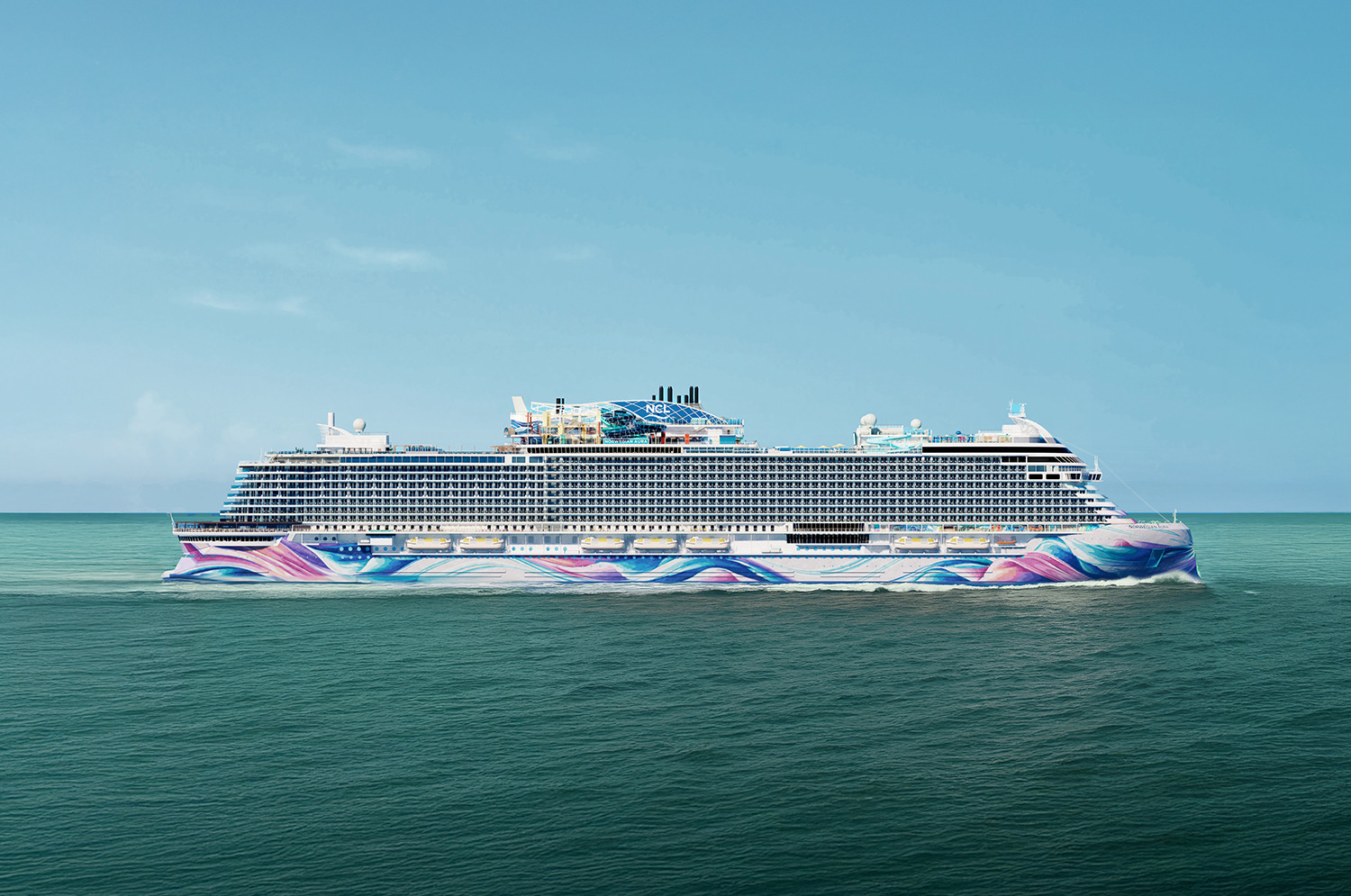
Norwegian Aura, coming in 2027
BOOSTING EARNINGS EVEN FURTHER
The NCF elimination coincides with other advisor-friendly initiatives, including the return of NCL’s ‘It’s different out here’ campaign and the November launch of Free at Sea Plus, a commissionable package that includes unlimited Wi-Fi, bottled water, prepaid gratuities, additional dining nights, restaurant discounts, premium beverages and more for US$50 per day, per person.
“When you combine no NCFs with Free at Sea Plus, the impact on advisor earnings can be significant,” said Chernesky.
He cited internal examples showing commission increases of 20% to 30% on certain sailings and as much as 46% when Free at Sea Plus is added to the booking.
“That’s real money going into advisors’ pockets,” he said. “It’s definitely something you should be talking to your clients about.”
BUILDING TRUST AMONG THE TRADE
Chernesky said the decision to eliminate NCFs was driven largely by candid feedback from travel advisors who valued NCL’s product but struggled to make it financially viable to sell. Hearing advisors say they loved the NCL experience yet could not afford to promote it was a turning point, he noted.
“That hit me hard because I respect the work that advisors do,” said Chernesky, who emphasized that Norwegian’s growth plans depend heavily on the trade. With more ships and capacity coming online, he said the line cannot succeed unless advisors are positioned to succeed as well.
“The reality is, we need the trade more than ever – we cannot be successful if you’re not successful. We need you during this great growth period and we want you on our side, which is why we made this decision to eliminate NCFs,” he added.
The goal of eliminating NCFs is to restore confidence and alignment, ensuring advisors clearly understand what they earn and feel good recommending the brand, without any impact on guest value.
Chernesky also framed the move as a statement of long-term commitment to the trade, especially as Norwegian marks the 15th anniversary of its Partners First program in 2026. “What better way to celebrate than to make it more profitable and easier to sell us,” he said. “We believe in you, we value you and we thank you for your partnership.”
Lead image caption: Michael Schottey, ASTA Vice President of Membership, Marketing and Communications (top) and John Chernesky, Norwegian Cruise Line’s Senior Vice President, North American Sales
