





OTTAWA — Foreign Affairs Minister Anita Anand said Canada is pursuing multiple options to help more than 2,000 Canadians who have requested assistance to leave the Middle East, as some Canadians in the region are calling on the government to do more to help them get home.
Devin Ramoutar said he arrived in Dubai with his parents and sister on Thursday for a short vacation and they were supposed to head back home on Monday, but their flight has been cancelled six times since American airstrikes on Iran began Saturday.
“When we heard the news, I booked an emergency flight out that was immediately cancelled and then the original flight has been bounced five times now,” the 27-year-old Toronto resident said Wednesday. “Thankfully we’re together because that’s keeping us pretty mentally healthy.”
Ramoutar said he contacted the Canadian government immediately after the war started and only heard back after about 48 hours via email with general information about how to leave the United Arab Emirates through land border crossings with Saudi Arabia and Oman.
“Basically, there’s not much help or much guidance, none at all actually, and that’s the only sort of response we’ve received, not a single person has reached out to us after that,” he said. “We need verified information to make an informed decision.”

People disembark from a military aircraft as they arrive in Slovakia after being evacuated from the Middle East, Tuesday, March 3, 2026. (Martin Baumann/TASR via AP)
“WE HAVE BEEN AT THIS FOR DAYS”
Anand rejected any suggestion Canada wasn’t doing as much as other countries to help its citizens.
“We’ve been at this for days to ensure that we have options in place for Canadians,” she said, in a press conference on Wednesday evening in Ottawa.
Anand said more than 106,000 Canadians and permanent residents have registered in the Middle East, and of those, 2,035 people have requested help to leave amid an escalating conflict following U.S. attacks on Iran that began on Feb. 28. She encouraged those in the Middle East who have not yet registered with the Registration of Canadians Abroad service to do so now.
She said the options available depend on whether local airspace is open, including the possibility of some charter flights operated by Canada or some of its allies, or securing a seat in blocks bought by Global Affairs Canada for Canadians. There is also some assistance being offered to help Canadians travel by land to airports that are still open.
“I want to speak directly now to Canadians in the Middle East and the Gulf region,” Anand said. “Your government is with you.”
Earlier this week Anand said Canada was not currently offering any charters and that Canadians in the region should “prepare departure plans that do not rely solely on government of Canada assistance.”
But by Wednesday evening that had changed, as Anand said she had directed her officials to sign contracts to charter flights for Canadians who are in the United Arab Emirates.
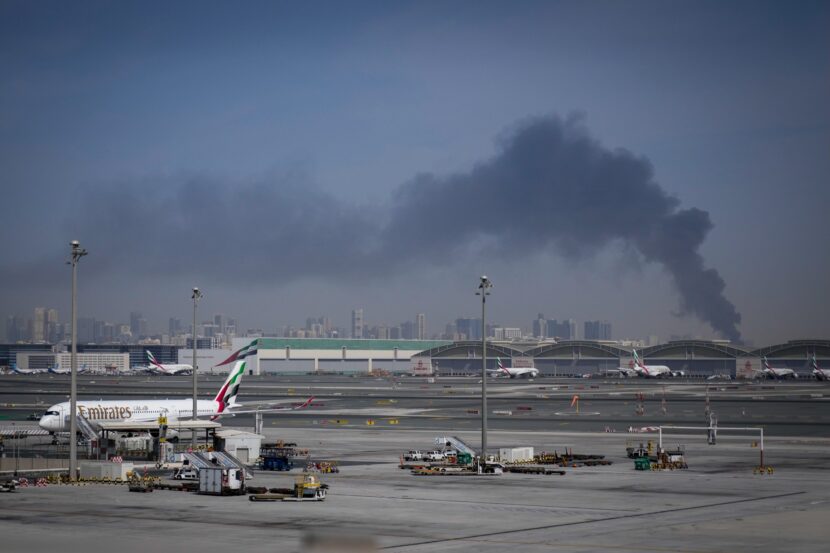
More than half the people seeking help to get home — 1,171 as of Wednesday evening — are in the UAE, where there is limited airspace open.
“This charter is contingent upon receipt of the necessary approval to use their airspace, which we have already requested, and I personally am involved in these requests at a diplomatic level,” Anand said. “Flights will be available on a cost recovery basis to Canadians, and the number of flights will be tailored to demand.”
While the 106,000 Canadians registered in the Middle East are stretched across more than a dozen countries, Anand said 85 per cent of the ones who have asked for help to leave are in just five of those — the 1,171 in UAE, 237 in Qatar, 164 in Lebanon, 93 in Israel and 74 in Iran.
Canada can provide very limited help in Iran, she said, where it has no diplomatic presence. Anand said 3,000 Canadians in Iran have registered with the Registration of Canadians Abroad service.
Global Affairs has sent additional consular staff to border areas around Iran including in Turkey, Turkmenistan, Armenia, Israel and Azerbaijan. If Canadians can make it to the border, consular staff will be there to assist them.
Canada secured 75 seats on a commercial flight out of Beirut on Wednesday, with 200 more seats to be available in the next few days.
Anand said there are no commercial options in Qatar, where airspace is closed entirely, but Qatar Airlines is providing bus transfers to people with tickets to an airport in Saudi Arabia to fly out of there. Anand said Israel is also operating a bus service to Eqypt, where passengers can then travel onward to airports that are in operation.
She warned there are risks with ground transportation, and that staying put can sometimes be the safer option.
“While we have no indication of roads being targeted by Iranian missiles, when they are intercepted overhead, debris can fall on the road below,” Anand said.
“Canadians should — no matter which country they are in — only travel when it is safe to do so and follow local advice.”
RACE TO BRING CITIZENS HOME
With much of the region’s airspace closed and airstrikes intensifying, government from North America and Africa to Europe and Southeast Asia continue their race to bring their citizens home.
Officials chartered jets or deployed military aircraft, routing stranded travellers through Oman, Egypt and Saudi Arabia — key exit points where planes could land and take off.
The U.S. State Department says 18,000 Americans have returned safely, including 8,500 on Tuesday. The U.S. administration pushed back against criticism that the administration had not done enough to help Americans leave.
Around 15,000 people have left Israel through land crossings into Jordan and Egypt. Israel’s Ministry of Tourism is running buses to the southern border with Egypt transport tourists.
More than 23,000 of the roughly 44,000 flights scheduled to fly to or from the Middle East between the start of the war and Thursday have been cancelled, according to aviation analytics firm Cirium. Flight-tracking service FlightAware reported more than 2,400 flight cancellations worldwide on Wednesday, down from about 3,150 on Monday.
Air Canada is adding capacity to its India routes in an effort to get more Canadians home, as it suspends Dubai and Tel Aviv flights until March 22, with a restart currently scheduled for March 23. From March 7 to March 21, Air Canada will add an extra frequency for double-daily Toronto-Delhi service. The airline will also use larger aircraft on select Toronto-London-Mumbai flights “to provide routing options,” says Air Canada.
Emirates, which normally serves YYZ and YUL to Dubai, has moved its operations restart target to 11:59 p.m. UAE time on March 7. In the meantime Emirates continues to operate a limited flight schedule.
Meanwhile there are reports of some people paying up to 200,000 euros (US$232,000) for charter flights out of the conflict region, to gateways in Europe.
Aviation industry experts also note that carriers cancelling flights or shifting to longer routes is straining operating costs and ticket prices, both of which could become more expensive if airlines have to pay more for fuel the longer the war drags on.
With file from The Associated Press
Lead image caption: A plume of smoke caused by an Iranian strike is seen in the background as Emirates planes are parked at Dubai International Airport after its closure in Dubai, UAE, March 1, 2026 (AP Photo/Altaf Qadri)