





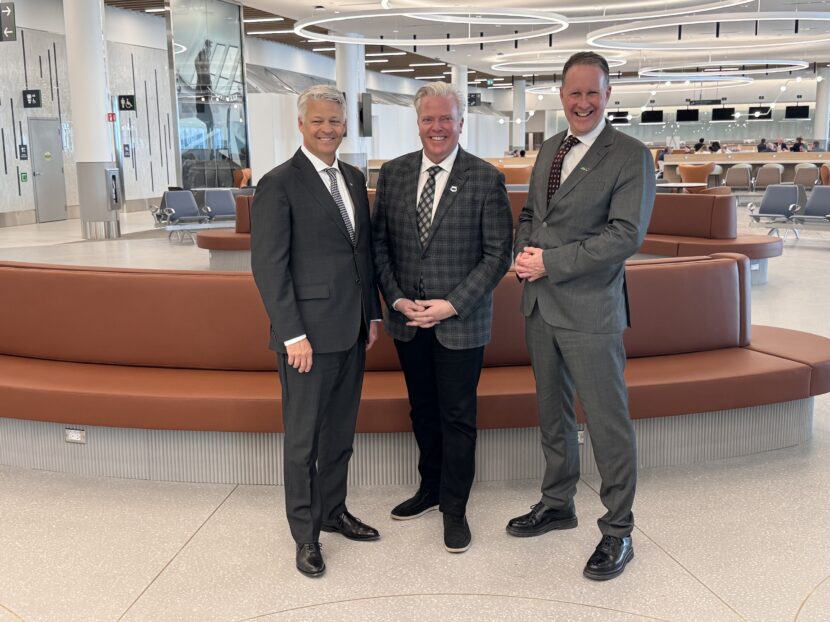
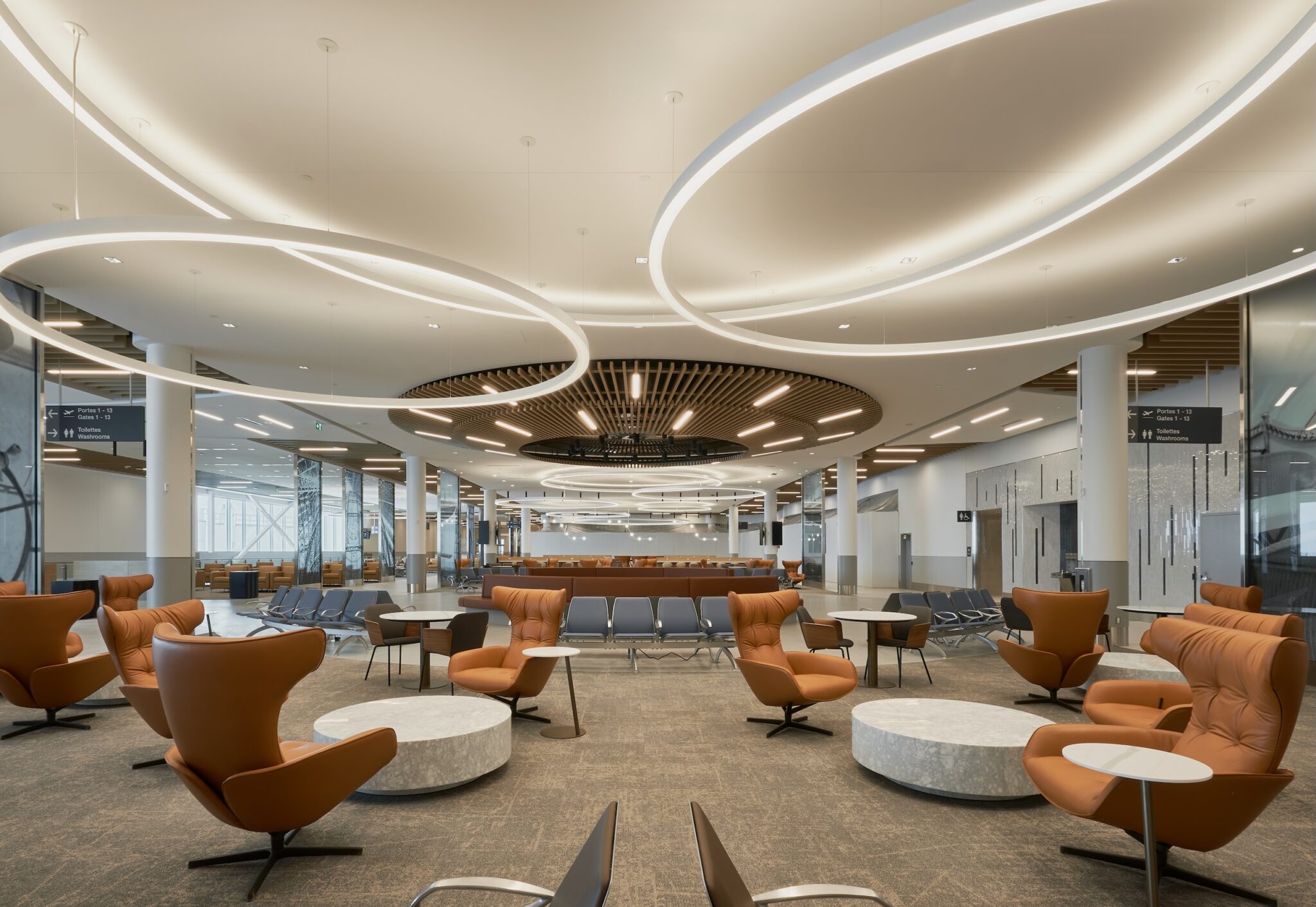
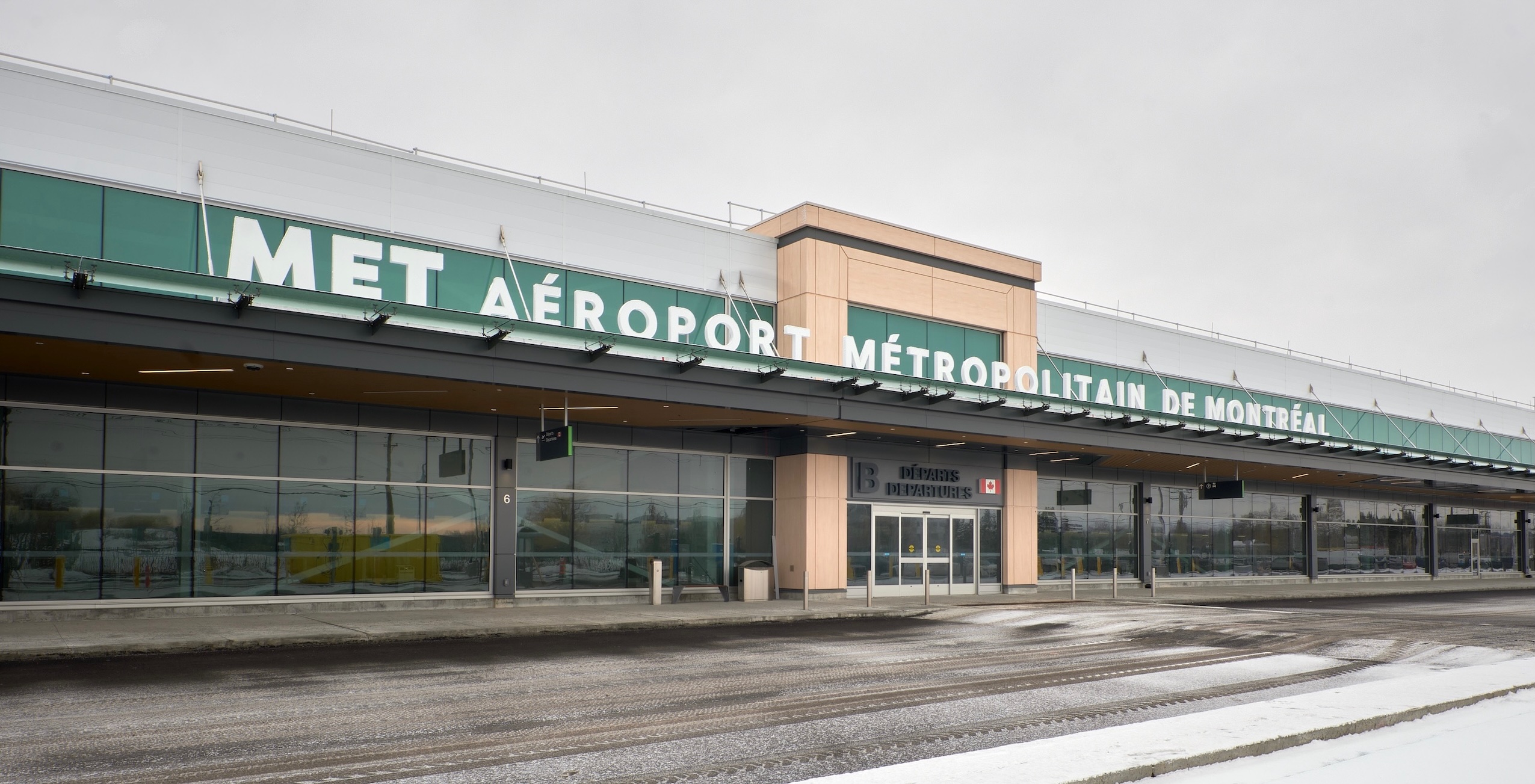
LONGUEUIL, QC — Given the scale of the work and the size of this vast, bright and welcoming space, with its clean and modern design, it’s fair to say that the new terminal at Montreal Metropolitan Airport — better known as the MET – is essentially a brand-new airport.
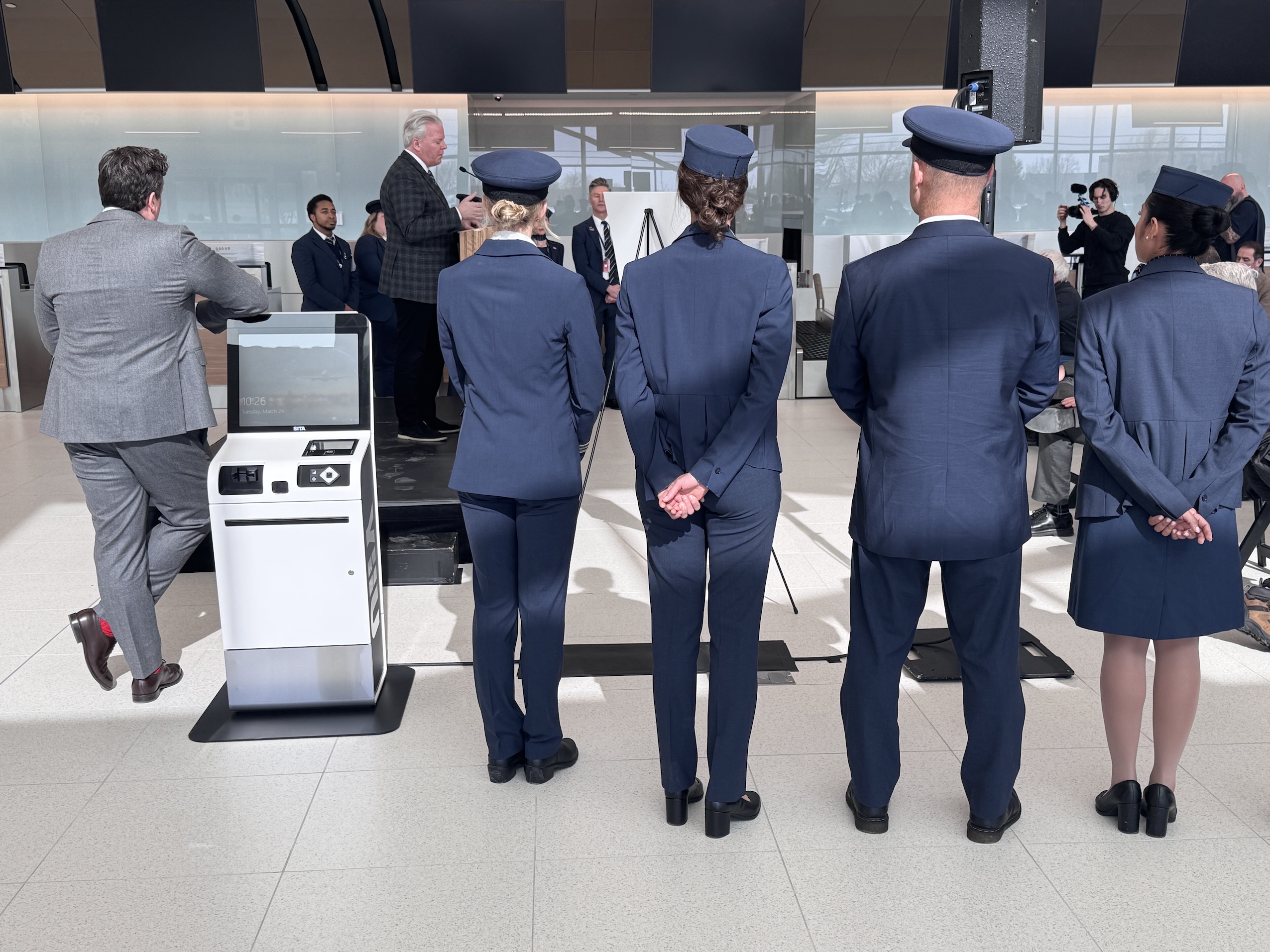
Announced with great fanfare at a media event yesterday, the upgraded version of the MET aims to redefine how people travel in Montreal through its integrated operating model, where all operations are managed under one roof.
On June 15 Porter Airlines becomes MET’s launch carrier, with Porter flights from YHU (the MET’s official IATA code) to no fewer than 12 cities across Canada. The MET, located in Longueuil, will become the cornerstone of Porter’s development in Eastern Canada, allowing the carrier to rapidly increase its peak summer capacity in the region by 91%, thanks to six new nonstop destinations among the 12 on offer.
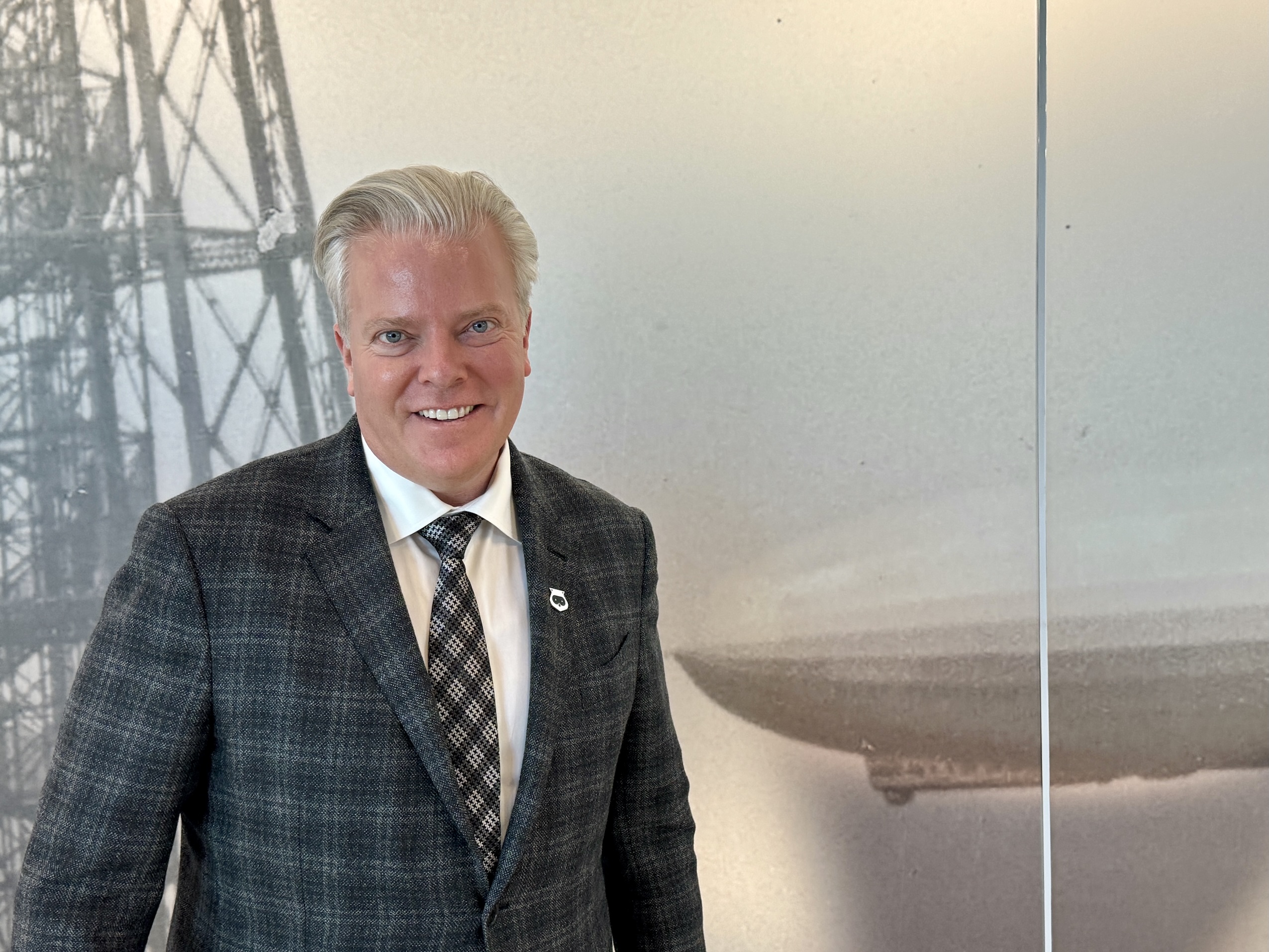
At the MET, Porter Airlines CEO Michael Deluce poses in front of a photo of the R-100 airship, which landed at Saint-Hubert Airport – the first airport in Canada and predecessor of the MET – in 1930
Porter Airlines’ CEO, Michael Deluce, was front and centre at yesterday’s big event, alongside Yanic Roy, CEO of the MET, and Charles Roberge, President and CEO of YHU Infrastructure Partners (co-owner of the terminal with Porter Airlines).
We spoke with Deluce about this new chapter in Porter’s history and the ambitions of this ever-growing airline …
Q. Why was it so important for Porter to invest in this airport in Greater Montreal?
Deluce: “Over the past three years, Porter has expanded across the country and added 52 Embraer E195-E2 aircraft to its fleet. Montreal has been one of the central hubs of this expansion, and our arrival at the MET is part of a plan to have an even stronger presence across Canada.
“With the opening of the MET in June, we’re going to transform the way Montrealers travel, as well as the experience of travellers arriving here. This airport is located near where half of Greater Montreal’s population lives, and when people discover its incredible environment – essentially a business lounge open to everyone – and realize how much time they save by using it, they’ll adopt it right away.”
Q. How long do you think it will take Montrealers to get used to the MET for domestic flights?
Deluce: “I think it will happen very quickly. Starting this week, we’re launching a major campaign, including reaching out to our large customer base – we carry no fewer than 7 million passengers per year across our network.
“Also, a large city like Montreal is no different from New York, Toronto, or London: if there are at least two airports, people use the one closest to their home. If you have the choice between crossing the entire city to get to an airport or using one that’s ten minutes away, you quickly learn what works best.
“As people begin using the MET, they’ll realize how superior the experience is and will quickly spread the word. That’s what happened at Billy Bishop Airport 20 years ago when we started offering flights there.”
Q. As you did at Billy Bishop, you’ve invested heavily in this terminal and even own 50% of it. Will you allow other airlines to use it?
Deluce: “Of course. At the end of the day, we compete with all North American carriers, and while we’ll account for the majority of traffic at the MET – with 132 weekly flights to 12 destinations – we aim to quickly surpass the one million passengers expected in the first year.
“Our partner Pascan Aviation, also based at the MET, will use it jointly with us and feed us passengers from regions across Quebec and the Maritimes. Passengers can purchase a single ticket covering flights on both airlines, including baggage transfers.
“Within a few years, we hope to reach 4 million annual passengers, and I’m confident the MET will soon become one of Canada’s top 10 airports.”
Q. For now, the 12 destinations you offer are only within Canada. Do you plan to serve the United States as well?
Deluce: “For the moment, we’ll focus on our 12 Canadian destinations. But as time goes on and the airport proves successful, I’m open to launching flights to the U.S. or even the Caribbean, if there’s interest from the community, politicians, and others.
“In recent years, we’ve experienced rapid growth across North America, notably thanks to transcontinental flights in Canada and the U.S., as well as service to Mexico, Central America, and the Caribbean. We continue to expand our network, which currently includes 112 routes across 49 seasonal and year-round destinations.”
Q. How might the situation in the Middle East affect your plans in the coming months, including flights from the MET?
Deluce: “In recent years, more and more Canadians have chosen to vacation within the country, and domestic air traffic continues to grow. With the U.S. under pressure, instability in the Middle East, and some travellers reconsidering trips to Europe, this year looks promising for tourism in Canada.
“With the opening of the MET, it will be a great opportunity to come to Montreal or travel elsewhere in the country. To encourage this, we’ll offer special fares as part of the June 15 launch.”
Q. Will the opening of the MET change anything in your joint venture with Air Transat?
Deluce: “With the MET, not only will we not remove any flights from Montreal–Trudeau – which remains very important to us – but we will double our presence in Montreal.
“Our partnership with Air Transat is excellent and very important for both sides: it helps feed passengers to each other. For now, we’ll be the only airline serving both airports simultaneously.”
Q. Are there any other Porter projects you can share today?
Deluce: “We always have several projects underway, but today is one of the most exciting days we’ve ever had. The opening of the MET will be one of the most disruptive events in Montreal’s air travel market in a long time.
“The MET will split Montreal’s domestic air travel market in two: some passengers will adopt the new airport immediately, while others will likely continue to consider Montreal–Trudeau their main airport. But most importantly, the MET will quickly become the preferred airport for traveling to and from Canadian cities.”
Lead image caption: Charles Roberge, President and CEO of YHU Infrastructure Partners (co-owner of the terminal with Porter Airlines); Michael Deluce, CEO, Porter Airlines; Yanic Roy, CEO, MET (all event photos courtesy Gary Lawrence)
