





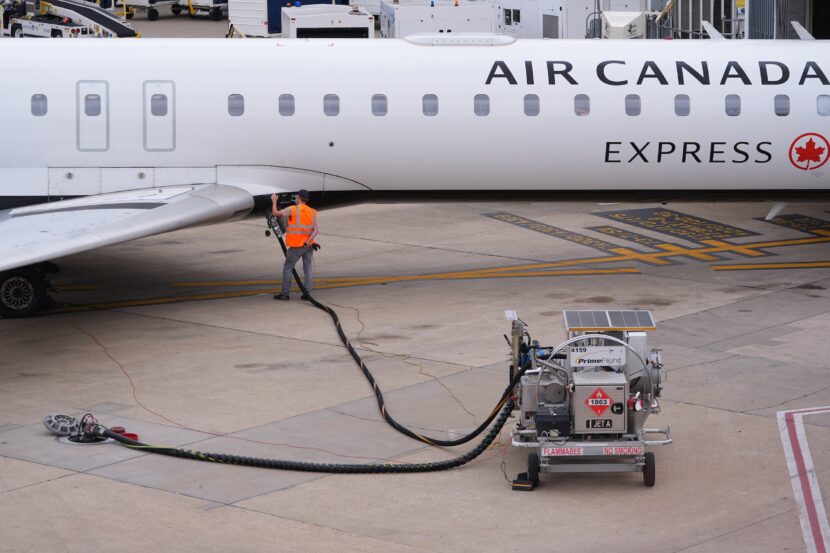
TORONTO — Oil prices are set to resume their wild ride now that the Strait of Hormuz is closed once again amid escalating tensions in the Iran war.
Europe’s airports last week warned of jet fuel shortages in a matter of weeks.
IEA Executive Director Fatih Birol reiterated those alarm bells yesterday, telling AP that Europe has “maybe six weeks or so (of) jet fuel left” and warning of possible flight cancellations soon if oil supplies remain blocked by the Iran war.
No matter what happens with the strait, at best skyrocketing jet fuel costs could push airfares upward well into the peak summer travel season, and at worst, jet fuel supply is under siege. Experts say it will take weeks for oil traffic to ramp up if the strait reopens, while jet fuel could take much longer to reach pre-war production levels given the damage to refineries in the Middle East.
AIR CANADA TEMPORARILY SUSPENDS JFK FLIGHTS FROM YYZ, YUL AS OF JUNE 1
As the Canadian travel industry saw in early February with Cuba, any destination’s jet fuel shortages impacts not just airlines flying locally, but airlines flying in and out from other countries too.
Europe’s busy spring travel season is underway – and peak summer season looms, with vacation bookings to Europe booming from Canada.
Concerns about jet fuel shortages have been rumbling for days. As aviation industry expert John Gradek told CTV News last week, while surcharges are frustrating for travellers, “the big tsunami we’re going to hit is going to be supply.”
In a new interview with CBC News, Gradek called the jet fuel supply shortage “the worst crisis we’ve had in aviation, ever,” adding: “We haven’t seen nothing yet.”
Closer to home, Air Canada plans to temporarily suspend service from Toronto and Montreal to JFK, effective June 1 through late October. “As jet fuel prices have doubled since the start of the Iran conflict and some lower profitability routes are no longer economic, we are making schedule adjustments accordingly,” an Air Canada spokesperson told CBC. Air Canada also serves LGA and EWR from Canada.
LUFTHANSA GROUP’S FLIGHT REDUCTION STRATEGY
Lufthansa Group announced yesterday it will embark on a strategy that provides for flight reductions on short-, medium- and long-haul routes. The company said the move comes in view of “significantly increased kerosene prices, which have more than doubled compared to the period before the Iran war, as well as rising additional burdens from labor disputes.” Part of Lufthansa Group’s measures include a reduction in long-haul capacity by a total of six intercontinental aircraft at the end of the summer flight schedule.
Lufthansa Group said the package of measures “generates a disproportionate savings effect on fuel costs. On the one hand, particularly inefficient aircraft are being removed from flight operations early. On the other hand, the saved kerosene quantity reduces the unhedged portion of the Group’s fuel requirements.
The leaders of France and the U.K. welcomed the announcement by Iran and the U.S. that the Strait of Hormuz is open, but said freedom of navigation must be permanently restored to the key oil route.
French President Emmanuel Macron and UK Prime Minister Keir Starmer said they would keep planning an international mission to restore maritime security, which Starmer said will be deployed “as soon as conditions allow.” They said military planners will meet in London next week.
LESS THAN 20 DAYS OF COVERAGE IN FUEL SUPPLIES
In general, some European countries hold several months’ worth of jet fuel inventory at a time, according to an IEA report released this week. The Strait of Hormuz accounts for around 40% of Europe’s jet fuel imports.
Jet fuel is airlines’ biggest cost, making up about 30% of overall expenses, according to IATA. Jet fuel prices have roughly doubled since the war began, leading to surcharges.
In Europe, a number of countries are now relying on less than 20 days of coverage in their fuel supplies, according to this week’s IEA report. Supplies haven’t dropped below 29 days since 2020, the report said.
Asia-Pacific countries are the most reliant on oil and jet fuel from the Middle East, followed by Europe.
Yesterday KLM said it would cut 160 flights next month — about 1% of its total European routes. The airline cited “rising kerosene costs” and said a limited number of flights are “no longer financially viable to operate.”
With file from The Associated Press and The Canadian Press
Lead image caption: A worker fuels an Air Canada jet at DFW International Airport on April 14, 2026 (AP Photo/LM Otero, File)
