





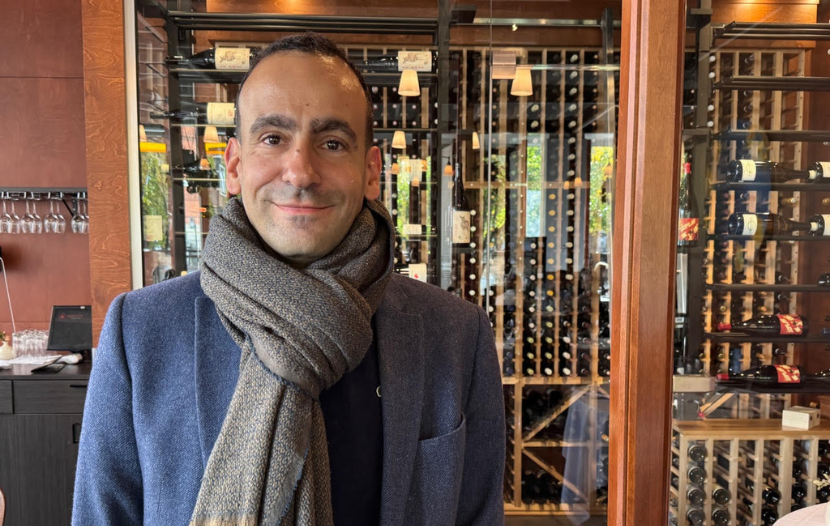
Adam Oubuih, the new Director General of Atout France, wants to get to know and understand Canada – and he recently started his journey across our borders in Montreal.
The tourism board’s leader took over his new post this fall and is keen not just on developing already key markets like Canada, but also to advance conversations around sustainable tourism, as well as France’s lesser-known regions, and the full potential France offers to Canadian travel advisors.
Oubuih’s appointment, for a renewable five-year term, “is part of a clear desire to strengthen Atout France’s action in support of the competitiveness and attractiveness of France as a destination,” notes Atout France’s parent organization.
Oubuih brings a strategic and partnership-driven vision of tourism development to his new role – and he’s committed to making France shine as a destination.
As soon as he took office, he was immediately impressed by Atout France’s teams already in place. “They are efficient, highly engaged, and know the field extremely well. I feel very well supported from the start.”
Part of Oubuih’s mandate is to build bridges between cultures. Born to a Moroccan father and a French mother, Oubuih grew up abroad. “From experience, I can assure you there is no more beautiful profession than one that allows you to build bridges between people,” he said.
Oubuih is also all about deliverables. He says he intends to maintain France’s competitiveness and attractiveness as a destination, “and make it the international benchmark for sustainable tourism by 2030.”
Q. Why is it so important for you to invest efforts in developing sustainable tourism?
Oubuih: “It’s essential because if we want tourism to keep growing, we cannot ignore its footprint or its acceptability by local populations.
“For me, sustainable tourism has three components: economic, environmental, and social. In the latter case, we must pay attention to how a visitor interacts with local populations and shares public spaces with them.
“I also want visitors to want to return to France – this is fundamental. It comes back to building bridges, the ones we want between tourists and residents, so that there is no conflict or competition for space. If a tourist has a bad experience because the local population is overwhelmed by visitors—like when 50 people create congestion just to take a selfie—this is bad for tourism and for the host community.”
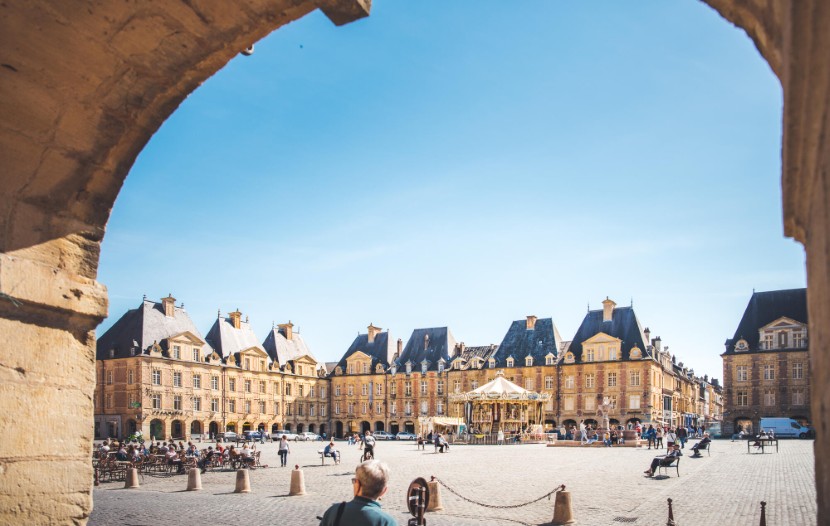
Place Ducale, Charleville-Mézières_©ART GE – Pierre Defontaine
Q. In concrete terms, how can the tourism industry in France achieve sustainability?
Oubuih: “There are several ways. People can travel during the shoulder seasons, that is, outside peak periods. On that note, we’re seeing that more and more people – including Canadians – choose to spend part of their winter on the Côte d’Azur rather than going to the U.S.
“We can also encourage the use of low-carbon or lower-impact means of transportation to explore the country – such as electric-bike vineyard tours, cycling along the ViaRhôna, or taking the train to travel long distances or explore a region. In many parts of France, it is very easy to get around by rail – Occitanie, for example.”
Q. Travelling to lesser-known or less-frequented places must also support sustainable tourism?
Oubuih: “Absolutely, because it helps distribute tourist flows more evenly and even improves their experience by avoiding overly crowded places.
“In France, there are many amazing places worth discovering. For example, the Drôme – where my mother is from – offers experiences similar to Provence in places, with lavender fields, along with a strong truffle culture.
“In Charleville-Mézières, Place Ducale is an exact replica of Paris’s Place des Vosges, as it was designed by the same family of architects. And 90 minutes from Beaune, the beautiful town of Auxerre is worth visiting for its Second Empire architecture.
“I’m also thinking of cities like Nancy, the French capital of Art Nouveau, or Metz, where the astonishing Maison Heler has been built on the roof of a building. The great thing is that tourism in these less-frequented areas generates real economic activity that benefits everyone.
“And when I discuss budgets with French parliamentarians, those from the regions all say they would like to welcome more tourists.
“Moreover, visiting these corners of the country provides a more global image of France, especially for people who have already seen a lot elsewhere in the country.”
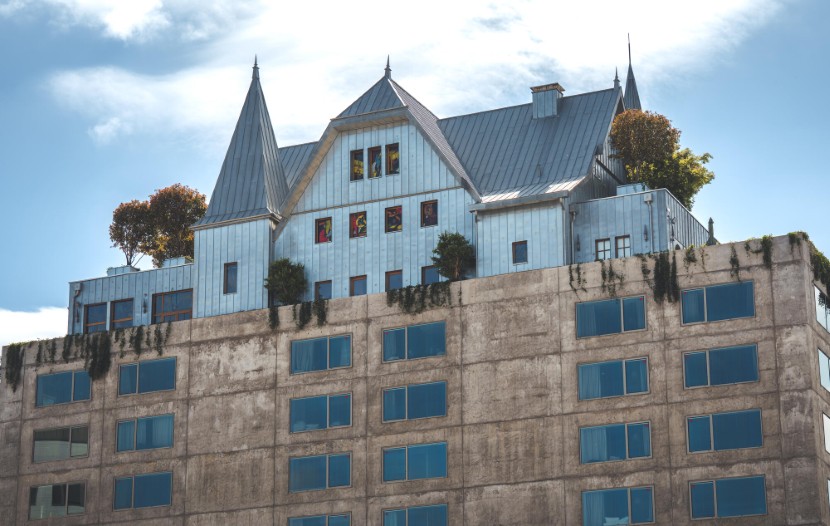
Heler House designed by Philippe Starck_©ART GE – Pierre Defontaine
Q. In 2024, boosted by the Olympic Games, France welcomed a record number of visitors: 100 million. Which customer segments can France still tap into after such success?
Oubuih: “As I mentioned earlier, the long-stay winter market has strong potential, especially as the proportion of people retiring will not decrease in the coming years.
“Highly specific niches, like sports tourism – going to see soccer or rugby matches, for example – are also promising.
“I’m also thinking of ‘spirit tourism,’ discovering Breton distilleries or the Cognac region in winter. It’s an experience out of the ordinary and aligns much better with the climate during that season. In Martinique and Guadeloupe, rum-tasting tours are already popular but could grow even more. In all these cases, history, traditions, and craftsmanship are elements visitors seek – and which we can highlight to promote these regions.”
Q. What advice would you give travel agents to better sell France?
Oubuih: “First, they can rely on France’s fundamental components for first-time visitors: culture, gastronomy, heritage, history, hospitality and more.
“Then, for those who have already visited once or more, they can propose new experiences and lesser-known destinations. What’s wonderful about tourism in France is that even when you go off the beaten path, you still find all these fundamental components, no matter where you go.”
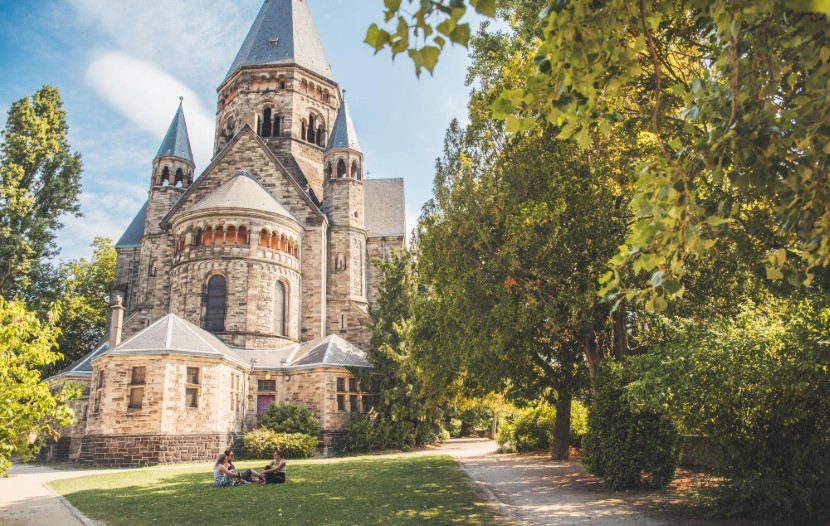
The New Temple_©ART GE – Pierre Defontaine
Q. Is there a particular approach travel advisors should take with English-speaking Canadians?
Oubuih: “Beyond the ‘fundamentals’ we just mentioned, one can highlight that many of our cities and famous sites are already well known to this audience, for instance, Bordeaux, Burgundy and Nice.
“It’s worth remembering that tourism in Nice began with British visitors who came to rest and rejuvenate there in the 18th and 19th centuries. Even today, this destination is highly prized for long stays.
“It’s also worth noting that some English-language media and institutions have recently praised French destinations. Time magazine named Marseille one of the best places to visit in 2022, and Lonely Planet did the same with Toulouse in 2025.
“It’s also worth emphasizing that even though Canada is large, France is often not as far as it seems. Despite the distance, Vancouver is only a 9.5-hour flight from Paris.
“Finally, I would add that Canadians outside Quebec often love extravagant experiences – such as the personalized tours offered by the Eiffel Tower, with a private guide, a visit to the ‘engine room,’ and champagne at the top – and travel advisors should definitely not hesitate to propose this type of product to their clients!”
More information about travel to France can be found at France.fr. This article originally ran at ProfessionVoyages.com, part of The Travelweek Group.
Caption for lead image: Adam Oubuih is the new CEO of Atout France
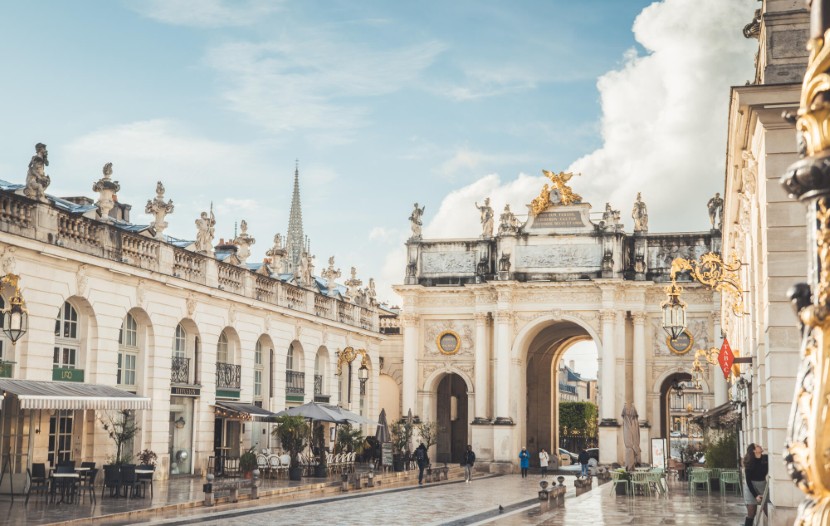
Place Stanislas – Nancy_©ART GE – Pierre Defontaine
